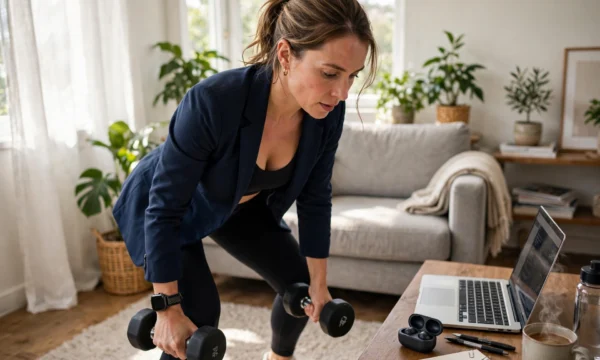
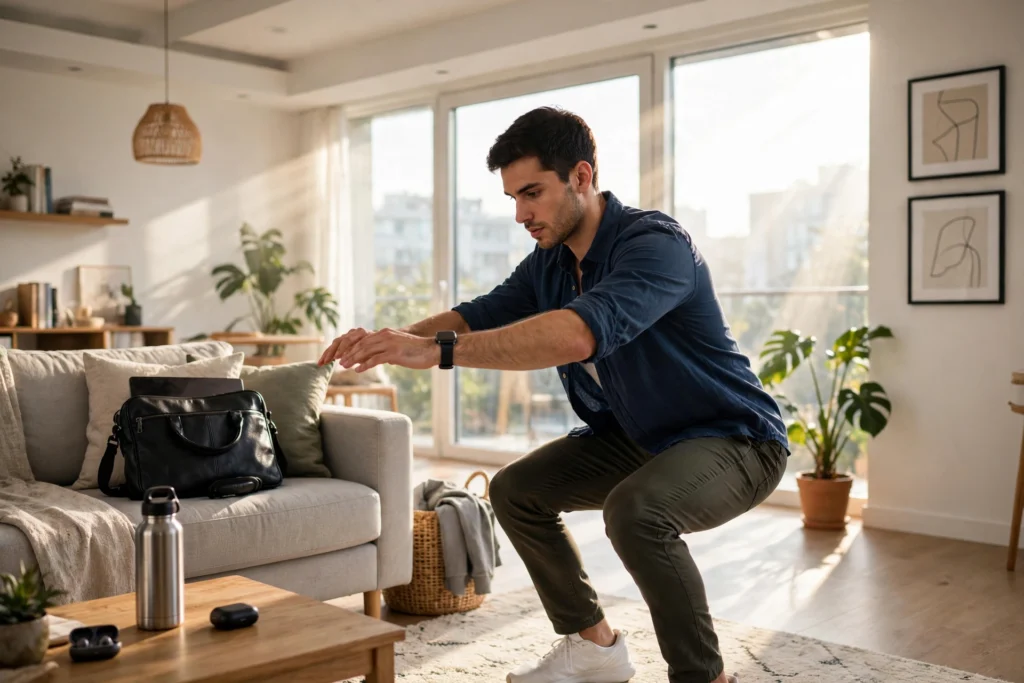
The CDC recommends that adults accumulate at least 150 minutes of moderate-intensity aerobic physical activity weekly, alongside muscle-strengthening activities on two or more days. Staying active and fit with a packed calendar is absolutely possible when you treat movement as a series of small, non-negotiable appointments rather than a single gym session.
Key Takeaways
- Accumulating brief 10-minute activity bouts provides cardiovascular benefits comparable to single continuous workouts.
- Non-Exercise Activity Thermogenesis (NEAT) accounts for significant daily caloric expenditure.
- Bodyweight circuits require zero equipment and can be performed anywhere in 15 to 20 minutes.
Active and Fit: Why 10-Minute Bouts Count
Research consistently shows that three 10-minute bouts of brisk walking deliver cardiovascular benefits comparable to one 30-minute session. The key is intensity: walk fast enough that talking requires slight effort, or climb stairs instead of waiting for the elevator. These micro-workouts also regulate blood sugar more effectively across the day than a single longer session, because each bout blunts the glucose spike from the nearest meal. For busy professionals, stacking short bouts before work, at lunch, and after dinner makes the 150-minute weekly target feel effortless.
Active and Fit: Boosting NEAT Throughout Your Day
Non-Exercise Activity Thermogenesis, the calories you burn through daily movement outside formal workouts, can vary by up to 800 calories between sedentary and active people. Simple upgrades compound fast: take walking meetings, park at the far end of the lot, do calf raises while brushing your teeth, or use a standing desk for calls. Fidgeting, gesturing, and taking the stairs all count. When you deliberately engineer more NEAT into your routine, staying active and fit stops depending on willpower and starts running on autopilot.
12 Practical Strategies to Stay Active and Fit
- Walk briskly for 10 minutes after each meal to aid digestion and control blood sugar.
- Do a 15-minute bodyweight circuit (squats, push-ups, lunges, planks) before your morning shower.
- Take the stairs for any climb under five floors, every single time.
- Schedule walking meetings for one-on-one calls instead of sitting.
- Keep resistance bands at your desk for 5-minute strength breaks between tasks.
- Park far away or get off transit one stop early to add steps automatically.
- Set an hourly timer to stand, stretch, and do 20 air squats.
- Do calf raises or wall sits while brushing your teeth or waiting for coffee.
- Try steady-state cardio twice a week with a brisk 30-minute walk or easy cycling session.
- Make weekends active by hiking, biking, or playing a sport instead of binge-watching.
- Track your steps and aim for a weekly average increase of 500 steps per day.
- Lay out workout clothes the night before to remove morning friction.
Bodyweight circuits are the ultimate busy-schedule workout because they need zero equipment and minimal space. A simple sequence of squats, push-ups, reverse lunges, and planks, performed for 40 seconds each with 20 seconds rest and repeated three times, delivers a full-body stimulus in under 20 minutes. Progress by adding rounds, slowing the tempo, or advancing to single-leg and incline variations. Two or three of these sessions weekly satisfy the muscle-strengthening guideline while building the strength that keeps joints healthy for decades.
Becoming the person who stays active and fit is less about motivation and more about design. Anchor movement to existing habits, track your streaks, and forgive the occasional missed day. Pair your activity routine with smart fueling from our complete guide to healthy eating, and explore zone 2 cardio to build an aerobic base that makes every other workout feel easier.
Even on your busiest days, a single 10-minute walk keeps the habit alive and your momentum intact.
References
- CDC. Physical Activity Guidelines for Americans. cdc.gov
- American College of Sports Medicine (ACSM). Exercise Guidelines. acsm.org