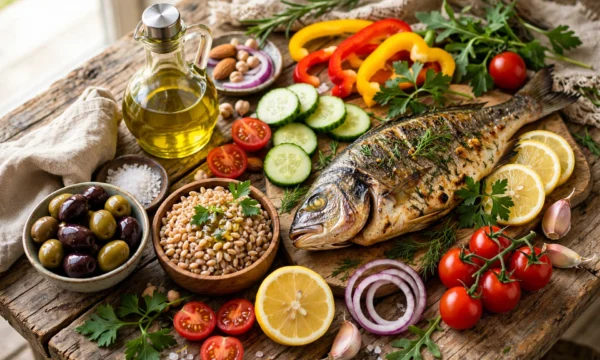
What is the Mediterranean diet, and why do researchers consistently rank it among the healthiest eating patterns in the world? Characterized by abundant extra-virgin olive oil, vegetables, legumes, whole grains, and moderate wild fish, the Mediterranean diet remains one of the most thoroughly validated dietary patterns in clinical literature, as highlighted by the landmark PREDIMED trial published in The New England Journal of Medicine.
What Is the Mediterranean Diet Made Of?
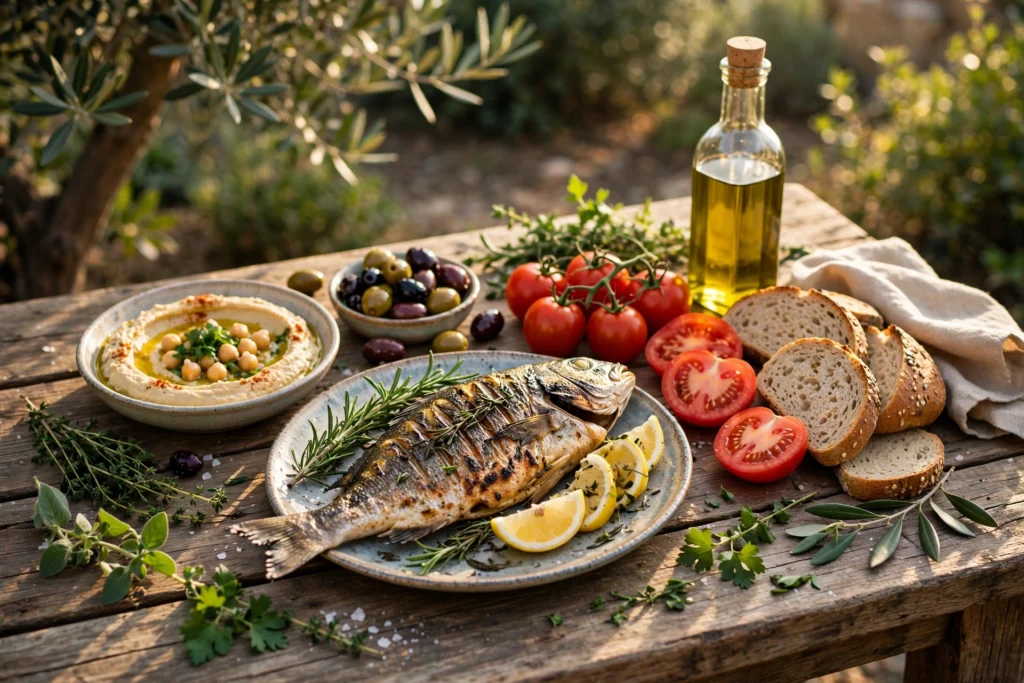
If you’re wondering what the Mediterranean diet looks like on a plate, think plant-forward: vegetables, fruits, legumes, nuts, and whole grains appear at nearly every meal, while extra-virgin olive oil replaces butter and refined oils as the primary fat source. It is not a strict meal plan but a flexible eating pattern inspired by the traditional cuisines of Greece, Italy, and Spain.
Protein comes mainly from fish and seafood eaten at least twice a week, with poultry, eggs, and dairy in modest amounts. Red meat and sweets are reserved for occasional enjoyment rather than daily staples, and herbs and spices flavor food instead of excess salt. For a deeper look at how these food groups fit into balanced daily nutrition, see The Complete Guide to Healthy Eating: Macronutrients Explained.
The Science Behind the Health Claims
The strongest evidence comes from the PREDIMED trial, which followed more than 7,000 adults at high cardiovascular risk. Participants assigned to a Mediterranean diet supplemented with extra-virgin olive oil or nuts experienced significantly fewer major cardiovascular events than those on a low-fat control diet — a finding influential enough to reshape dietary guidelines worldwide.
Researchers point to several mechanisms. The polyphenol oleocanthal in extra-virgin olive oil acts as a mild natural anti-inflammatory. Omega-3 fatty acids from fatty fish lower triglycerides and improve the elasticity of arterial walls. And the diet’s high fiber content — from lentils, chickpeas, and vegetables — steadies blood sugar and feeds beneficial gut bacteria, supporting healthy colonic fermentation.
Many of these staple foods also appear in our roundup of 10 Superfoods to Boost Your Immune System Naturally, which explains how nutrient-dense ingredients support everyday immunity.
How to Start Eating the Mediterranean Way
You don’t need to overhaul your kitchen overnight. Begin by swapping butter for extra-virgin olive oil, adding one extra vegetable serving to dinner, and choosing fish twice a week. Stock your pantry with lentils, chickpeas, brown rice, nuts, and canned tomatoes so Mediterranean-style meals are always within reach.
Make legumes the star of two dinners a week — a lentil soup or chickpea salad delivers fiber and plant protein at minimal cost. Snack on a handful of almonds or walnuts instead of processed crackers. Over weeks, these small swaps compound into the pattern that clinical trials associate with better heart health and longevity.
What is the Mediterranean diet in everyday practice? A sample day might include Greek yogurt with walnuts and berries for breakfast, lentil and vegetable soup with whole-grain bread for lunch, and grilled salmon with roasted vegetables drizzled in olive oil for dinner. Fruit or a small handful of nuts makes an ideal snack. Notice that nothing is weighed or counted — the pattern works because it emphasizes whole foods and healthy fats rather than restriction.
Key Takeaways
- Extra-virgin olive oil supplies polyphenol oleocanthal, offering potent natural anti-inflammatory activity.
- Regular omega-3 intake from seafood reduces serum triglycerides and improves arterial compliance.
- High dietary fiber intake from legumes supports glycemic control and healthy colonic fermentation.
- The Mediterranean diet is a flexible eating pattern, not a restrictive diet — consistency matters more than perfection.
References
- Estruch R et al. Primary Prevention of Cardiovascular Disease with a Mediterranean Diet. N Engl J Med, 2013.
- WHO. Healthy Living & Diet. who.int