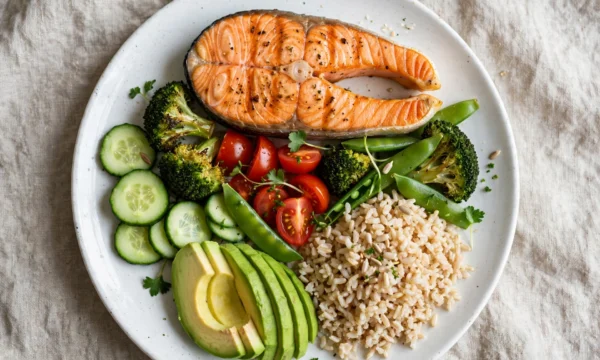
Macronutrients provide the caloric energy and biochemical building blocks required for human survival. The Centers for Disease Control and Prevention (CDC) emphasizes balanced macronutrient distribution to prevent chronic metabolic disease. This guide translates those principles into practical strategies for healthy eating out, so restaurant meals support your macros instead of sabotaging them.

Key Takeaways
- Protein provides 4 kcal/g, carbohydrates 4 kcal/g, and dietary fats 9 kcal/g.
- Dietary fiber supports digestive microbiome balance, insulin sensitivity, and healthy blood lipid levels.
- Target healthy unsaturated fatty acids while keeping saturated fats under 10% of total daily energy intake.
Protein: Structural Repair & Enzyme Synthesis
Composed of 20 amino acids, dietary protein maintains lean skeletal muscle mass, synthesizes neurotransmitters, and supports immune enzymes. The Recommended Dietary Allowance (RDA) begins at 0.8g per kilogram of body weight, with active individuals requiring 1.4 to 2.0g/kg according to the International Society of Sports Nutrition (ISSN). Understanding protein helps with healthy eating out choices.
For a concrete example of how protein targets translate into real meals, this PCOS-friendly meal plan balances lean protein, fiber, and healthy fats across a full day of eating.
Carbohydrates: Glycogen & Cellular Energy
Complex carbohydrates like oats, quinoa, and legumes provide sustained glucose release alongside dietary fiber, preventing erratic blood sugar spikes and reactive hypoglycemia. These carbs work well for healthy eating out.
Fats: Hormone Production & Cellular Membranes
Monounsaturated and polyunsaturated fats (omega-3 and omega-6 fatty acids) maintain cell membrane elasticity, reduce systemic inflammation, and enable the absorption of fat-soluble vitamins (A, D, E, and K).
Healthy Eating Out: Smart Protein Picks at Restaurants
Restaurant portions are generous, which makes protein the easiest macro to protect when you dine out. Scan the menu for grilled, roasted, baked, or steamed lean proteins such as chicken breast, fish, shrimp, tofu, or legumes, and ask for sauces and dressings on the side, since creamy sauces can quietly double the fat content of an otherwise lean dish. Starting with a broth-based soup or a side salad topped with grilled chicken front-loads protein and fiber, which naturally reduces how much of the main course you need to feel full. A palm-and-a-half-sized serving of protein, roughly 30 to 40 grams, at lunch and dinner keeps you near the daily targets described above without needing a food scale at the table. These healthy eating out strategies help you stay on track without missing out.
Carbohydrates and fats are where restaurant meals most often drift off plan. Swap refined sides like white rice, fries, or dinner rolls for fiber-rich options such as quinoa, brown rice, beans, or extra vegetables, which steady blood sugar and extend fullness. For fats, favor dishes built on olive oil, avocado, nuts, or fatty fish over butter-heavy or deep-fried preparations. If dessert is non-negotiable, split one with the table: the first three bites deliver most of the pleasure with a fraction of the sugar load. Remember that superfoods like leafy greens, berries, and fermented vegetables appear on many menus and add micronutrients without derailing your macros.
7 Practical Tips to Protect Your Macros When Dining Out
- Preview the menu online and decide your order before hunger and social pressure take over.
- Drink a large glass of water before the meal to fine-tune your true hunger signals.
- Order vegetables as your first course so fiber blunts the blood sugar impact of later dishes.
- Request half portions or box half the entree immediately to defeat oversized servings.
- Ask how dishes are cooked and choose grilled or steamed preparations over fried or breaded ones.
- Keep bread baskets and free chips at arm’s length or ask the server to skip them entirely.
- Finish with fresh fruit or a small dessert shared at the table instead of a full sugary course.
Social occasions deserve enjoyment, not anxiety. One effective strategy is the one-plate rule: fill a single plate with your chosen foods and skip the buffet line afterward. Research on portion awareness shows that people eat significantly less when refills require a deliberate trip rather than sitting within reach. Pair that with slower eating, putting your fork down between bites, and you will leave the restaurant satisfied instead of stuffed.
Healthy eating out is a skill, not a sacrifice. When your plate follows the protein-first, fiber-rich pattern above, dining out supports the same goals as home cooking. For meal-planning inspiration between restaurant visits, explore the Mediterranean diet, one of the most researched balanced eating patterns in nutrition science.
Reading the Nutrition Label: The 30-Second Habit Behind Every Macro Goal
You can understand protein, carbs, and fat perfectly and still get tripped up at the grocery store, because packaged food doesn’t come with a dietitian attached. It comes with a Nutrition Facts label — and learning to read it in about thirty seconds is the single most useful skill for turning macro knowledge into real meals. Here’s the condensed version of how to do it.
Start with serving size, not calories. Every number on the label describes one serving, and the serving size reflects what people typically eat at one sitting — not a recommendation. If a snack bag lists two servings and you eat the whole bag, double every number. This one step corrects more misread labels than anything else.
Use the 5/20 rule for % Daily Value. The %DV column shows how much of a nutrient one serving contributes to a 2,000-calorie day. As a rule of thumb, 5% DV or less is low and 20% DV or more is high. Scan for nutrients you want more of — fiber, vitamin D, calcium, iron, potassium — and nutrients you want less of — saturated fat, sodium, added sugars. The NIH’s National Institute on Aging has a clear walkthrough of this system in its guide to reading food and beverage labels.
Check “Added Sugars” separately. The updated label splits added sugars out from total sugars, and this line deserves your attention: the American Heart Association advises keeping added sugars to no more than 6% of daily calories — about 6 teaspoons for most women and 9 for most men. A single 12-ounce regular soda carries roughly 10 teaspoons. See the AHA’s added-sugars guidance for the full picture.
Read the ingredient list like a story. Ingredients appear in descending order by weight, so whatever sits in the first three spots is mostly what you’re eating. Watch for sugar aliases — dextrose, maltose, cane juice, syrup, anything ending in “-ose” — and be skeptical of front-of-package claims like “natural” or “low-fat” until the panel backs them up.
How Much of Each Macro? Turning Percentages Into Real Plates
General guidance from the World Health Organization sketches the broad ranges: carbohydrates around 45–75% of daily energy from whole grains, vegetables, fruits, and pulses; total fat at 30% or less with saturated fat under 10%; and protein around 10–15% of energy for most adults, higher for the very active. Those percentages are useful, but abstract — here’s what they look like on an actual plate.
Take a 2,000-calorie day. Roughly 900–1,300 of those calories come from carbohydrates, which is 225–325 grams — think oats at breakfast, lentils or brown rice at lunch, vegetables and fruit across the day. Fat lands around 400–600 calories, or 45–65 grams: olive oil in cooking, a handful of nuts, fatty fish twice a week. Protein at the baseline range is 50–75 grams, rising toward 100+ grams for active people — a palm-and-a-half of chicken or fish, Greek yogurt, eggs, or a hearty lentil bowl at each meal.
Notice what the ranges imply: there’s no single “correct” macro split. A Mediterranean-style eater and a higher-protein eater can both sit comfortably inside these bands. What matters more than the exact ratio is that the foods filling each slot are minimally processed — the pattern the WHO describes as adequate, balanced, moderate, and diverse.
The Other Half of the Equation: Fiber and Micronutrients
Macros get the attention, but two quieter categories do enormous work. First, fiber: WHO advises at least 25 grams of naturally occurring dietary fiber per day for adults, and most people fall well short. Fiber steadies blood sugar, feeds beneficial gut bacteria, and keeps you full — which is exactly why the lentil soups and vegetable-heavy plates in this guide’s eating-out section work so well.
Second, the shortfall micronutrients. The NIA flags four that older adults especially under-consume: vitamin D, calcium, potassium, and dietary fiber. Potassium deserves a callout because it directly supports healthy blood pressure — WHO suggests at least 3,510 mg daily from fruits and vegetables, and notes that potassium helps offset the blood-pressure effects of excess sodium. Practical sources: leafy greens, beans, bananas, sweet potatoes, and yogurt.
The label habit from the first section pays off here too. Comparing %DV for fiber and potassium across two similar products takes ten seconds and often reveals a clear winner that no front-of-package claim would have told you about.
Does Meal Timing Matter? What the Research Actually Says
Once the daily totals are in decent shape, people often ask whether when you eat matters. The honest answer: less than the internet suggests, but not zero.
Total daily intake of each macro matters far more than precise timing for most people. That said, spreading protein across the day — rather than eating almost none at breakfast and a mountain at dinner — is supported by sports-nutrition research. The International Society of Sports Nutrition suggests distributing protein doses every 3–4 hours across the day, with each meal containing a meaningful serving (roughly 20–40 grams for active adults), because muscle protein synthesis responds to each feeding.
For carbohydrates, timing around activity is the one place it genuinely helps: a carb-containing meal a few hours before sustained exercise tops up glycogen, and eating afterward replenishes it. For everyone else, the most evidence-backed “timing” advice is almost boring — eat regular meals, don’t skip breakfast if it leaves you ravenous by noon, and stop eating a couple of hours before bed if late meals disturb your sleep. Consistency beats optimization.
Frequently Asked Questions
What’s the difference between total sugars and added sugars on a label?
Total sugars include everything — the lactose in milk, the fructose in fruit, plus anything added during processing. Added sugars are only the sugars put in during manufacturing or at the table. Since whole fruit brings fiber and nutrients along with its natural sugars, the added-sugars line is the one that tells you the most about a product’s quality.
Do I have to count macros every day to eat healthy?
No. Counting can be a useful short-term learning tool, but most people do fine with habits: protein and fiber at every meal, mostly whole foods, and the 30-second label check from this guide when buying packaged items. If your energy, weight, and training are steady, the habits are working.
Can I trust ‘natural’ or ‘low-fat’ claims on the front of a package?
Not on their own. Terms like ‘natural’ aren’t tightly regulated, and ‘low-fat’ products often compensate with added sugar. The Nutrition Facts panel is the regulated part of the package — check serving size, added sugars, sodium, and the ingredient list before believing the front.
References
- CDC. Nutrition and Health. cdc.gov
- USDA Dietary Guidelines for Americans. dietaryguidelines.gov
- ISSN Position Stand: Protein and Exercise. J Int Soc Sports Nutr.