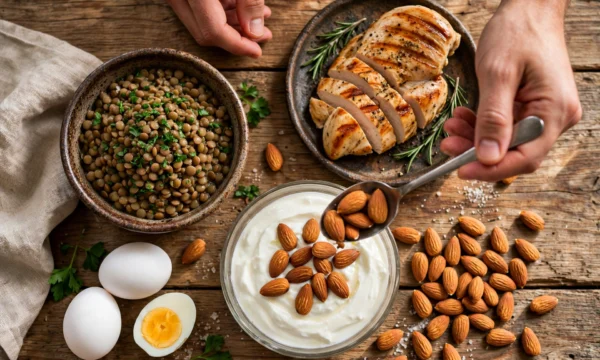
If you searched for a PCOS diet plan, you have probably found the same thing on every site: a short list of “good” and “bad” foods, copied from article to article for years. No actual plan. No portions. No answers to the questions women really ask — can I eat dairy? Do I have to quit carbs? Will diet alone fix my cycles?
This guide is different. It is a complete, practical PCOS diet plan: a full 7-day meal plan with 20–30g protein targets per meal, a printable-style grocery list, the insulin-resistance science in plain English, and honest myth-busting. One important update first: in May 2026, PCOS was officially renamed PMOS — polyendocrine metabolic ovarian syndrome — by a global consensus published in The Lancet, reflecting that this is a metabolic and hormonal condition, not just an ovarian one. You will still see “PCOS” everywhere (including in this article), because the transition is ongoing — the dietary science below applies whichever name your doctor uses.
Why Diet Matters So Much for PCOS
PCOS affects roughly 1 in 10 women of reproductive age, and at its core sits insulin resistance: the body’s cells respond poorly to insulin, so the pancreas pumps out more of it. High insulin drives the ovaries to produce more androgens (male-type hormones), which fuels the classic symptoms — irregular or missing periods, acne, hair thinning, unwanted hair growth, and weight gain that feels impossible to shift.
This is why diet is first-line therapy, not a footnote. Research consistently shows that losing just 5–10% of body weight can restore ovulation and regular cycles in many women with PCOS. And because insulin resistance is also the road toward type 2 diabetes, eating for PCOS is eating for long-term metabolic health — our type 2 diabetes prevention guide covers the same underlying mechanisms in more depth. That is why a structured PCOS diet plan beats generic healthy-eating advice for this condition.
The 4 Principles of an Effective PCOS Diet Plan
1. Favor low glycemic index foods. Low-GI carbs (oats, lentils, quinoa, sweet potato, most fruits) raise blood sugar slowly, keeping insulin steadier than white bread, sugary cereals, and pastries. You do not need zero carbs — you need smarter carbs.
2. Eat 20–30g of protein per meal. Protein blunts the blood-sugar spike of a meal, keeps you full for hours, and protects muscle if you are losing weight. That is roughly a palm-and-a-half of chicken, fish, tofu, or Greek yogurt at each meal. Our macronutrients guide shows exactly how to build protein targets into real days of eating.
3. Build an anti-inflammatory plate. Women with PCOS tend to run higher levels of chronic low-grade inflammation. A Mediterranean-style pattern — olive oil, fatty fish, nuts, vegetables, berries, whole grains — is the best-studied anti-inflammatory diet for PCOS and also supports heart health.
4. Keep meal timing consistent. Skipping meals and then eating a huge dinner spikes insulin hard. Three balanced meals plus one or two planned snacks keeps blood sugar — and hunger — on an even keel.
Best Foods for PCOS
- Protein: eggs, chicken, turkey, salmon, sardines, Greek yogurt, cottage cheese, tofu, tempeh, lentils, chickpeas
- Low-GI carbs: oats, quinoa, brown rice, sweet potato, lentils, beans, whole-grain bread, berries, apples, pears
- Healthy fats: olive oil, avocado, almonds, walnuts, chia seeds, flaxseed, fatty fish
- Vegetables: leafy greens, broccoli, cauliflower, peppers, zucchini, tomatoes — at least half your plate at lunch and dinner
- Flavor without sugar: cinnamon (may modestly support insulin sensitivity), turmeric, herbs, lemon, vinegar
Foods to Avoid with PCOS (or Strictly Limit)
- Sugary drinks and sweets: soda, sweetened coffee drinks, pastries, candy — the fastest insulin spikes
- Refined carbs: white bread, white rice in large portions, sugary breakfast cereals, fries
- Processed meats and deep-fried foods: pro-inflammatory and calorie-dense with little nutrition
- Alcohol: disrupts blood sugar, sleep, and hormones; keep it minimal
Notice what is not on the banned list: dairy, fruit, soy, and carbs in general. We will bust those myths below.
7-Day PCOS Diet Meal Plan
Each day targets roughly 1,600–1,800 kcal with 90–110g protein. Adjust portions up or down to your own calorie needs — the structure matters more than exact numbers.
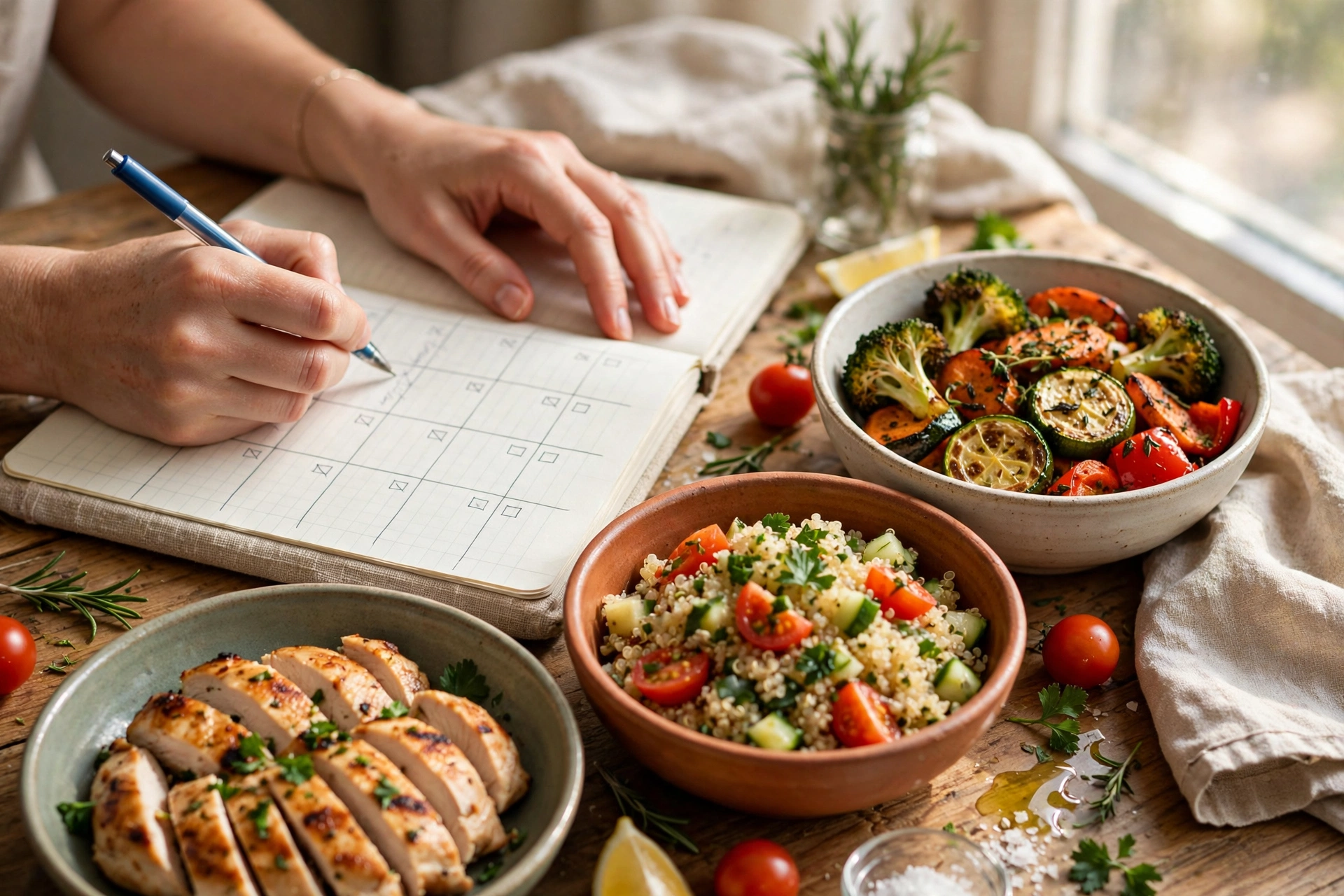
Day 1: Breakfast — Greek yogurt (200g) + berries + walnuts. Lunch — grilled chicken quinoa bowl with roasted vegetables and olive oil. Dinner — baked salmon + broccoli + small sweet potato. Snack — apple + tablespoon of almond butter.
Day 2: Breakfast — 3-egg vegetable omelet + whole-grain toast + avocado. Lunch — red lentil soup + large side salad. Dinner — turkey and vegetable stir-fry + half cup brown rice. Snack — cottage cheese + cinnamon + pear.
Day 3: Breakfast — overnight oats with chia seeds, peanut butter, and banana. Lunch — tuna and white bean salad with olive oil and lemon. Dinner — light chicken curry + cauliflower rice. Snack — hummus + carrot and cucumber sticks.
Day 4: Breakfast — protein smoothie (milk or soy milk + protein powder + spinach + berries + flaxseed). Lunch — chickpea, feta, and roasted vegetable bowl. Dinner — lean beef strips + Brussels sprouts + quinoa. Snack — small handful of pistachios + one square of dark chocolate.
Day 5: Breakfast — cottage cheese oat pancakes + fresh berries. Lunch — grilled shrimp + zucchini noodles with pesto. Dinner — baked cod + asparagus + wild rice. Snack — Greek yogurt + pumpkin seeds.
Day 6: Breakfast — whole-grain toast + avocado + 2 boiled eggs. Lunch — chicken, avocado, and black bean whole-wheat wrap. Dinner — tofu and vegetable stir-fry + brown rice. Snack — small protein smoothie or a pear + handful of almonds.
Day 7: Breakfast — shakshuka (eggs poached in spiced tomato sauce) + whole-grain pita. Lunch — quinoa bowl with roasted vegetables and grilled halloumi. Dinner — herb-roasted chicken thighs + green beans + small roasted potato. Snack — mixed nuts + an orange.
The best breakfast for PCOS? One with 20–30g protein and fiber — the yogurt bowl, the omelet, or the protein smoothie above. A sugary cereal or a pastry alone is the worst start because it spikes insulin within the hour.
PCOS Grocery List
Proteins: eggs, chicken breast, turkey, salmon, canned tuna and sardines, Greek yogurt, cottage cheese, tofu, lentils, chickpeas, black beans, protein powder (optional). Carbs: rolled oats, quinoa, brown rice, sweet potatoes, whole-grain bread and wraps, berries, apples, pears, oranges. Fats: olive oil, avocados, almonds, walnuts, chia and flaxseed, natural peanut butter. Vegetables: spinach, kale, broccoli, cauliflower, peppers, zucchini, tomatoes, carrots, cucumber, onions, garlic. Flavor: cinnamon, turmeric, herbs, lemon, vinegar, mustard. Shop from this list every week and your PCOS diet plan practically runs itself.
PCOS Diet Myths, Busted
“You must quit dairy.” There is no strong evidence that dairy worsens PCOS for most women. Unless you are lactose intolerant, yogurt and milk are fine — Greek yogurt is one of the best high-protein PCOS foods there is.
“You must quit all carbs / go keto.” Very-low-carb diets can help short-term, but they are hard to sustain and not required. Low-GI carbs in sensible portions work for most women — this PCOS diet plan proves it.
“Soy messes with hormones.” Normal soy foods (tofu, soy milk) have not been shown to harm women with PCOS; Asian populations eating soy regularly do not show worse outcomes.
“Seed cycling balances hormones.” Eating flax and pumpkin seeds in the first half of your cycle and sesame and sunflower in the second half is popular online — but there are no clinical trials showing it regulates PCOS hormones. Seeds are nutritious; the “cycling” part is unproven.
“Intermittent fasting is the answer for PCOS.” Some women do well with time-restricted eating, but evidence in PCOS specifically is limited, and fasting can backfire if you have a history of disordered eating. If you try it, keep it gentle (e.g., 12-hour overnight fast) and watch your symptoms.
Supplements Often Discussed for PCOS
Supplements are helpers, not fixes — and you should discuss them with your doctor, especially if you take metformin (which depletes vitamin B12 over time and pairs well with diet changes, not instead of them):
- Myo-inositol: the best-studied PCOS supplement — trials show improved insulin sensitivity and ovulation rates at around 2–4g daily.
- Vitamin D: deficiency is common in PCOS and linked to worse insulin resistance; test before mega-dosing.
- Magnesium and zinc: frequently low; food first (nuts, seeds, whole grains), supplement only if deficient.
No supplement replaces a consistent PCOS diet plan — think of these as small optimizers on top of the meals above.
FAQs
Can a PCOS diet plan restore ovulation?
Often, yes — a sustained 5–10% weight loss restores regular ovulation in many women with PCOS, and even without weight loss, steadier insulin from low-GI eating improves hormonal balance. It is not guaranteed, and fertility treatment is sometimes still needed.
What is the best diet for PCOS overall?
The Mediterranean diet has the strongest evidence for PCOS: it improves insulin sensitivity, supports weight loss, and protects long-term heart health. Think of this PCOS diet plan as Mediterranean principles with PCOS-specific protein and blood-sugar targets.
Can I drink coffee with PCOS?
Yes, in moderation — 1–2 cups daily is fine for most women. Just skip the sugary syrups, and avoid drinking it on an empty stomach if it worsens your anxiety or reflux.
Does PCOS increase diabetes risk?
Yes — women with PCOS develop type 2 diabetes at significantly higher rates, which is why this way of eating doubles as prevention. See our type 2 diabetes prevention guide for the full picture.
The Bottom Line
A real PCOS diet plan is not a list of forbidden foods — it is a structure: low-GI carbs, 20–30g of protein per meal, anti-inflammatory fats, consistent timing, and a 7-day rotation like the one above. Pair it with movement, sleep, and your doctor’s treatment plan (whether or not that includes metformin), and give it 8–12 consistent weeks. And remember the new name — PMOS — because it captures the real story: this is a metabolic condition, and food is one of your most powerful tools against it.
This article is for educational purposes only and is not medical advice. PCOS/PMOS diagnosis and treatment (including metformin and supplements) should be managed with a qualified healthcare professional.