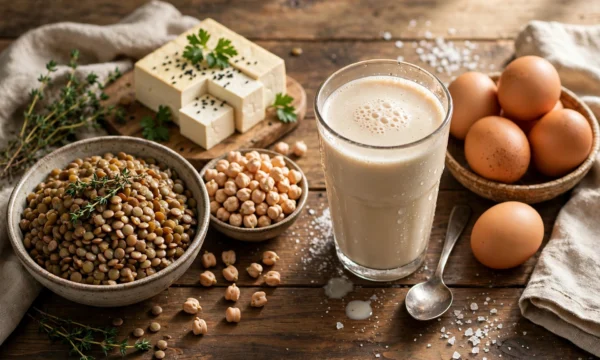
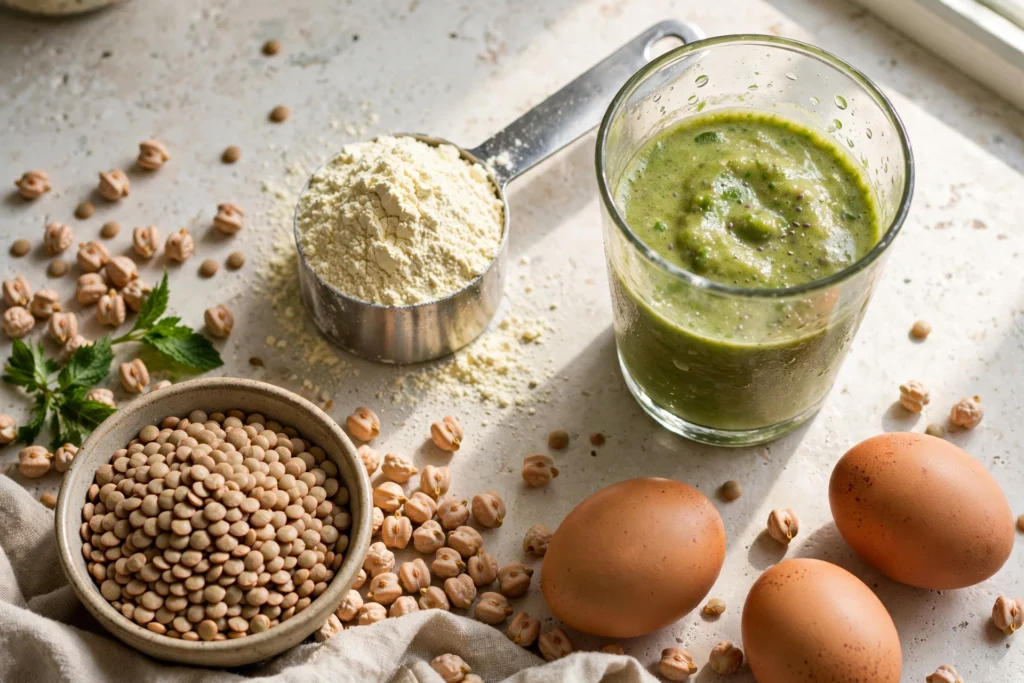
The animal protein vs plant protein debate matters for anyone seeking muscle growth, athletic recovery, or healthy aging. Dietary protein quality is determined by its essential amino acid (EAA) profile and digestibility. The International Society of Sports Nutrition (ISSN) provides clear clinical benchmarks for optimizing muscle protein synthesis (MPS). Whether you prefer whey, eggs, lentils, or pea protein blends, understanding digestibility, leucine content, and amino acid completeness helps you choose wisely for your goals.
Animal Protein vs Plant Protein: Digestibility and DIAAS Scores
When comparing animal protein vs plant protein, digestibility is the key differentiator. The Digestible Indispensable Amino Acid Score (DIAAS) is the gold-standard measure of protein quality, accounting for ileal digestibility. Animal proteins dominate the rankings: whey isolate scores 109–125, eggs 113, and milk 114. By contrast, most plant proteins score lower — pea protein 62–82, rice 59, and wheat 40–48 — due to fiber, antinutrients, and limiting amino acids. This doesn’t make plant proteins inadequate; it means you need slightly more total protein or strategic combinations to achieve equivalent essential amino acid delivery. Understanding these scores helps you set realistic protein targets based on your primary sources.
Leucine and Muscle Protein Synthesis
Leucine is the master switch for muscle protein synthesis, and animal proteins deliver it more efficiently. Whey protein contains approximately 11–12% leucine by weight, triggering maximal MPS with just 20–25 grams. Most plant proteins contain 6–8% leucine, requiring 30–40 grams to reach the 2.5–3 gram leucine threshold for optimal MPS stimulation. Research shows that when leucine and total protein are matched, plant and animal proteins produce comparable muscle growth — the difference is dose, not destiny. For those prioritizing high-protein diet benefits from animal sources, lean meats, dairy, and eggs remain the most efficient delivery vehicles for leucine and complete EAAs.
Practical Strategies for Plant-Based Athletes
Plant-based athletes can absolutely maximize muscle protein synthesis with smart strategies. Combine complementary proteins — rice and beans, hummus and whole wheat, or pea and rice blends — to create complete amino acid profiles. Eat slightly more total protein (1.6–2.2 g/kg bodyweight) to compensate for lower digestibility. Time protein intake around workouts, and consider leucine-fortified plant protein powders. Soy protein is the standout plant option with a DIAAS of 90–91, nearly matching animal sources. These approaches, combined with proper macronutrient planning, ensure plant-based diets fully support strength, hypertrophy, and recovery goals.
The animal protein vs plant protein debate ultimately comes down to your goals, preferences, and dietary pattern. Animal proteins offer superior digestibility and leucine density, making them efficient for muscle building. Plant proteins, when combined strategically and eaten in adequate amounts, fully support athletic performance and recovery. Whichever you choose, prioritize total daily protein intake, distribute it across meals, and pair it with resistance training for optimal results.
Key Takeaways
- The “Leucine Trigger” requires approximately 2.7g to 3.5g of leucine per meal to initiate mTOR phosphorylation.
- Whey protein possesses a superior Digestible Indispensable Amino Acid Score (DIAAS > 1.15) with rapid gastric emptying.
- Blending pea and rice protein creates an identical amino acid profile to animal-derived whey protein isolate.
- Calculate your exact daily requirement with our Daily Protein Intake Calculator and complete energy balance via the TDEE Calculator.
Protein Quality Comparison Table
| Protein Source | DIAAS Score | Leucine Content (per 25g) | Digestion Rate |
|---|---|---|---|
| Whey Protein Isolate | 1.15 – 1.30 | 2.8 – 3.2 g | Fast (10g/hour) |
| Pea + Brown Rice Blend | 1.00 – 1.05 | 2.4 – 2.7 g | Moderate (6g/hour) |
| Whole Egg Protein | 1.18 | 2.2 – 2.5 g | Moderate (3g/hour) |
| Isolated Soy Protein | 0.98 | 2.0 – 2.3 g | Moderate (4g/hour) |
References
- Jäger R et al. International Society of Sports Nutrition Position Stand: protein and exercise. J Int Soc Sports Nutr, 2017.
- FAO/WHO. Dietary protein quality evaluation in human nutrition. fao.org