Medical Disclaimer: This article is published for educational and informational purposes only and does not constitute individualized medical diagnosis, treatment, or clinical prescription. Always consult a board-certified physician or qualified healthcare provider regarding symptoms, medication changes, or specific health conditions.
Key Takeaways
- Family meal plans remove daily dinner guesswork by mapping a week of balanced meals in one short session.
- A simple six-step method — set goals, check the pantry, choose meals, build the week, write the list, prep — works for busy households.
- Planning ahead typically cuts grocery spending and food waste while making healthier choices the easy default.
- Flexible frameworks beat rigid menus: theme nights and mix-and-match formulas keep picky eaters happy without extra cooking.
- Safe storage matters — refrigerate leftovers within two hours and use them within three to four days.
If the 5 p.m. scramble feels familiar — staring into the fridge, hoping dinner invents itself — you are not alone. Family meal plans are the simple habit that ends that nightly stress. Instead of deciding what to cook every single day, you make those decisions once a week, in about half an hour, and the rest of the week practically runs itself.
In this guide, you will get a step-by-step method you can start this weekend, plus a sample 7-day dinner framework, budget tips, picky-eater strategies, and food-safety basics.
What Are Family Meal Plans, Exactly?
A family meal plan is simply a written outline of what your household will eat over the coming days — usually a week. It is not a strict diet, a stack of complicated recipes, or a spreadsheet worthy of an accountant. Think of it more like a gentle roadmap: Monday is taco night, Tuesday is sheet-pan chicken, Wednesday is pasta, and so on.
The plan usually covers dinners — the meal most families struggle with — though many households sketch out breakfasts and lunches too. Some people plan every bite; others assign a theme to each night and fill in the blanks at the store. Both approaches count.
Why Family Meal Plans Are Worth the Effort
Thirty minutes of planning can genuinely change how your whole week feels. Here is what families who use family meal plans tend to notice:
- Less decision fatigue. You make the “what’s for dinner” decision once instead of seven times. Weeknights feel calmer almost immediately.
- Lower grocery bills. A list built from a plan means fewer impulse buys and fewer forgotten ingredients that force a second trip. The Dietary Guidelines for Americans note that planning meals around nutrient-dense foods is one of the most effective ways to eat well on a budget.
- Less food waste. When every ingredient has a job, less produce wilts forgotten in the crisper drawer.
- Healthier default choices. It is far easier to plan a balanced week on a calm Sunday than to assemble one from takeout menus on a hectic Thursday.
- More family time. Less scrambling in the kitchen means more time actually sitting together at the table.
How to Build Your Family Meal Plan: A 6-Step Method
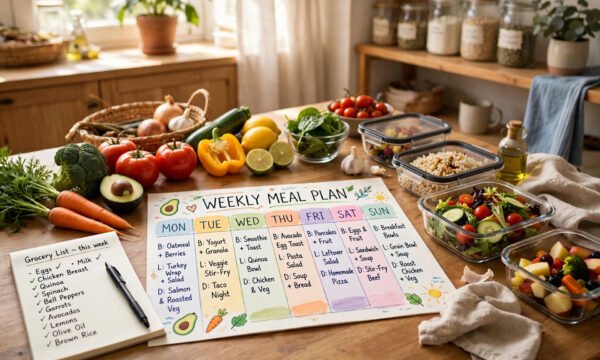
You do not need special apps or color-coded binders. A notebook, your phone’s notes app, or a whiteboard on the fridge will do. Work through these six steps in order, and your family meal plan will be complete in about 30 minutes.
Step 1: Set Your Goals for the Week
Before choosing a single meal, glance at the week ahead: which nights are busy, who is eating at home, and whether late meetings or dinners out are already on the calendar. Your family meal plan should fit your real life. A 20-minute night calls for something different than a relaxed Sunday — and noting goals like three meatless dinners keeps the week on track.
Step 2: Take Stock of Your Pantry, Fridge, and Freezer
A quick five-minute inventory saves real money. Check what proteins, grains, canned goods, and frozen vegetables you already have, and note anything that needs using up soon. Planning around ingredients you own — that half-bag of lentils, the chicken thighs in the freezer — means your grocery list stays short and your budget stays intact.
Step 3: Choose Your Meals
Now pick your dinners for the week — five to seven, depending on whether you want a night off for leftovers or takeout. Aim for variety across proteins (chicken, fish, beans, eggs, lean beef) and cooking methods (one sheet-pan night, one slow-cooker night, one 20-minute stovetop meal). For balanced plates without overthinking, the USDA’s MyPlate visual is a handy guide: roughly half the plate vegetables and fruit, with room for whole grains and protein. If you want a refresher on building balanced meals, our complete guide to healthy eating breaks down how protein, carbs, and fats work together.
Step 4: Build the Week
This is where your family meal plan takes shape: assign each meal to a day, matching effort to your schedule. Put the slowest-cooking meal on your calmest evening and the fastest meals on your busiest nights. Plan a “leftovers” or “clean out the fridge” night — it prevents waste and gives the cook a break. Theme nights (Meatless Monday, Taco Tuesday, Pasta Friday) are a beloved shortcut: the theme narrows your choices so planning takes minutes.
Step 5: Write the Grocery List
Go meal by meal and list only what you do not already have, grouping items by store section (produce, dairy, meat, pantry). A grouped list makes the shopping trip faster and far less tempting. While you shop, a little label savvy goes a long way — our guide on how to read nutrition labels shows you how to compare products and spot added sugars in seconds.
Step 6: Plan a Short Prep Day
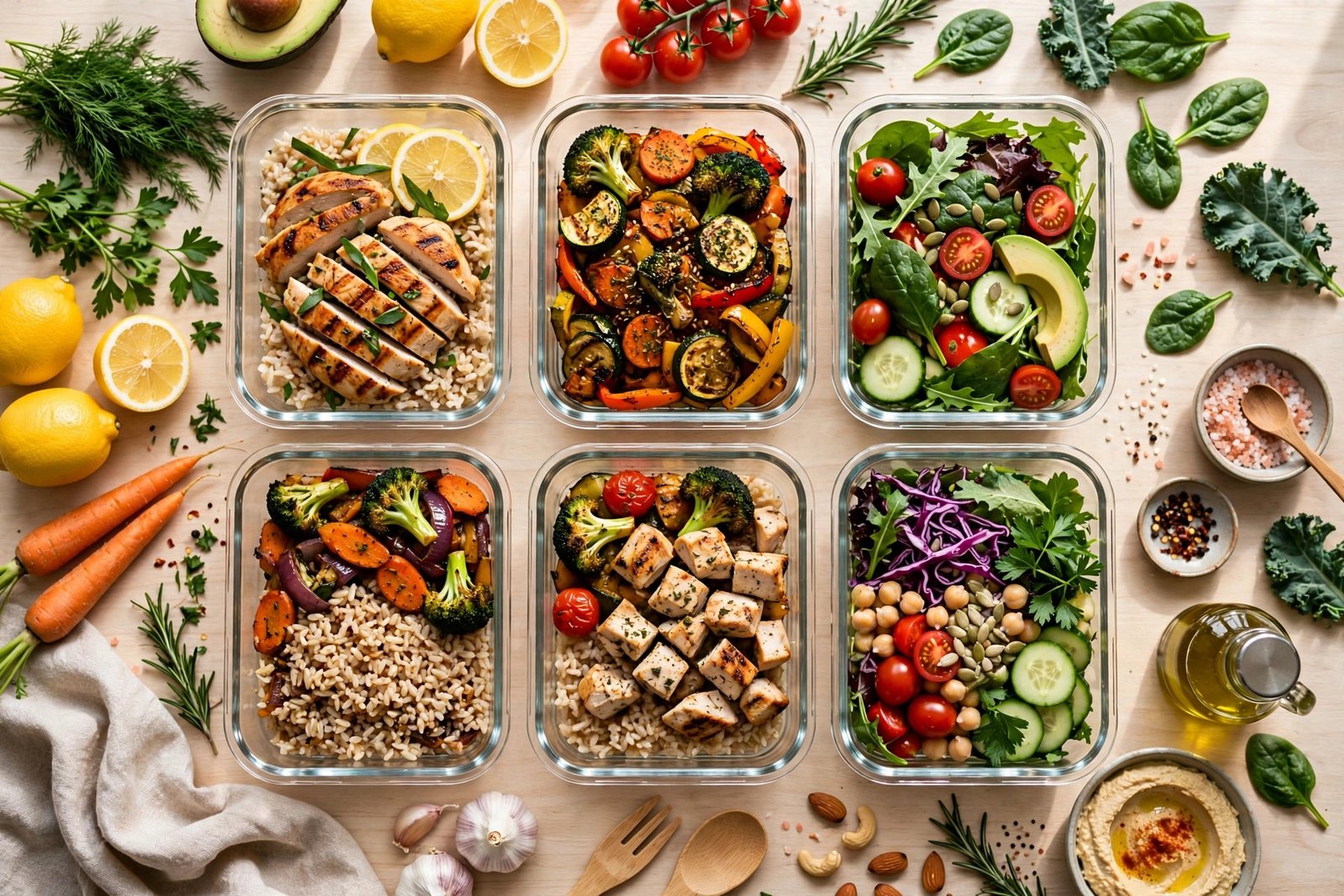
You do not need a full Sunday meal-prep marathon. Even 30 to 60 minutes of light prep — washing and chopping vegetables, cooking a pot of grains, marinating proteins, portioning snacks — pays off all week. Store prepped ingredients in clear containers at eye level in the fridge so they actually get used. For cozy winter weeks, a big pot of soup is an ideal prep project — see our 12 best soups for winter for freezer-friendly recipes the whole family will enjoy.
A Sample 7-Day Family Dinner Framework
Use this flexible framework as a starting template, swapping in your family’s favorites. This sample week shows how family meal plans come together in real life:
- Monday: Sheet-pan chicken thighs with roasted broccoli and sweet potatoes
- Tuesday: Turkey or bean tacos with all the fixings
- Wednesday: One-pot lentil soup with crusty whole-grain bread
- Thursday: Stir-fried vegetables and tofu or shrimp over brown rice
- Friday: Homemade pizza night on whole-wheat dough
- Saturday: Slow-cooker pulled chicken sandwiches with coleslaw
- Sunday: Leftovers / clean-out-the-fridge bowls
Budget-Saving Tips for Family Meal Plans
- Plan around sales. Check the weekly flyer first, then build two or three meals around what is discounted.
- Embrace plant proteins. Beans, lentils, and eggs cost a fraction of meat and stretch beautifully in soups, tacos, and pasta.
- Buy frozen produce. Frozen vegetables and fruit are picked at peak ripeness, just as nutritious as fresh, and never spoil in the drawer.
- Repeat ingredients across meals. A big batch of roasted vegetables can top Monday’s grain bowls and fill Wednesday’s quesadillas.
- Keep a well-stocked pantry. Rice, pasta, oats, canned tomatoes, and spices turn odds and ends into real dinners.
What About Picky Eaters?
Family meal plans can actually make picky eating easier, not harder. The trick is building in choice without cooking separate meals. Try “deconstructed” dinners — taco bars, grain bowls, or pasta with toppings on the side — so everyone assembles a plate they like from the same ingredients. Keep one familiar “safe” food on the table alongside anything new, and let kids serve themselves; autonomy reduces mealtime battles more than any bribing strategy.
It also helps to involve children in the planning itself. When a child picks Tuesday’s vegetable or helps wash produce on prep day, they are far more willing to taste the result. And remember the long game: most children need many calm exposures to a new food before accepting it. Keep portions small, pressure low, and the same foods will gradually become familiar. That’s the power of family meal plans.
Food Safety and Storage Basics
A good family meal plan includes keeping food safe. Refrigerate perishable leftovers within two hours of cooking (one hour if the room is very warm), and plan to eat refrigerated leftovers within three to four days. When reheating, bring foods to a steaming 165°F (74°C) throughout. Label containers with the date using masking tape and a marker — your future self will thank you. Thaw frozen foods in the fridge overnight rather than on the counter, and when in doubt, throw it out.
Frequently Asked Questions
How long does it take to make family meal plans each week?
Most households spend 20 to 30 minutes once they have a rhythm. The first week takes a little longer as you gather favorite meals and learn your store’s layout, but it gets faster quickly — especially if you reuse plans every few weeks.
Do family meal plans work for small households or singles?
Absolutely. The same method works for any household size — just scale recipes down or embrace intentional leftovers for lunch. Singles often find that planning three or four dinners plus a “cook once, eat twice” strategy covers the whole week.
What if our schedule changes mid-week?
Treat your family meal plan as a guide, not a contract. Swap nights freely, push a meal to next week, or turn a planned dinner into a freezer meal. The plan’s real job is giving you options, not locking you in.
How do I start family meal plans on a tight budget?
Start with a pantry inventory and plan two or three meals around what you already own. Build the rest from affordable staples — beans, lentils, eggs, rice, oats, frozen vegetables, and in-season produce. Planning itself saves money by cutting impulse buys and waste, so the habit pays for the effort.
Should I plan breakfasts and lunches too?
Only if you want to. Many families start with dinners, then add a breakfast rotation once the habit sticks. Lunches often take care of themselves when dinner leftovers are planned with the next day in mind.
How can I keep family meal plans from getting boring?
Rotate a new recipe or two into the plan each week, lean on theme nights for built-in variety, and keep a “try soon” list of ideas from friends or favorite sites. Seasonal produce naturally refreshes the menu every few months without any extra effort.
The Bottom Line
Family meal plans are not about perfection — they are about replacing nightly panic with a calm, flexible rhythm. Start small: plan this week’s dinners using the six steps above, and you’ll quickly see why family meal plans are worth the small weekly effort.
For a grain-free week that fits this system, try our paleo meal plan.
References
- U.S. Department of Agriculture. MyPlate. myplate.gov
- U.S. Department of Agriculture and U.S. Department of Health and Human Services. Dietary Guidelines for Americans. dietaryguidelines.gov