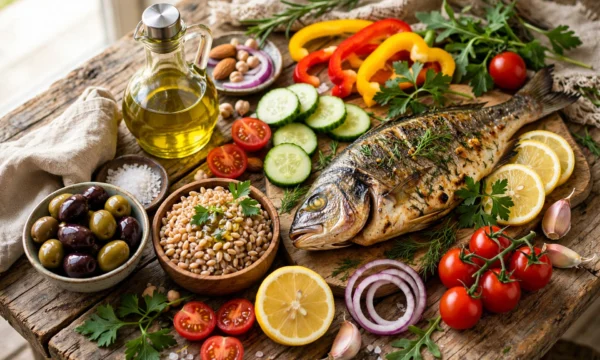
What is the Mediterranean diet, and why do researchers consistently rank it among the healthiest eating patterns in the world? Characterized by abundant extra-virgin olive oil, vegetables, legumes, whole grains, and moderate wild fish, the Mediterranean diet remains one of the most thoroughly validated dietary patterns in clinical literature, as highlighted by the landmark PREDIMED trial published in The New England Journal of Medicine.
What Is the Mediterranean Diet Made Of?
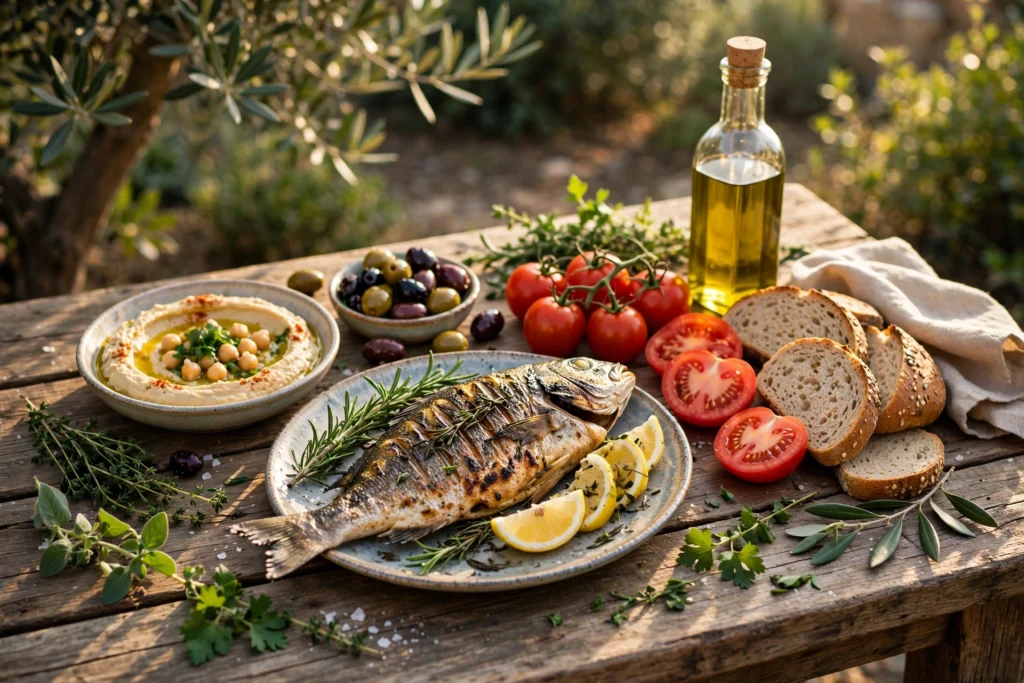
If you’re wondering what the Mediterranean diet looks like on a plate, think plant-forward: vegetables, fruits, legumes, nuts, and whole grains appear at nearly every meal, while extra-virgin olive oil replaces butter and refined oils as the primary fat source. It is not a strict meal plan but a flexible eating pattern inspired by the traditional cuisines of Greece, Italy, and Spain.
Protein comes mainly from fish and seafood eaten at least twice a week, with poultry, eggs, and dairy in modest amounts. Red meat and sweets are reserved for occasional enjoyment rather than daily staples, and herbs and spices flavor food instead of excess salt. For a deeper look at how these food groups fit into balanced daily nutrition, see The Complete Guide to Healthy Eating: Macronutrients Explained.
The Science Behind the Health Claims
The strongest evidence comes from the PREDIMED trial, which followed more than 7,000 adults at high cardiovascular risk. Participants assigned to a Mediterranean diet supplemented with extra-virgin olive oil or nuts experienced significantly fewer major cardiovascular events than those on a low-fat control diet — a finding influential enough to reshape dietary guidelines worldwide.
Researchers point to several mechanisms. The polyphenol oleocanthal in extra-virgin olive oil acts as a mild natural anti-inflammatory. Omega-3 fatty acids from fatty fish lower triglycerides and improve the elasticity of arterial walls. And the diet’s high fiber content — from lentils, chickpeas, and vegetables — steadies blood sugar and feeds beneficial gut bacteria, supporting healthy colonic fermentation.
Many of these staple foods are also rich in antioxidants — learn how astaxanthin and glutathione protect your cells from oxidative stress.
How to Start Eating the Mediterranean Way
You don’t need to overhaul your kitchen overnight. Begin by swapping butter for extra-virgin olive oil, adding one extra vegetable serving to dinner, and choosing fish twice a week. Stock your pantry with lentils, chickpeas, brown rice, nuts, and canned tomatoes so Mediterranean-style meals are always within reach.
Make legumes the star of two dinners a week — a lentil soup or chickpea salad delivers fiber and plant protein at minimal cost. Snack on a handful of almonds or walnuts instead of processed crackers. Over weeks, these small swaps compound into the pattern that clinical trials associate with better heart health and longevity.
What is the Mediterranean diet in everyday practice? A sample day might include Greek yogurt with walnuts and berries for breakfast, lentil and vegetable soup with whole-grain bread for lunch, and grilled salmon with roasted vegetables drizzled in olive oil for dinner. Fruit or a small handful of nuts makes an ideal snack. Notice that nothing is weighed or counted — the pattern works because it emphasizes whole foods and healthy fats rather than restriction.
The Mediterranean Pantry’s Nutrient All-Stars
Olive oil gets the headlines, but the Mediterranean pattern works because the whole plate is stacked with nutrient-dense foods. If you know which ingredients pull the most weight, grocery shopping gets a lot simpler. Here are the standouts worth eating on repeat.
Citrus fruits. Oranges, lemons, and grapefruits deliver vitamin C, which supports normal immune function and helps the body absorb iron from plant foods. The National Institutes of Health notes that adults need roughly 75 to 90 mg of vitamin C per day — one medium orange covers most of that in a single piece of fruit. A squeeze of lemon over lentils or greens is a classic Mediterranean move that also happens to boost iron absorption from the meal. Read more in the NIH vitamin C fact sheet.
Garlic. Crushing fresh garlic releases allicin, a sulfur compound that gives garlic its bite and its studied bioactive properties. Mediterranean cooking leans on garlic heavily — in salad dressings, bean stews, roasted vegetables — which means you get the flavor payoff and the plant compounds without trying.
Leafy greens and crucifers. Spinach, chard, arugula, and broccoli show up constantly in Greek and Italian cooking. They supply folate, beta-carotene, vitamin C, and, in broccoli’s case, sulforaphane, a compound researchers study for its role in the body’s antioxidant defenses.
Fermented dairy. Plain yogurt and kefir are Mediterranean staples, eaten at breakfast or as snacks. They provide protein and calcium along with live cultures that support a balanced gut microbiome — a theme we’ll come back to below.
Nuts, fatty fish, and berries. A small handful of almonds or walnuts adds vitamin E and unsaturated fats. Sardines, mackerel, and salmon contribute omega-3 fatty acids. Berries bring anthocyanins, the pigments behind their deep color and much of their antioxidant reputation. None of these are exotic or expensive in season, and all of them fit naturally into the pattern described above.
Why Your Gut Loves This Way of Eating
One reason nutrition researchers stay enthusiastic about the Mediterranean pattern has little to do with any single food and everything to do with what the whole pattern feeds: the trillions of microbes in your digestive tract. A diverse gut microbiome is associated with better metabolic health, and diet is the fastest lever most people have for shifting it.
Three features of Mediterranean eating feed gut diversity especially well. First, fiber: lentils, chickpeas, vegetables, fruits, and whole grains deliver the 25-plus grams of daily fiber that the World Health Organization recommends for adults, and fiber is the preferred fuel of beneficial gut bacteria. Second, fermented foods like yogurt and kefir introduce live cultures directly. Third, polyphenols — the colorful compounds in olive oil, berries, herbs, and even red wine — appear to encourage the growth of helpful bacterial strains.
You don’t need a supplement protocol to get these effects. A week of Mediterranean-style eating that includes a daily serving of legumes, two servings of fermented dairy, and vegetables at both lunch and dinner covers all three bases. The practical takeaway is simple: the more plant variety on your plate, the more microbial variety in your gut.
Eating Mediterranean on a Real-World Budget
The Mediterranean diet has an unfair reputation as expensive, probably because restaurant versions lean on wild salmon and imported cheese. The traditional pattern was peasant food — built on the cheapest ingredients in the market. Here’s how to keep it that way.
- Make legumes your anchor protein. Dried lentils, chickpeas, and white beans cost a fraction of meat per serving and cook into soups, salads, and stews that need nothing fancy. Two legume-based dinners a week cut the grocery bill noticeably.
- Buy canned fish without apology. Sardines and mackerel are among the most affordable omega-3 sources in any store, and they’re central to actual Mediterranean eating — not a compromise.
- Go frozen for vegetables. Frozen broccoli, spinach, and peppers are picked and frozen at peak ripeness, and they’re often more nutritious than “fresh” produce that spent a week in transit. They also eliminate waste.
- Buy olive oil smart. You don’t need a boutique bottle. A store-brand extra-virgin olive oil in a dark bottle, used as your everyday cooking and dressing fat, delivers the same core fats and polyphenols.
- Shop the seasons. The whole pattern is built on eating what’s ripe now. In-season produce is cheaper, tastes better, and automatically rotates variety into your diet across the year.
A Mediterranean pantry — olive oil, lentils, chickpeas, brown rice, canned tomatoes, frozen vegetables, nuts, and spices — can be assembled for less than the cost of a few takeout dinners, and then it keeps producing cheap meals for weeks.
Three Traps That Turn “Mediterranean-Style” Into Marketing
As the diet’s popularity has grown, so has the number of products borrowing its name. Watch for these.
The ultra-processed “Mediterranean bowl.” A frozen meal can print “Mediterranean-style” on the box while delivering the sodium and refined starch of any other frozen dinner. The pattern is defined by minimally processed foods — if the ingredient list reads like a chemistry exam, the label is doing the work, not the food. The American Heart Association’s overview is a useful reality check on what the pattern actually includes.
Cheese overload. Traditional Mediterranean eating uses cheese as a garnish — a crumble of feta, a grating of parmesan — not as a main ingredient. Piling it on turns the fat profile of the meal upside down.
Wine as a requirement. Modest wine with meals is part of the traditional pattern in some regions, but it is optional, not medicinal. If you don’t drink, you lose nothing — the benefits researchers study come from the food pattern, not the alcohol.
Frequently Asked Questions
Is the Mediterranean diet expensive to follow?
No — the traditional pattern was built on inexpensive staples like lentils, chickpeas, seasonal vegetables, and canned sardines. A Mediterranean pantry of olive oil, legumes, whole grains, frozen vegetables, and nuts costs less than regular takeout and produces cheap meals for weeks.
Can vegetarians follow the Mediterranean diet?
Yes. Legumes, eggs, dairy, nuts, and whole grains supply plenty of protein within the pattern, and many traditional Mediterranean dishes are already meatless. Fish is a feature but not a requirement — the core is plant-forward eating with olive oil as the main fat.
Do I have to give up bread and pasta on the Mediterranean diet?
No. Whole grains — including bread and pasta in reasonable portions — are part of the traditional pattern. The key is choosing whole-grain versions most of the time and keeping refined, heavily processed grain products occasional rather than daily.
Key Takeaways
- Extra-virgin olive oil supplies polyphenol oleocanthal, offering potent natural anti-inflammatory activity.
- Regular omega-3 intake from seafood reduces serum triglycerides and improves arterial compliance.
- High dietary fiber intake from legumes supports glycemic control and healthy colonic fermentation.
- The Mediterranean diet is a flexible eating pattern, not a restrictive diet — consistency matters more than perfection.
References
- Estruch R et al. Primary Prevention of Cardiovascular Disease with a Mediterranean Diet. N Engl J Med, 2013.
- WHO. Healthy Living & Diet. who.int