Water makes up approximately 60% of adult human body weight and participates in thermoregulation, cellular transport, joint lubrication, and renal metabolic clearance according to the CDC. Understanding how much water to drink daily is essential for maintaining these vital functions.
Key Takeaways
- The National Academies of Sciences recommends approximately 3.7 liters daily for men and 2.7 liters for women from all foods and beverages combined.
- Urine color is the most practical real-time gauge: pale straw yellow indicates adequate hydration.
- Fluid needs increase during intense exercise, hot environments, fever, and high-altitude exposure.
How Much Water to Drink Daily: Science-Based Guidelines
The National Academies of Sciences recommends about 3.7 liters of total water daily for men and 2.7 liters for women, though individual needs vary based on body size, activity level, climate, and diet. About 20 percent of this fluid typically comes from food, especially fruits and vegetables, while the rest should come from beverages. Rather than obsessing over an exact number, pay attention to thirst, urine color, and energy levels. Pale straw-colored urine generally indicates good hydration, while dark yellow suggests you need more fluids. These guidelines answer how much water to drink for most adults.
How Much Water to Drink When Exercising and in Hot Weather
Physical activity and heat dramatically increase fluid needs. During exercise, aim to drink 7 to 10 ounces every 10 to 20 minutes, and weigh yourself before and after to gauge losses. For every pound lost, drink 16 to 24 ounces of fluid. In hot weather, pre-hydrate and don’t wait until you’re thirsty. Our guide to staying active offers practical strategies for maintaining exercise routines, while our electrolytes guide explains when water alone isn’t enough and you need sodium and potassium replacement. Knowing how much water to drink during workouts helps prevent both dehydration and overhydration.
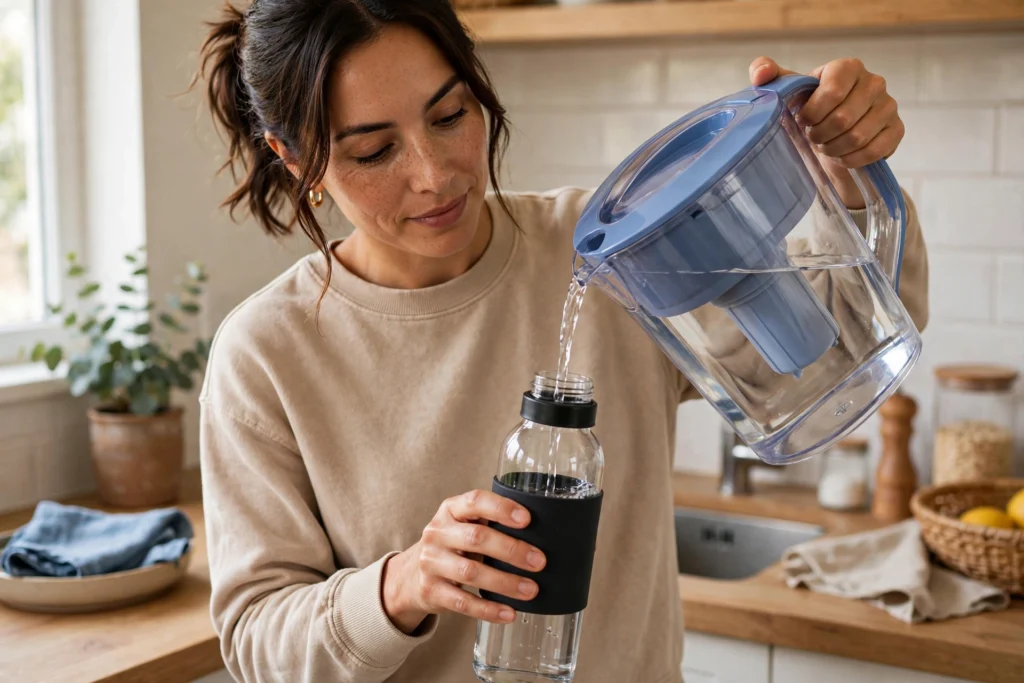
Beyond plain water, many foods contribute significantly to hydration. Cucumbers, watermelon, oranges, and lettuce are over 90 percent water by weight. Soups, smoothies, and herbal teas also count toward daily fluid intake. While caffeinated beverages do have a mild diuretic effect, moderate coffee and tea consumption still contributes to hydration for most people. The key is variety: if you struggle to drink enough plain water, try infusing it with lemon, cucumber, or mint, or set reminders on your phone. Carry a reusable bottle and sip throughout the day rather than chugging large amounts at once, which is gentler on your kidneys and keeps energy steady. These foods help answer how much water to drink daily.
Dehydration can impair both physical and cognitive performance even before you feel thirsty. Just a 1 to 2 percent loss of body weight from fluids can reduce concentration, increase fatigue, and cause headaches. Older adults, children, and people with chronic illnesses are at higher risk and should be especially mindful.
If plain water feels boring, try sparkling water, coconut water in moderation, or water-rich snacks. Avoid sugary sodas and energy drinks as primary hydration sources because excess sugar can increase fluid loss. A simple habit that works for many people is drinking a full glass of water first thing in the morning and keeping a bottle visible on your desk throughout the day. Learning how much water to drink for your body size and activity level is a practical first step.
Pregnant and breastfeeding women need additional fluids to support increased blood volume and milk production. The National Academies suggests about 3 liters daily during pregnancy and 3.8 liters while breastfeeding. People with kidney stones, urinary tract infections, or who take diuretic medications should discuss personalized hydration targets with their clinician. Remember that thirst becomes a less reliable signal as you age, so older adults benefit from scheduled drinking times. A practical rule: drink a glass of water with each meal and between meals, and adjust upward on active days.
References
- National Academies of Sciences, Engineering, and Medicine. Dietary Reference Intakes for Water. nap.nationalacademies.org
- CDC. Plain Water, the Healthier Choice. cdc.gov