It is 9 p.m. on a Tuesday, and you are standing in the pharmacy aisle staring at a wall of candy-colored bottles — and the one your eyes keep returning to is Olly. The blackberry sleep gummies. The stress gummies with the sunset name. They look like they belong in the candy aisle, and honestly, that is most of the appeal. Olly became one of America’s best-selling supplement brands for one reason: it removed the thing everyone hated about vitamins, which is that they taste like medicine. But most reviews skip the real question — what is actually inside, and does the evidence support the promises? This Olly vitamins review is independent: we did not take the product, we do not sell it, and there are no affiliate links. Numbers come from Olly’s published Supplement Facts panels, peer-reviewed ingredient research, and government safety databases. Prices and formulas are approximate.
Olly vitamins review: the quick verdict
Olly is the most enjoyable way to take a mediocre dose. Its flagship sleep gummies pair a reasonable 3 mg of melatonin with sensible L-theanine and botanicals dosed far below what research studied. Every serving carries about 3 grams of added sugar, and the brand publishes no third-party test certificates. For a healthy adult who needs a pleasant wind-down ritual, a defensible choice. For anyone who wants the dose science studied, a cheap low-dose melatonin tablet does it better for pennies. We take the same label-math approach in our Fatty15 review, where a single 100 mg capsule meets the science at the minimum dose.
What Olly is, and why it is everywhere
Olly launched in 2013 with a simple idea: vitamins nobody has to choke down. Unilever bought the company in 2019 — mass-market wellness built for Target checkout lanes and TikTok hauls, not the clinic shelf. That explains the brand’s real product: not cutting-edge formulas, but compliance. A supplement you take every night beats the perfect capsule gathering dust. Four flagships carry the line: Olly Sleep, Olly Stress, the men’s and women’s multis, and Undeniable Beauty.
Olly Sleep, deep-dive: what the label actually says
Olly Sleep (Blackberry Zen) built this brand’s reputation, so it deserves the closest look. Per two-gummy serving, the label lists approximately:
- Melatonin — 3 mg. Moderate by gummy-market standards, where 5 mg and 10 mg products are common. Not the dose sleep researchers would pick first, but more restrained than the line’s own Extra Strength and Maximum Strength versions.
- L-theanine — 100 mg. The green-tea amino acid tied to calm focus. Sleep trials generally used 200 mg and up — roughly half the studied range here, a gentle wind-down aid, not a therapeutic dose.
- Botanicals — chamomile, passionflower, lemon balm, roughly 17 mg each. The uncomfortable part. Chamomile trials used hundreds of milligrams, and the one insomnia study NCCIH cites found no benefit. Around 17 mg each is enough to name on the bottle, not to match the research.
- Added sugar — about 3 g per serving. Glucose syrup and sugar in the inactives, with citric acid and natural flavors.
For the full head-to-head, our Relaxium Sleep vs Olly Sleep comparison runs both labels through the same playbook.
The melatonin dose question, answered honestly
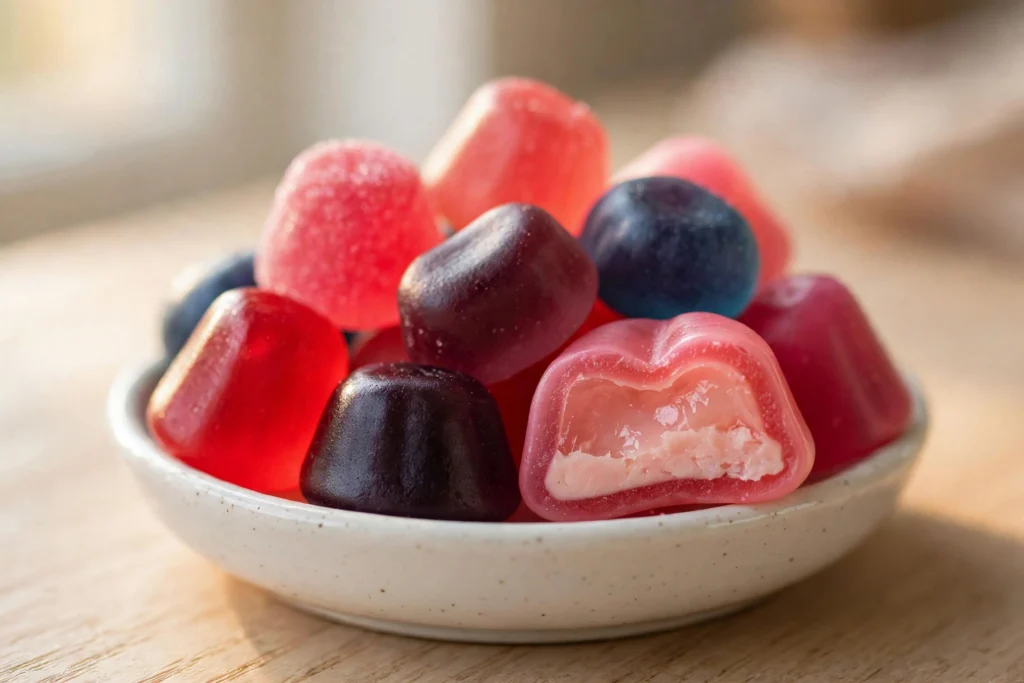
With melatonin, more is not better. Research has repeatedly found that low doses — around 0.5 to 1 mg — perform about as well as higher doses for helping people fall asleep, with less next-morning grogginess. Melatonin is a timing signal, not a sedative. Against that yardstick, Olly Sleep’s 3 mg is acceptable: triple the research-favored range, but well below the 5 mg and 10 mg products on the same shelf, where grogginess complaints cluster exactly as you would expect.
Melatonin looks reasonably safe for short-term use, but its long-term safety is not established, and there is real uncertainty about hormonal effects — including on puberty — in children and teens. The NCCIH’s melatonin guide is direct about this, noting an estimated 11,000 U.S. emergency department visits from 2019 to 2022 for unsupervised melatonin ingestion by young children. Gummies look and taste like candy — that alone should decide where the bottle lives.
The botanicals: pretty names, thin evidence
Chamomile, passionflower, lemon balm — the names do half the marketing work, and here the marketing outruns the evidence the farthest. The NCCIH’s review of chamomile is blunt: very little information exists on its effect on insomnia, and the one insomnia study found no benefit. Passionflower and lemon balm have small, preliminary studies at doses many times higher than the roughly 17 mg in each Olly serving. The honest read: the melatonin and the routine do the heavy lifting.
The other flagships: Stress, multis, and Beauty
Olly Stress (Goodbye Stress). GABA at 50 mg, L-theanine at 50 mg, lemon balm at 75 mg. The GABA dose is potentially reasonable; the theanine and lemon balm sit well under studied doses. For an occasional rough day, a pleasant gummy may genuinely help you feel calmer — ritual and expectation have real effects. Nothing here is research-grade.
Women’s and Men’s Multi. Standard gummy-multi territory: a decent spread of vitamins and minerals at modest doses, because two small gummies can only hold so much. Large population studies find little evidence that multivitamins benefit healthy, well-nourished adults; the people who need one have documented gaps. And Olly uses folic acid for B9 rather than the methylfolate form some clinicians prefer. A capsule multi delivers more for less money.
Undeniable Beauty. Biotin-heavy hair-skin-nails gummies — and the line’s most common complaint across retail reviews: biotin-related breakouts, a known trade-off of high-dose biotin. If your skin is acne-prone, approach this one cautiously.
The sugar section: what “healthy” gummies do not want you to count
Three grams of added sugar a night, every night, is over a kilogram of added sugar a year — consumed right before bed, in a sticky form that clings to your teeth. For a product living inside the wellness universe, that is a real contradiction. Not dangerous for a healthy adult, but the wrong shape for blood-sugar watchers, diabetics, and children. We ran the same uncomfortable dose math in our Goli gummies review: gummy convenience always comes with a sugar tax.
Third-party testing: the question Olly does not answer
Olly manufactures under GMP rules — the legal baseline — but publishes no third-party test certificates confirming the label matches the bottle. For melatonin gummies that gap matters: a widely reported 2023 JAMA analysis of 25 products sold in the U.S. found 88 percent deviated from their labeled content by more than 10 percent, with actual amounts ranging from a fraction of the label to more than triple it. The study did not single out Olly. But a brand selling a hormone in candy form should arguably clear a higher transparency bar than “trust the label.”
The price math
Olly Sleep typically runs about $14 for a 50-count bottle — roughly 25 nights, or around 55 cents a night (prices shift; check before you buy). A plain low-dose melatonin tablet costs a few cents a night; a basic capsule multi runs well under 20 cents a day. You are paying roughly 5 to 15 times the unglamorous alternatives. The only defense is compliance: if a blackberry gummy is the difference between a consistent bedtime ritual and nothing, the markup buys something real. If you would take a tablet just as reliably, you are paying candy prices for candy.
Olly vitamins review: honest pros and cons
Pros:
- Taste and format remove the biggest barrier to supplements — people stick with Olly.
- Sleep’s 3 mg melatonin is moderate by market standards and pairs with sensible L-theanine.
- Widely available, affordable, clearly labeled with full Supplement Facts.
- No artificial flavors or colors per the brand’s labeling; gluten-free line-wide.
Cons:
- Botanical doses sit far below clinical-study amounts — mostly label dressing.
- About 3 g of added sugar per serving, in a tooth-sticking form, every night.
- No published third-party testing in a category with a documented mislabeling problem.
- The 5 mg and 10 mg sleep versions push past what research supports.
- Multis deliver modest doses at a premium; capsules do more for less.
Who it is for, and who should skip it
Consider it if you are a healthy adult with occasional sleeplessness or pre-bed restlessness, you will not take a pill consistently, and a pleasant nightly gummy is what gets you to wind down. Start with the standard 3 mg Sleep.
Skip it if you are watching sugar or managing diabetes; you are pregnant or breastfeeding; you take blood thinners or sedatives without your doctor’s okay (chamomile has reported warfarin interactions); you have a ragweed allergy; or you are buying for a child — candy-shaped hormones demand a pediatrician’s input. Our Relaxium Sleep review covers the same safety ground in depth.
The safety fine print
Sleep gummies feel harmless because they look like candy. Treat them like what they are: a hormone plus herbs, taken nightly. Do not combine Olly Sleep with alcohol, prescription sleep aids, or other melatonin products. Expect possible next-morning drowsiness from the higher-dose versions. Keep the bottle locked away from children. If your sleeplessness is chronic rather than occasional, no gummy fixes that — ask your doctor about cognitive behavioral therapy for insomnia, which beats supplements in the research by a wide margin.
Frequently asked questions
Do Olly Sleep gummies actually work?
For occasional sleeplessness, plausibly yes — 3 mg melatonin is a real dose, and reviews skew positive. Botanicals are dosed far below studied amounts, so the melatonin and the ritual likely do most of the work. No trial has tested Olly Sleep itself.
Is 3 mg of melatonin too much?
More than the 0.5 to 1 mg range research suggests works about as well with less grogginess — but moderate next to 5 mg and 10 mg gummies on the same shelf. If 3 mg leaves you groggy, the dose is higher than you need.
Are Olly vitamins third-party tested?
Olly publishes no third-party test certificates; GMP manufacturing is the legal baseline. A 2023 JAMA analysis found 88 percent of tested melatonin gummies deviated from their labels by more than 10 percent.
How much sugar is in Olly gummies?
About 3 grams of added sugar per two-gummy serving of Olly Sleep — over a kilogram a year if taken nightly. A real consideration for diabetics, sugar-watchers, teeth.
Can kids take Olly Sleep?
Olly sells a Kids Sleep line at 0.5 mg, but the NCCIH notes real uncertainty about melatonin’s hormonal effects in children and teens, including possible effects on puberty. Talk to your pediatrician first, and keep gummy supplements locked away — they look exactly like candy.
Olly Sleep vs. plain melatonin tablets — which is better?
On evidence and price, plain low-dose melatonin wins: cheaper, no sugar, closer to studied doses. On real life, Olly wins for anyone who will not take a tablet — consistency beats perfection. Weighing full daily routines instead of just sleep? Our honest AG1 review runs the same playbook on the biggest greens brand.
Shopping gummy multis? See our head-to-head Goli vs SmartyPants breakdown for the honest sugar math, the dental angle parents should know, and which brand fits which goal.
Written by the HealthRovia editorial team. For general information only — not medical advice.
Bloom Nutrition played the same TikTok playbook to become America’s best-selling greens brand — our honest Bloom Greens review breaks down the viral debloat tub ingredient by ingredient.
Olly is not the only women’s multivitamin worth a look — our Ritual vs Care/of comparison lines up the two biggest direct-to-consumer vitamin brands, including the one that shut down in 2024, to show what verifiable quality actually costs.
MaryRuth’s played the same TikTok playbook to become the platform’s liquid wellness leader — our MaryRuth’s review checks whether the viral Hair Growth bottle earns its price.
To see how Olly stacks up against its biggest rival, our Olly vs Vitafusion comparison puts the two gummy giants head to head — nutrients, sugar, price, and testing.