You have seen them everywhere. Bright red bottles, celebrity endorsements, and a promise that sounds almost too convenient: all the benefits of apple cider vinegar, minus the harsh taste, in a chewy little gummy. Goli turned apple cider vinegar into a candy-like supplement and built one of the biggest wellness brands on the internet doing it.
But here is the question most reviews skip: does a gummy actually deliver what the research on apple cider vinegar studied? We read the label, ran the dose math, and went back to the original studies to find out. In this Goli gummies review, these are the 7 honest facts we think you should know before you buy.
1. What You’re Actually Getting in Each Gummy
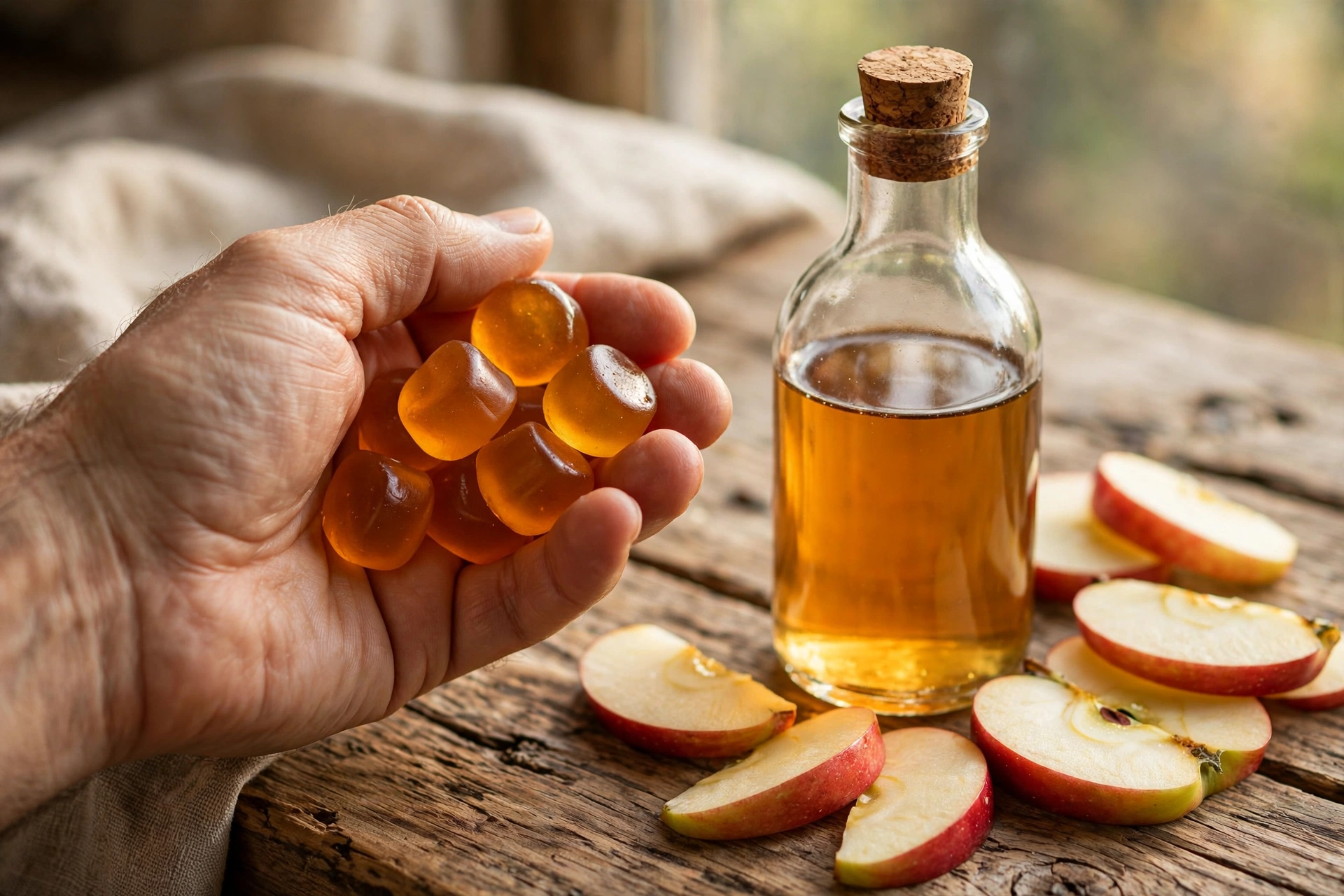
Goli’s Apple Cider Vinegar gummies are pectin-based (vegan-friendly) chews. Per the label, each gummy contains about 500 mg of apple cider vinegar powder, plus added B vitamins — folate (B9) and B12, roughly 50% of the daily value per two-gummy serving — and around 2 grams of sugar per serving of two gummies.
That is the entire active-ingredient story. Everything else is flavor, color (from fruit and vegetable juices), and the pectin that makes it chewy. There is no fiber to speak of, no protein, and no meaningful mineral content. When you strip away the branding, you are buying flavored ACV powder with B vitamins and sugar.
2. The Dose Math Is the Whole Story
This is the gap almost no review talks about, so let’s do it carefully.
The human trials that put apple cider vinegar on the map used liquid vinegar, and they used a lot more of it than a gummy holds. In the well-known 2009 Japanese trial by Kondo and colleagues, participants drank either 15 mL or 30 mL of vinegar daily — delivering 750 mg and 1,500 mg of acetic acid respectively — for 12 weeks (published in Bioscience, Biotechnology, and Biochemistry).
Now the gummy math: Goli’s label lists its ACV powder at 5% acetic acid. That means each 500 mg gummy carries roughly 25 mg of acetic acid, and a full two-gummy serving delivers about 50 mg. Compare that to the 750 mg used at the low dose in the Kondo trial. You would need something like 30 gummies a day to match the acetic acid dose that trial actually tested.
There is a second problem. The trials used liquid vinegar — the form that contains the fermented liquid and, in unfiltered versions, the cloudy “mother.” Goli’s powder is dehydrated and processed. Nobody has run a clinical trial on Goli gummies themselves, so assuming the liquid-vinegar results transfer to the gummy is exactly that: an assumption.
3. The B12 and B9 “Energy” Claim, Examined Honestly
Goli leans on its added B12 and folate (B9) for energy-related marketing. Here is the honest version: B vitamins do help your body convert food into usable energy — but only if you are running low on them. If your B12 and B9 intake is already adequate, extra amounts do not give you extra energy. They are not stimulants, and they do not work like caffeine.
Most people eating a reasonably varied diet get enough of both. Vegetarians and vegans can run low on B12 specifically, and for them the modest amount in these gummies could help fill a gap — but a basic B12 supplement would do it far more cheaply. And it is worth noting the irony: the little lift some people feel after chewing a sweet gummy is more plausibly explained by the 2 grams of sugar per serving than by the B vitamins.
4. What the Actual Studies Found (and Didn’t)
Let’s give the research a fair hearing, because it is more interesting — and more limited — than the marketing suggests.
The Kondo 2009 trial was a genuine 12-week, double-blind, placebo-controlled study in obese Japanese adults. The vinegar groups ended up with modestly lower body weight, BMI, visceral fat, and triglycerides than the placebo group. Modest is the key word: real, statistically significant, but small in absolute terms. It was also a single trial, in one population, over 12 weeks — and it is worth knowing the researchers were affiliated with a vinegar company, which was disclosed in the paper.
The other frequently cited study, Johnston et al. (2004) in Diabetes Care, found that roughly a tablespoon or two of vinegar taken with a high-carbohydrate meal improved insulin sensitivity in insulin-resistant adults. That is a single-meal study, not a weight-loss trial, and again it used liquid vinegar.
The pattern across the literature is consistent: small trials, short durations, liquid vinegar, modest effects. Nothing in this body of research tested ACV gummies, and nothing supports the idea that a fraction of the studied dose will produce the studied result.
5. Goli vs. Plain Liquid ACV: An Honest Comparison
If you want the form of vinegar the research actually used, the comparison is not close:
- Dose: A tablespoon (~15 mL) of liquid ACV matches the low dose from the Kondo trial. Two Goli gummies deliver roughly one-fifteenth of that acetic acid.
- Cost: A bottle of Goli (60 gummies, 30 servings) typically runs around $19, or roughly $0.60+ per day. A bottle of organic liquid ACV costs a few dollars and provides a studied dose for pennies a day.
- Sugar: Liquid vinegar has none. The gummies add about 2 grams of sugar per serving.
- Taste and convenience: This is the one category the gummies genuinely win. Plenty of people simply will not drink vinegar.
So the honest framing is this: Goli is a taste-and-convenience product wearing a science costume. If the ritual of chewing two tasty gummies is the only way you will consume vinegar regularly, that convenience has some value — but you should know you are paying a premium for a much smaller dose.
6. The Teeth and Stomach Caveats Nobody Advertises
Apple cider vinegar is an acid, and acids plus teeth are a bad combination. The American Dental Association notes that dietary acids cause erosive tooth wear — a progressive, irreversible loss of enamel that starts with softening of the tooth surface (ADA on dental erosion). Gummies are arguably worse than a diluted drink here: they are acidic, they contain sugar, and they stick to your teeth.
If you take them, do not chew them right before bed without brushing, and consider rinsing with water afterward. The same acidity can aggravate reflux or heartburn in sensitive people, and anyone taking glucose-lowering or diuretic medications should talk to their doctor before adding a daily vinegar product — vinegar can nudge potassium and blood sugar, and stacking effects is worth a conversation, not a gamble.
7. Goli Gummies Review Verdict: Who Should Actually Buy These?
Goli gummies are not a scam — they contain what the label says, they taste good, and the brand’s quality control is generally solid. But they are dramatically overpromising relative to the dose they deliver. Nothing about the current research supports meaningful weight-loss or metabolic effects from 50 mg of acetic acid a day.
Buy them if: you enjoy the taste, you want a pleasant daily ritual, and you understand you are buying convenience, not a studied dose.
Skip them if: you want the effects described in the actual research (drink a tablespoon of liquid ACV in water instead, far cheaper), you are watching sugar, or you have reflux or enamel concerns.
We judge supplements the same way every time: label math first, marketing second — the same evidence-first approach we used in our Relaxium sleep review. And if you are curious how other gummy-format supplements hold up under the same scrutiny, our creatine gummies breakdown runs the same playbook.
We take the same label-math approach in our AG1 review, where we do the dose math on the internet’s most famous greens powder.
Olly’s gummy line gets the same treatment in our honest Olly vitamins review — dose math, sugar, and third-party testing all checked.
Frequently Asked Questions
Do Goli gummies help with weight loss?
This Goli gummies review found no clinical evidence that Goli gummies cause weight loss. The vinegar trials that showed modest effects used liquid vinegar at acetic acid doses roughly 15 times higher than a daily serving of the gummies, and no trial has tested the gummies themselves.
How many Goli gummies should I take per day?
The label suggests two gummies daily. Taking more to “catch up” to studied vinegar doses is not sensible — you would need around 30 gummies a day, which means a lot of sugar and cost for an unproven benefit.
Do Goli gummies contain “the mother”?
Goli markets its gummies as containing the mother, but the product uses dehydrated ACV powder, not the raw unfiltered liquid the term originally described. The research trials used liquid vinegar, so results from those studies cannot be assumed to apply to the powdered form.
Are Goli gummies bad for your teeth?
They can contribute to enamel erosion. They combine dietary acid with sugar in a sticky form that clings to teeth, and the ADA notes that acid-driven enamel loss is irreversible. Rinsing with water afterward and keeping up with dental checkups is sensible.
Are liquid ACV and Goli gummies equally effective?
No. Liquid vinegar delivers the studied dose of acetic acid for pennies per serving with no added sugar. The gummies deliver a small fraction of that dose at a premium price. Their real advantage is taste and convenience, not potency.
Wondering how Goli stacks up against a true multivitamin gummy? Read our honest Goli vs SmartyPants comparison — including the sugar math per serving most reviews skip.
Written by the HealthRovia editorial team. For general information only — not medical advice.
If you like the idea of a daily vitamin routine but want capsules with fully disclosed doses instead of gummies, our Ritual vs Care/of review breaks down the two biggest direct-to-consumer vitamin brands head to head.
Prefer your daily routine backed by a published clinical trial instead of gummies? Our Ritual vitamins review breaks down the USP-verified multi, the $468-a-year math, and the formula change since its study.
Gummy vitamins compared: our Olly vs Vitafusion breakdown covers the two biggest gummy brands side by side, from sugar per serving to third-party testing.