It usually starts in the bathroom mirror. You wake up, catch your reflection, and your face looks… puffy. Cheeks fuller, eyelids a little heavy, your jawline softer than last night. Then your phone lights up with another TikTok: a creator squeezes a brown dropper under her tongue, films the same “morning face,” and forty-eight hours later — snatched jawline, flatter stomach, lymphatic system “FINALLY drained.”
You are not alone in wondering whether a little glass dropper could actually do that. Puffy mornings happen to almost everyone — sleep position, salty food, hormones, a late night — and the promise of a quick fix spreads fast. So before you spend a dollar, this lymphatic drainage drops review covers 7 honest facts.
How this review works: we did not take these drops, we do not sell them, and there are no affiliate links here. Everything below comes from actual product labels, published research, and government health databases. One disclosure up front: no lymphatic drainage drop formula has ever been tested in a randomized controlled trial measuring lymphatic function.
1. What lymphatic drainage drops actually are
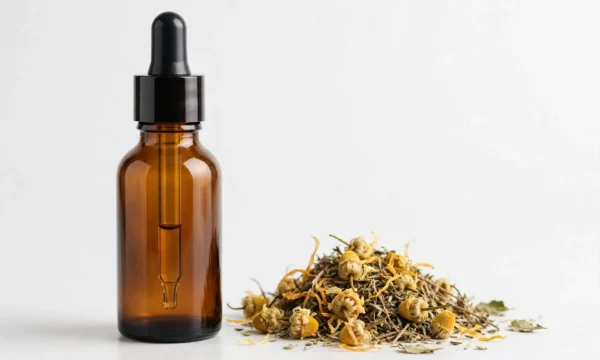
Lymphatic drainage drops are not one product — they are a whole category of herbal tinctures that blew up on TikTok in 2024–2026. Brown dropper bottles labeled “lymphatic drainage support,” “de-puff drops,” or “lymph detox,” sold by brands like MaryRuth’s, Lymphatica, NULEVIA, Hello Balance, and heyNuvella — plus dozens of smaller sellers with near-identical bottles. Typical use: one or two droppers under the tongue or in water, daily.
The pitch: the herbs “stimulate,” “open,” or “drain” your lymphatic system. The physiology it skips: lymph has no pump of its own — it moves through one-way valves, pushed along by muscles contracting when you walk or even breathe. No herb has been shown in a human study to change how lymph flows. The category rests on traditional-use claims and before-and-after photos, not on any published trial of a complete formula.
2. The white-label problem: what’s really inside the bottle
Line up labels across brands and a pattern jumps out. Most formulas share the same four-herb core: cleavers (Galium aparine), red clover (Trifolium pratense), stillingia (Stillingia sylvatica), and prickly ash bark (Zanthoxylum), plus extras like dandelion, echinacea, or horse chestnut. This is the same label-first standard behind our AG1 review: read the actual label, not the ad.
When ten labels read like the same template, you’re choosing between ten marketing budgets at ten prices for the same herbs. Compare labels before you buy — if the herb list looks copied, it probably was.
Alcohol base vs glycerin matters. Most drops are alcohol-based tinctures (commonly 25–45% alcohol by volume), so a full daily dose carries a small but real amount of alcohol — relevant if you avoid alcohol, are pregnant or nursing, or take interacting medications. Glycerin-based (alcohol-free) versions exist but brands don’t always make the base obvious. Check before you buy, not after.
3. The price math, done honestly
Listed prices we found (prices change): MaryRuth’s Lymphatic Support, ~$22–23 for 30 servings (~$0.75/day); Lymphatica, $29.99 (typically a 60-day supply, ~$0.50/day); NULEVIA, $29.95; Hello Balance, $39.00; heyNuvella, $39.90.
The category band: roughly $22–50 for a 30–60 day supply, about $0.50–$1.65 a day — cheap enough to try on impulse, and many brands’ “best price” is a subscription that auto-renews. Read the fine print before you enter your card — our Fatty15 review shows how trial-kit auto-enrollment works. The honest question isn’t “is $0.75 a day a lot?” — it’s “is $270 a year for unproven herbs a lot?”
4. What the science actually shows — ingredient by ingredient
Here’s the honest scorecard — the part every competitor review we read failed:
Cleavers — the “lymph herb” of tradition. A 2020 Molecules study (full text on PubMed Central) found cleavers extracts stimulated lymphocyte proliferation — in a lab dish, using immune cells from blood samples. Not a human trial, and lymphocyte proliferation in a petri dish is not “draining” the lymphatic system.
Red clover — the best-studied herb in the bottle, but for the wrong reason: randomized trials support modest benefit for menopausal hot flashes, not lymphatic anything. Its isoflavone phytoestrogens mean real cautions — medical guidance for hormone-sensitive conditions, and bleeding-related case reports with blood thinners.
Horse chestnut — the one ingredient with real randomized trials, and a textbook case of borrowed evidence. A Cochrane review of 17 RCTs (Pittler & Ernst, 2012) found horse chestnut seed extract helped chronic venous insufficiency symptoms — leg pain, swelling, and itch from vein problems. But those trials used standardized extracts delivering roughly 50 mg of aescin twice daily, while a dropper of multi-herb tincture holds trace amounts by comparison. And CVI is a vein problem, not a lymph problem — see the Cochrane summary.
Butcher’s broom — small randomized trials for vein-related leg swelling (CVI again). None for lymphatic function, and dropper amounts are a fraction of trial doses.
Dandelion — a small 2009 pilot in the Journal of Alternative and Complementary Medicine (n=17, one day) found a dandelion leaf extract increased urination. So yes, dandelion is mildly diuretic — which is why drops can make a face look “de-puffed” (Fact 5). A diuretic effect is not a lymphatic effect.
Burdock — laboratory studies only; no human evidence relevant to lymphatic function.
Echinacea — the real evidence is about colds: the NCCIH says it may slightly reduce the chance of catching a cold, with much less known about anything else. No lymphatic evidence — plus possible interactions with immunosuppressants and allergy risk for ragweed-sensitive people.
The scorecard: zero of these eight ingredients have human evidence for improving lymphatic drainage — and no complete formula has ever been tested in an RCT measuring lymphatic function.
5. Why the before-and-afters fool everyone
The TikTok before-and-afters are this category’s engine, and many are probably not faked — just misread. Three things make them look dramatic:
1. The diuretic effect is real, and it photographs well. Dandelion’s mild diuresis means you pee out water; faces and bellies look slimmer within a day or two. That’s water weight, not lymph being “cleared” — and it reverses when you stop.
2. Morning gravity does half the work. Faces are naturally puffiest first thing in the morning — fluid redistributes while you sleep flat — and improve on their own by midday: a “before” at 7 a.m. and an “after” at noon will look different with zero drops involved.
3. Expectation, lighting, and angles. When you believe something is working, you photograph it that way — chin up, better light, a little smile. The camera adds its own placebo.
One clean sentence on “detox”: in a healthy person, the liver and kidneys detoxify continuously — the lymphatic system doesn’t need a supplement to do its job. “Flushes toxins” is marketing language, not physiology.
6. The safety fine print and the red-flag buying checklist
These are herbs, not candy, and the interactions are real:
- Pregnancy and breastfeeding: avoid without physician guidance — the alcohol base, phytoestrogen herbs, and near-total absence of safety data.
- Red clover + blood thinners: bleeding case reports; don’t combine without medical guidance.
- Echinacea + immunosuppressants: possible interaction with immunosuppressants; ragweed-allergy cross-reaction.
- Dandelion + prescription diuretics: possible additive diuretic and potassium effects.
When swelling is a symptom, not a cosmetic issue: one-sided leg swelling, swelling that won’t go away, or sudden swelling with pain or shortness of breath can signal heart, kidney, vein, or clotting problems. Those need a doctor, not a dropper.
Red-flag buying checklist — skip brands with proprietary blends (hidden doses); white-label formulas (identical herb lists, different prices); subscription traps (hard-to-find cancel); countdown timers and fake scarcity; or “detox”/disease claims like “treats lymphedema” — illegal for supplements, and a reliable honesty signal.
7. Lymphatic drainage drops review: what actually moves lymph — the verdict
Here’s the comparison the marketing hopes you never make. Manual lymphatic drainage (MLD) is a real, studied therapy by trained therapists — systematic reviews, including Cochrane evidence, support it for conditions like post-mastectomy lymphedema. A brown dropper is not in the same category of intervention. Dry brushing has no meaningful evidence either.
What actually moves lymph is free and unglamorous: walking and regular muscle movement, staying hydrated — our Liquid IV vs LMNT comparison covers the hydration half of de-puffing — deep diaphragmatic breathing, and elevating puffy legs. None of it photographs like a dropper bottle, but all of it has physiology on its side.
Consider it if: you want an herbal tincture ritual, you understand you’re buying tradition plus mild diuresis rather than proven lymph support, you check the base (alcohol vs glycerin), you compare labels to dodge the white-label markup, and you buy one-time.
Skip it if: you’re pregnant or nursing, you take blood thinners, diuretics, or immunosuppressants, you have persistent or one-sided swelling (see a doctor), or you expect proven effects on the lymphatic system — none can honestly promise them. For how we apply this evidence-first standard to a product with deeper human data, see our Goli gummies review.
Frequently Asked Questions
Do lymphatic drainage drops really work?
No published human evidence shows any formula improves lymphatic function — no randomized controlled trial has ever measured it. What users notice is mostly a mild diuretic effect (from herbs like dandelion) plus the natural morning-to-midday change in facial puffiness.
Are lymphatic drainage drops safe?
For most healthy adults a labeled tincture is unlikely to cause serious harm, but “herbal” is not risk-free. Avoid them in pregnancy and breastfeeding without medical guidance, and be cautious with blood thinners (red clover), immunosuppressants (echinacea), and prescription diuretics (dandelion).
Why do the before-and-after photos look so convincing?
Mild diuresis slims faces and bellies within a day or two; faces are naturally puffiest in the morning and improve on their own by midday; and expectation, lighting, and camera angles do the rest. Water-weight changes reverse when you stop the drops.
What’s the difference between the drops and manual lymphatic drainage?
Manual lymphatic drainage is a hands-on therapy by trained therapists with systematic-review-level evidence for conditions like post-mastectomy lymphedema. The drops are unstudied herbal tinctures with no measured effect on lymphatic function — not the same category of intervention.
Do lymphatic drainage drops help you lose weight?
Any slimming effect is water weight from mild diuresis, not fat loss, and it reverses when you stop. No ingredient in these formulas has evidence for fat loss, and “detox” weight-loss framing is marketing, not physiology.
Who should avoid lymphatic drainage drops?
Anyone pregnant or breastfeeding (without physician guidance), people on blood thinners, antiplatelets, immunosuppressants, or prescription diuretics, and anyone with persistent or one-sided swelling — that needs a doctor’s evaluation, not a supplement.
Written by the HealthRovia editorial team. For general information only — not medical advice.