Is matcha healthier than coffee? We put the café world’s favorite debate through an independent, evidence-based check — no sponsors, no affiliate links, just the research.
Walk into any café in 2026 and you’ll see it: the bright green latte that costs a dollar more than the flat white next to it. Matcha has gone from a Japanese tea ceremony staple to a full-blown wellness phenomenon — and with that rise comes a bold claim you hear everywhere: matcha is healthier than coffee.
Here’s the problem: nearly every result sells matcha, is sponsored by a matcha brand, or was written by one — and every one concludes matcha wins. This article sells nothing. Below is an independent look at the evidence: where matcha genuinely shines, where the claims get shaky, and where coffee deserves more credit than matcha marketing gives it.
The Caffeine Question: Let’s Get the Numbers Right
Most comparison articles fumble the most basic fact — how much caffeine is actually in each drink. You’ll see matcha listed anywhere from 25 mg to 70 mg per serving across different sites, which is confusing enough to be useless. Here are consistent, defensible numbers:
| Drink | Typical serving | Caffeine |
|---|---|---|
| Matcha | 2 g powder (1 tsp) whisked | ~60–70 mg |
| Brewed coffee | 8 oz (240 ml) | 95–200 mg |
| Steeped green tea | 8 oz (240 ml) | 14–60 mg |
| Espresso | 1 oz shot | ~63–75 mg |
The coffee and tea ranges come from MedlinePlus (U.S. National Library of Medicine). The matcha figure — roughly 60–70 mg per standard 2-gram serving — is the range most consistently reported by lab analyses of commercial matcha; shade-growing boosts caffeine in the leaf, and because you drink the whole ground leaf rather than an infusion, you get nearly all of it.
Bottom line on caffeine: a bowl of matcha delivers roughly half to two-thirds the caffeine of a regular cup of brewed coffee — a meaningfully smaller dose, not caffeine-free “energy.” Two reference points from MedlinePlus: for most people, up to 400 mg of caffeine per day isn’t harmful, and caffeine’s effects typically peak within about an hour and linger for four to six hours. A morning matcha is far less likely than a large coffee to still be buzzing in your system at bedtime.
The L-Theanine Factor: Why Matcha Feels Different
Here’s where matcha has a genuine, interesting edge — and it’s not really about caffeine at all.
Matcha contains L-theanine, an amino acid found almost exclusively in tea plants (Camellia sinensis). Shade-grown matcha leaves produce more of it, which is one reason ceremonial-grade matcha tastes smoother and less bitter. Researchers have studied L-theanine for its calming properties — it’s associated with a state of relaxed alertness rather than sedation.
The practical upshot: caffeine plus L-theanine feels different from caffeine alone. Coffee often brings a sharper spike — fast onset, jitters, then a crash — while matcha drinkers commonly report a steadier lift: alert but calm. The theanine seems to smooth caffeine’s rougher edges, which is why people who feel wired on coffee sometimes do better on matcha.
Be honest with yourself here, though. If you’re highly sensitive to caffeine, 60–70 mg can still cause jitters, a racing heart, or ruined sleep. Matcha is gentler — not consequence-free.
Antioxidants and Catechins: What the Evidence Actually Supports
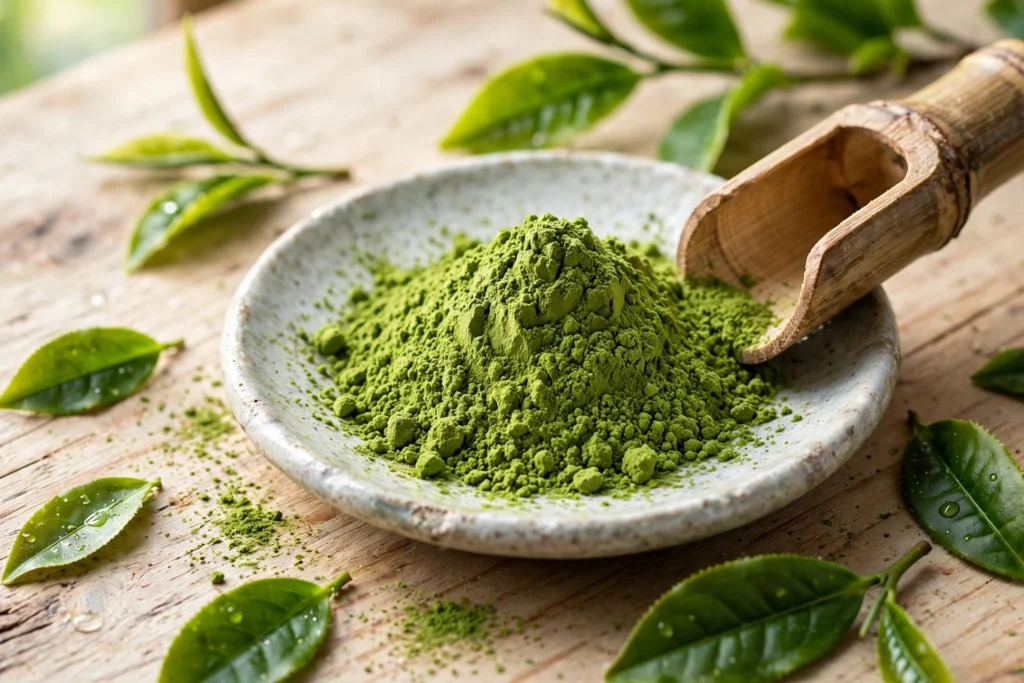
Matcha’s biggest health claim rests on catechins, especially EGCG (epigallocatechin gallate) — the antioxidant compounds concentrated in green tea. Because you consume the entire leaf, matcha delivers more catechins per serving than steeped green tea, where much of the good stuff stays trapped in the discarded leaves.
What does the evidence say? The U.S. National Center for Complementary and Integrative Health (NCCIH) reviewed the green tea research, and its conclusions are encouraging but measured:
- Weight: the catechins and caffeine in green tea “may have a modest effect on body weight.” Modest is the key word — this is not a fat-loss drink.
- Cholesterol: randomized trials found green tea reduced total and LDL cholesterol “to a small extent,” with no effect on HDL or triglycerides. Notably, most of these trials used concentrated extracts, not the beverage.
- Heart disease and cancer: some observational links exist (particularly in Asian populations), but overall the cancer evidence has been inconsistent, and NCCIH concludes definite answers aren’t in yet for most claimed uses.
Read the full review at the NCCIH green tea page — it’s refreshingly honest. Matcha is a genuinely antioxidant-rich drink, but “antioxidant-rich” is not the same as “proven to prevent disease.” Anyone telling you otherwise is selling something — which brings us to the part matcha brands never mention.
The Downside Nobody Selling Matcha Mentions: Lead
This is the section missing from every matcha company’s comparison article, so let’s handle it carefully and factually.
Tea plants absorb heavy metals from soil — lead in particular. With regular steeped tea, most of the lead stays in the leaves you throw away. With matcha, you drink the entire powdered leaf, so your exposure is higher by design. That doesn’t mean matcha is dangerous; it means quality and sourcing matter far more than with any other tea.
A 2018 peer-reviewed analysis in Molecules measured toxic metals across green teas from six countries: lead varied enormously by origin, with the highest levels in Chinese and Indian samples — yet every sample fell below international safety limits (2–10 mg/kg depending on the country). More recently, a 2024 Food Chemistry study found lead, arsenic, or cadmium above U.S. limits in about 12 percent of low-grade matcha samples — the bargain powders flooding the market during recent shortages.
The measured takeaway:
- Premium, tested matcha from reputable Japanese producers is consistently clean — independent lab testing of popular U.S. matcha brands has found no concerning contamination.
- The risk concentrates in cheap, unverified matcha of unknown origin, often sold at suspiciously low prices online or in discount stores.
- If you drink matcha daily, buy from brands that publish third-party heavy-metal testing (certificates of analysis). Origin matters: established Japanese growing regions have the strictest controls.
This isn’t a reason to fear matcha. It’s a reason to stop buying the cheapest bag on the internet.
In Coffee’s Defense: The Most Studied Drink in the World
In fairness: coffee has one of the deepest evidence bases of any beverage humans consume. Decades of large observational studies link habitual moderate coffee drinking with favorable health markers, and coffee is rich in its own antioxidants (including chlorogenic acids) — it’s not just brown caffeine water.
And caffeine is caffeine. The molecule in your matcha and the molecule in your espresso are identical; only the dose and the company it keeps (theanine, catechins) differ. If you love coffee, tolerate it well, and drink it in moderate amounts, there is no evidence-based reason to switch. MedlinePlus notes that up to 400 mg of caffeine daily — roughly two to four 8-ounce cups of brewed coffee — is not harmful for most people.
Coffee’s real downsides are practical, not mysterious: the dose is bigger and less predictable (that 95–200 mg range is wide), it can disrupt sleep when drunk late, and it can trigger anxiety, reflux, or jitters in sensitive people. Those are the exact problems matcha’s smaller, theanine-buffered dose tends to solve.
Who Should Pick Which? An Honest Decision Guide
You’ll probably prefer matcha if: coffee makes you jittery or anxious; you want caffeine later in the day without wrecking sleep; you like the preparation ritual; you want the highest catechin dose per cup; or you’re cutting back on caffeine without quitting it.
Stick with coffee if: you love the taste and ritual; you want the strongest, fastest lift; you drink it black or lightly sweetened; or quality matcha’s price per serving makes you wince — good matcha costs significantly more than good coffee.
Consider both: coffee in the morning for the full kick, matcha in the early afternoon for focus without the edge. No rule says you must pledge allegiance to one.
And whichever you choose, keep the bigger picture in view: both drinks are minor characters in your health story. Sleep, movement, and a genuinely nutritious breakfast move the needle far more than the color of your morning caffeine. If you’re rebuilding your mornings from scratch, our guide on how to start meal prepping pairs well with either habit.
Frequently Asked Questions
Does matcha have more caffeine than coffee?
No. A standard 2-gram serving of matcha has roughly 60–70 mg of caffeine, while an 8-ounce cup of brewed coffee has 95–200 mg (MedlinePlus). Matcha delivers about half to two-thirds the caffeine of coffee — noticeable, but gentler.
Is it safe to drink matcha every day?
For most healthy adults, yes — one to two servings daily is well within normal caffeine limits. NCCIH notes no safety concerns for green tea consumed as a beverage by adults. Buy tested, reputable matcha and keep total daily caffeine from all sources in a comfortable range.
Can matcha replace my morning coffee?
It can if your goal is a smaller, steadier dose of caffeine. Expect less of a “kick” — that’s the point. If you need maximum alertness fast (or just love coffee), there’s no health reason forcing the switch.
Is cheap matcha bad for you?
Not automatically, but it’s the riskiest category. Because you consume the whole leaf, low-grade matcha of unknown origin carries the highest chance of heavy-metal contamination — a 2024 study found some low-grade samples exceeded U.S. safety limits. Choose tested brands with published lab results.
Which is better for weight loss, matcha or coffee?
Neither is a weight-loss drink. NCCIH describes green tea’s effect on body weight as “modest” at best, mostly from studies of concentrated extracts. Both are essentially calorie-free before milk and sugar — that’s where the real difference is made.
Written by the HealthRovia editorial team. For general information only — not medical advice.