The sodium potassium pump is a microscopic engine in every cell membrane that profoundly influences blood pressure and vascular health. Hypertension is the single greatest preventable risk factor for stroke, myocardial infarction, and vascular dementia worldwide. While standard medical advice focuses solely on sodium reduction, clinical trials in The Lancet demonstrate that increasing dietary potassium while modestly moderating sodium produces superior blood pressure reductions and arterial compliance. Understanding how this cellular pump works reveals why the sodium-to-potassium ratio matters more than either mineral alone.
Sodium Potassium Pump: How It Regulates Blood Pressure
The sodium potassium pump (Na+/K+ ATPase) is an enzyme embedded in every cell membrane, actively transporting 3 sodium ions out of the cell for every 2 potassium ions it brings in. This creates the electrochemical gradient essential for nerve impulses, muscle contraction, and fluid balance. In vascular smooth muscle cells, pump activity directly influences arterial tone: when intracellular sodium rises (from high dietary sodium), calcium accumulates via the sodium-calcium exchanger, causing vasoconstriction and higher blood pressure. Potassium counteracts this by promoting sodium excretion through the kidneys and hyperpolarizing vascular smooth muscle, inducing vasodilation. This is why the dietary sodium-to-potassium ratio predicts hypertension risk better than sodium intake alone.
Dietary Strategies to Optimize Your Sodium-Potassium Ratio
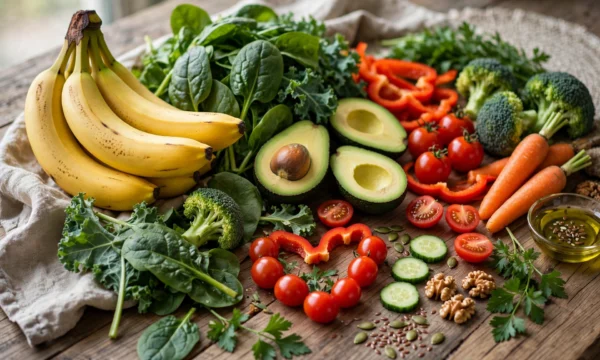
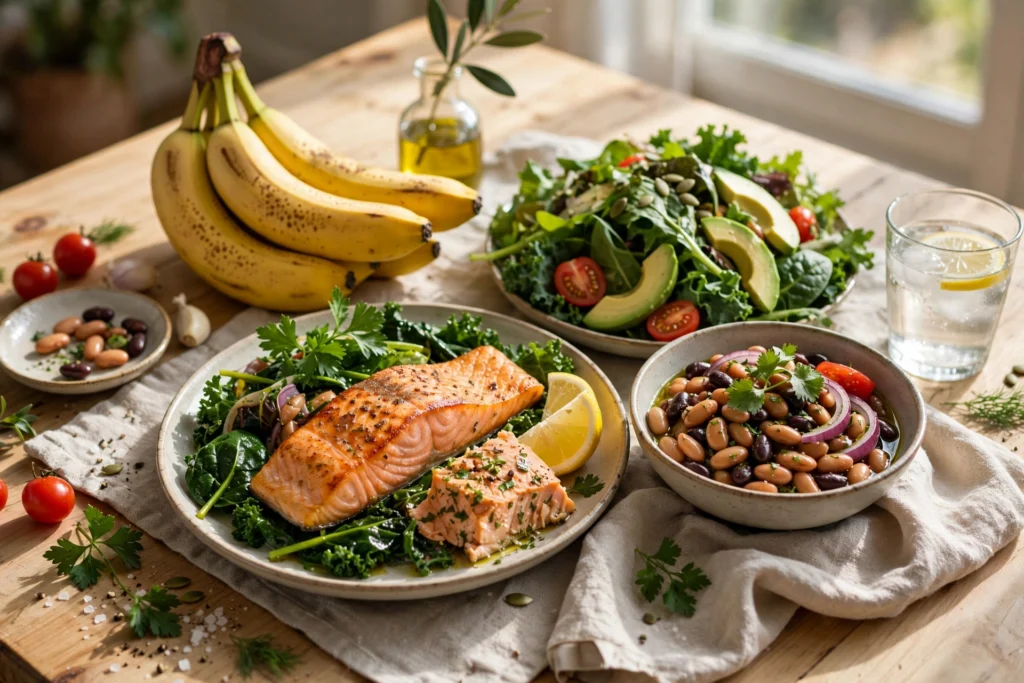
Most adults consume far too much sodium (3,400+ mg daily) and too little potassium (under 2,800 mg), creating a dangerous imbalance. The DASH diet — rich in fruits, vegetables, legumes, and low-fat dairy — naturally corrects this ratio and lowers systolic pressure by 8–11 mmHg. Prioritize potassium-rich foods: bananas, sweet potatoes, spinach, white beans, avocados, and salmon. Simultaneously reduce processed foods, which supply 70% of dietary sodium. Aim for under 2,300 mg sodium daily while boosting potassium toward 3,500–4,700 mg. Learning how to lower blood pressure naturally through these dietary shifts is more effective than sodium restriction alone.
Electrolytes and Vascular Health
Sodium and potassium don’t work in isolation — magnesium is the essential cofactor that powers the sodium-potassium pump. Without adequate magnesium, pump efficiency declines and vascular tone suffers. Most adults are magnesium-deficient, compounding hypertension risk. Include magnesium-rich foods (nuts, seeds, dark chocolate, leafy greens) alongside potassium sources. Stay hydrated to support renal sodium excretion. Understanding electrolytes as an integrated system — rather than isolated minerals — is key to vascular health. Together, balanced electrolytes maintain optimal pump function, healthy blood pressure, and resilient arteries.
The sodium potassium pump illustrates a profound principle: cellular mechanisms drive systemic health outcomes. By understanding how this microscopic pump regulates vascular tone, you gain actionable insight into preventing hypertension. Focus on achieving a favorable sodium-to-potassium ratio through whole foods rather than obsessing over sodium alone. Eat 4–5 servings of fruits and vegetables daily, choose potassium-rich staples like beans and leafy greens, limit ultra-processed foods, and ensure adequate magnesium intake. These evidence-based dietary strategies optimize pump function, support healthy blood pressure, and protect your arteries. Start today by adding one potassium-rich food to each meal.
Key Takeaways
- Potassium promotes renal sodium excretion and induces vascular smooth muscle hyperpolarization (vasodilation).
- Adopting the clinical DASH diet pattern (rich in potassium, magnesium, and dietary fiber) lowers systolic blood pressure by up to 11 mmHg.
- Monitor your blood pressure readings against official AHA/ACC stages with our Blood Pressure Calculator.
- Calculate daily water volume to maintain renal fluid balance using our Daily Water Intake Calculator.
- Maintain a healthy body weight benchmarked via our Ideal Weight Calculator.
References
- Whelton PK et al. 2017 ACC/AHA Guideline for the Prevention, Detection, Evaluation, and Management of High Blood Pressure. J Am Coll Cardiol, 2018.
- Aburto NJ et al. Effect of increased potassium intake on cardiovascular risk factors and disease: systematic review and meta-analyses. BMJ, 2013.