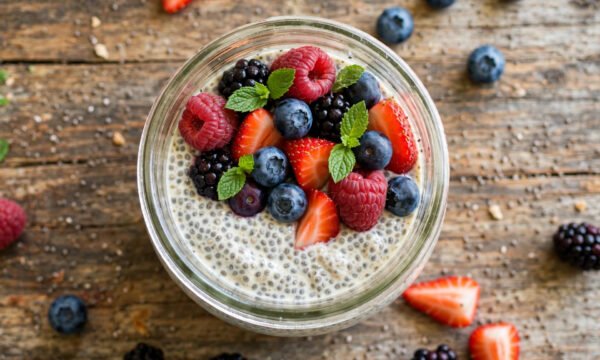
Chia seed pudding is one of those rare breakfasts that sounds too easy to be real: stir seeds into milk, go to sleep, wake up to dessert. No cooking, no blender, no 6 a.m. effort. But most recipes give you one ratio and wish you luck — which is why so many first batches turn out lumpy, watery, or bland.
This guide fixes that. You’ll get the base recipe, a ratio table for three textures, five variations with real macros, and fixes for every common failure. Everything here is built around the numbers: one ounce (about two tablespoons) of chia seeds delivers roughly 138 calories, 4.7 grams of protein, and 9.8 grams of fiber, according to USDA FoodData Central — plus over 5 grams of omega-3 ALA per ounce. That fiber-to-calorie ratio is the whole reason chia pudding keeps you full until lunch.
The base chia seed pudding recipe
Start here. Master this, then riff.
Serves 1 (about 1 generous cup)
- 4 tablespoons chia seeds
- 1 cup milk of choice (dairy, almond, oat — all work)
- 1 teaspoon honey or maple syrup (optional, adjust to taste)
- 1/2 teaspoon vanilla extract (optional)
- Pinch of salt
Steps:
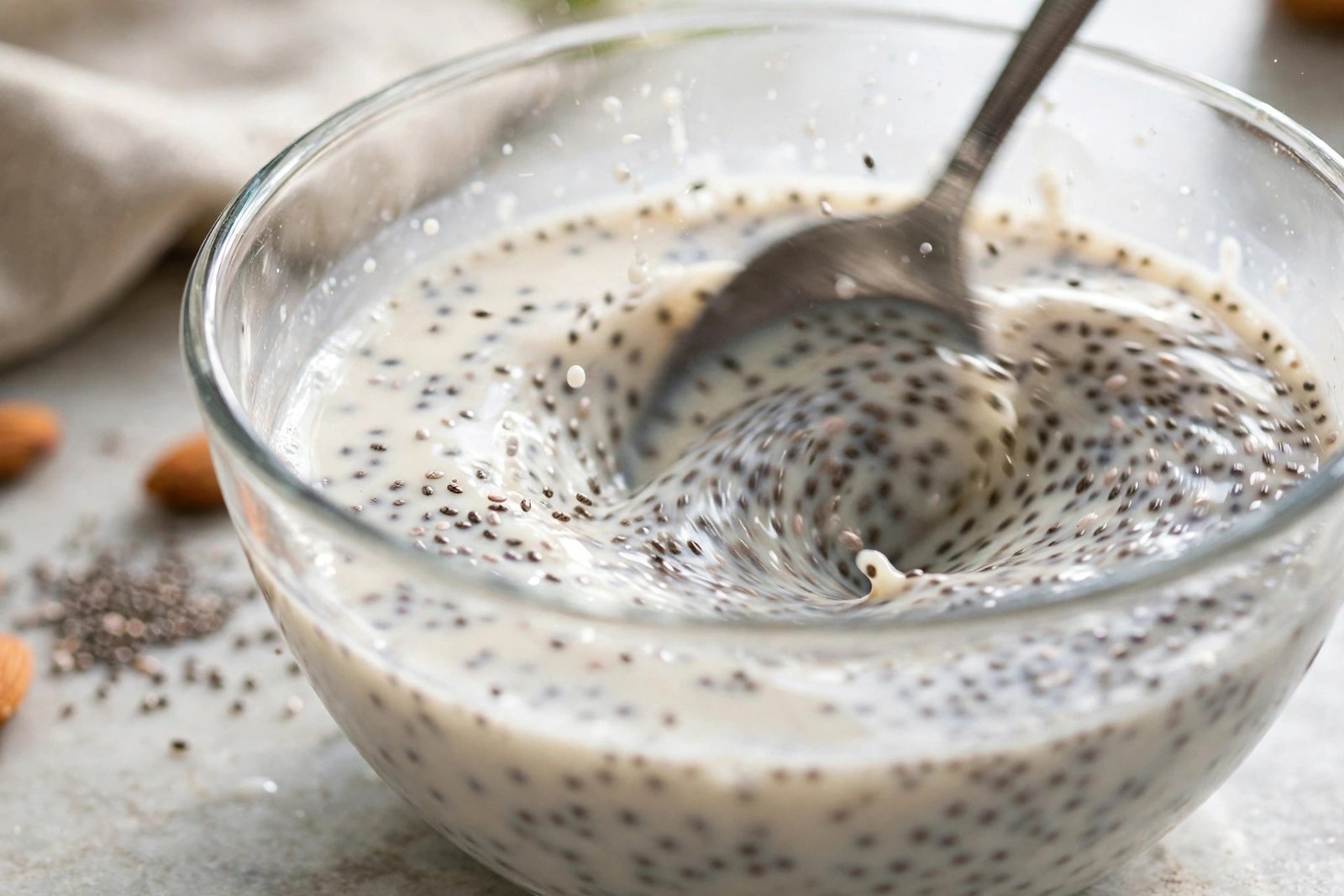
- Whisk everything together in a jar or bowl — dry clumps now become lumps later.
- Wait 10 minutes, then whisk again. This second stir is the single most important step in this entire recipe. Chia seeds gel fast on the outside; the second stir breaks up the early clumps before they set permanently.
- Cover and refrigerate at least 4 hours, ideally overnight.
- Stir once more in the morning, add toppings, and eat.
A full batch lands around 425 calories with roughly 17 grams of protein and 20 grams of fiber — a complete breakfast that fits a meal-prepping routine: four jars on Sunday night, breakfast done through Thursday.
The ratio table: pick your texture
Chia pudding texture is entirely a function of the seed-to-liquid ratio. Different sources swear by different ratios because they’re chasing different textures. Here’s the honest map:
| Texture | Chia seeds | Liquid | Best for |
|---|---|---|---|
| Thin / drinkable | 2 tbsp | 1 cup | Chia fresca-style drinks, light snack |
| Creamy / classic | 3 tbsp | 1 cup | The standard pudding most people love |
| Thick / spoonable | 4 tbsp | 1 cup | Dessert-style pudding, parfaits, topping-heavy bowls |
5 chia seed pudding variations (with macros)
All variations start from the base recipe (4 tbsp chia + 1 cup milk). Macros are approximate per serving.
1. Classic vanilla berry
Add 1/2 cup mixed berries and an extra 1/2 teaspoon of vanilla to the base. Top with a few fresh berries in the morning.
Roughly: 485 calories, 17g protein, 24g fiber. The berries add vitamin C and another 4 grams of fiber for almost no calories.
2. Chocolate peanut butter
Whisk 1 tablespoon unsweetened cocoa powder and 1 tablespoon peanut butter into the base before refrigerating. A pinch of flaky salt on top in the morning takes it somewhere special.
Roughly: 530 calories, 21g protein, 22g fiber. This one eats like dessert and still out-fibers almost any breakfast cereal on the shelf.
3. Mango coconut (dairy-free)
Swap the milk for 1 cup light coconut milk, skip the honey, and fold in 1/2 cup diced mango in the morning. Add a squeeze of lime.
Roughly: 390 calories, 10g protein, 21g fiber. Lower in protein than the dairy versions — pair it with a handful of nuts if that matters to you.
4. Apple cinnamon
Use unsweetened almond milk as the base liquid, add 1/2 teaspoon cinnamon to the mix, and top with 1/2 diced apple and a few chopped walnuts in the morning.
Roughly: 360 calories, 10g protein, 22g fiber. Tastes like apple pie filling decided to be breakfast.
5. Mocha
Dissolve 1 teaspoon instant espresso and 1 tablespoon cocoa powder into the milk before adding the chia. Sweeten a touch more than usual — coffee needs it.
Roughly: 440 calories, 17g protein, 21g fiber. Caffeine plus fiber is a genuinely great morning combination.
Nutrition breakdown: why the numbers work
Let’s put the USDA figures in context, because chia’s reputation as a “superfood” actually survives contact with the data. Per one ounce (28g) of dried chia seeds, USDA FoodData Central lists 138 calories, 4.7g protein, 9.8g fiber, and 8.7g fat — of which about 5 grams are omega-3 ALA. That’s 35% of the daily value for fiber in a single ounce.
The fiber does most of the work: it slows digestion, steadies blood sugar after meals, and keeps you full — which is why 425 calories of chia pudding satisfies the way a 425-calorie pastry never could. Chia also brings meaningful minerals: that same ounce covers 14% of daily calcium, 23% of magnesium, and 12% of iron needs. It’s part of why chia earned a spot on our list of 10 superfoods to boost your immune system naturally — the omega-3 and mineral density per calorie is genuinely hard to beat.
One honest caveat: chia is not a protein powerhouse. At under 5 grams of protein per ounce, the seeds contribute, but the milk in your pudding is doing real work too. If protein is your priority, use dairy milk or stir in Greek yogurt — the chocolate peanut butter variation above is the best pick of the five for that goal.
Chia pudding vs. overnight oats vs. yogurt parfait
How does it stack up against the other make-ahead breakfasts, at roughly 300 calories each?
| Breakfast (~300 cal serving) | Protein | Fiber | Prep |
|---|---|---|---|
| Chia pudding | ~12g | ~14g | 5 min + chill |
| Overnight oats (with peanut butter) | ~13g | ~5g | 5 min + chill |
| Greek yogurt parfait (with granola) | ~21g | ~6g | 5 min, no chill needed |
The pattern is clear: chia pudding wins on fiber by a wide margin, the yogurt parfait wins on protein, and oats sit in the middle. If your diet is already low on fiber — and for most Americans, it is — chia pudding fills the biggest gap. If you’re chasing protein, the parfait (or a chia pudding made with Greek yogurt) is the better tool.
Troubleshooting: fix every common failure
It’s clumpy. You skipped the second stir. Whisk at minute zero and again at minute ten — this breaks up the gel layer that forms around dry pockets of seeds. If it’s already set, vigorous whisking can still rescue it; worst case, a quick blitz with an immersion blender.
It’s too thin. Your ratio was off or your seeds are old. Stir in 1 tablespoon of chia per cup, wait 30 minutes, and check again. Very old seeds (over a year) gel weakly — buy fresh.
It’s too thick. The easiest problem to have. Stir in a splash of milk until it loosens. Next time, drop to 3 tablespoons of chia per cup.
There’s liquid sitting on top. Normal. The gel weeps a little as it sits, especially after day two. Stir it back in — it’s not spoilage.
It tastes bitter or “off.” Chia seeds are high in unsaturated fats, which means they can go rancid. Taste a dry seed: it should taste like almost nothing. If it’s bitter, the bag is done — replace it and store the new one sealed, away from heat.
Storage and meal prep
Chia pudding keeps 4 to 5 days in the fridge in a sealed jar — which makes it one of the best meal-prep breakfasts going. Make four jars on Sunday night and you’re covered through Thursday. A few rules:
- Add fresh fruit toppings the morning you eat, not at prep time — berries get mushy by day three.
- Leave a little headspace in the jar; the pudding expands slightly as it chills.
- Don’t freeze it. Thawed chia pudding turns watery and grainy — the texture never comes back.
- When in doubt, smell it. Sour or fermented smell means it’s done — discard.
Dairy-free versions (almond, oat, coconut milk) keep just as well as dairy ones. If anything, they hold texture slightly better by day four.
The bottom line
Chia seed pudding earns its hype, but only if you respect the ratio and the second stir. Start with 4 tablespoons of chia per cup of milk, whisk twice, and refrigerate overnight — then use the five variations above to keep it interesting. You get a breakfast with 20 grams of fiber, real staying power, and five minutes of actual effort. That’s a trade worth making.
For an honest look at another healthy morning drink, see our matcha vs coffee verdict.
Frequently asked questions
How long does chia seed pudding take to set?
Minimum 4 hours in the fridge, but overnight (8+ hours) gives the best texture. In a pinch, 2 hours works if you stir every 30 minutes — the frequent stirring compensates for the shorter gel time.
Why is my chia pudding clumpy?
Almost always because of a skipped second stir. Chia seeds form a gel coating within minutes of hitting liquid, and dry seeds trapped inside that coating never hydrate. Whisk at minute zero and again at minute ten, and clumps disappear.
Can I make chia seed pudding dairy-free?
Yes — almond, oat, soy, and coconut milk all work with the same ratios. The mango coconut variation above is fully dairy-free. Note that plant milks are lower in protein than dairy milk, so the final pudding will have less protein unless you add nut butter or pair it with something else.
How long does chia pudding last in the fridge?
4 to 5 days in a sealed container. Add fresh fruit toppings the morning you eat rather than at prep time. Discard if it smells sour or fermented.
Is chia seed pudding good for weight loss?
It can help. The very high fiber content (around 10 grams per ounce of seeds) slows digestion and increases fullness, which can naturally reduce how much you eat later. But calories still count — the peanut butter and sweetened variations run 500+ calories, so portion and toppings matter.
How much protein is in chia seed pudding?
A standard serving (4 tablespoons chia + 1 cup whole milk) has roughly 17 grams of protein. The seeds themselves contribute about 9 grams; the rest comes from the milk. For more protein, use dairy milk or Greek yogurt, or pick the chocolate peanut butter variation.
Written by the HealthRovia editorial team. For general information only — not medical advice.