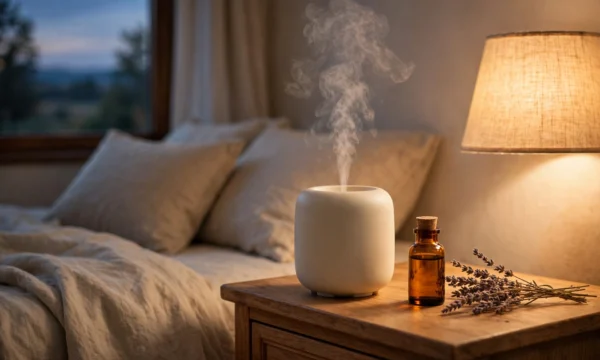
Walk into any wellness shop and you’ll find a wall of little amber bottles promising deeper sleep. Lavender, chamomile, cedarwood — the marketing for essential oils for sleep all sounds the same: natural, calming, proven. But when you strip away the labels and look at what scientists have actually tested, the picture gets a lot more interesting — and a lot more honest than most sellers will give you.
This guide to essential oils for sleep does something the top-ranking articles won’t: it sorts the oils by the actual strength of their evidence, compares the methods head-to-head, and tells you plainly where the safety lines are. No miracle claims. No “therapeutic grade” theater. Just what we know, what we don’t, and how to use these oils safely if you decide to try them.
The short version: what the science says about essential oils for sleep
Here’s the honest starting point, straight from the U.S. National Center for Complementary and Integrative Health (NCCIH): “Aromatherapy is sometimes used for insomnia, but we don’t know whether it’s helpful because little rigorous research has been done on this topic.”
That doesn’t mean essential oils do nothing. It means the research is early — mostly small trials, often measuring sleep with questionnaires rather than lab equipment, and using different oils, doses, and methods. So results are genuinely mixed.
That said, the newer evidence is more encouraging than the old reviews suggest:
- A 2025 systematic review and meta-analysis of lavender for sleep problems in older adults (10 trials) found 9 of 10 trials positive, with a large average effect (standardized mean difference −1.20). (Ostovar et al., 2025, PMID 41057090)
- A 2022 meta-analysis of aromatherapy for sleep in cancer patients found single-oil aromatherapy improved sleep quality, with lavender showing the strongest effect. (Cheng et al., 2022, PMID 35836211)
- A 2026 meta-analysis focused specifically on lavender essential oil for sleep in adults. (Shen et al., 2026, PMID 40600743)
- One recent randomized trial gave 80 chronic heart failure patients nightly lavender inhalation for 4 weeks and found significantly better sleep-quality scores than placebo, with no adverse events reported. (PMID 41499426)
The caveats matter as much as the results: most trials are small and heterogeneous, they rely heavily on subjective sleep questionnaires (like the PSQI), and a 2024 review of essential-oil trials specifically called for proper dose and toxicity studies. Keep that frame in mind as we go — it’s the difference between “promising” and “proven.”
The evidence tiers: which oils actually have human data
Almost every article lists the same 8–10 oils as if they’re equals. They’re not. Here’s an honest tiering based on human-trial evidence specifically for sleep.
Tier 1 — Human trial evidence for sleep
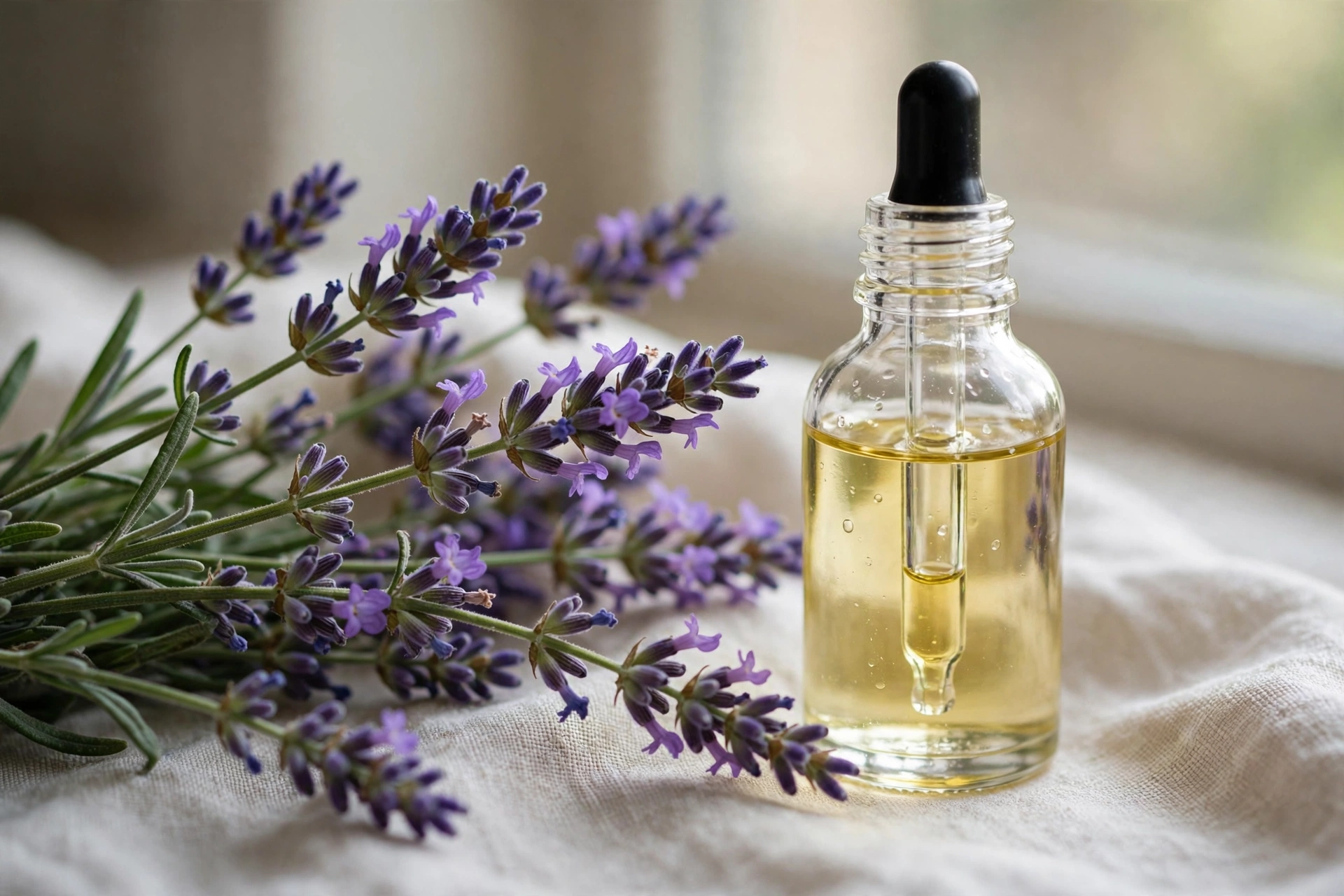
Lavender (Lavandula angustifolia). The clear frontrunner. Multiple randomized trials and at least three meta-analyses link lavender inhalation to better self-reported sleep quality. It’s the only oil with anything approaching a real evidence base. If you try one essential oil for sleep, the research points here.
Roman chamomile (Chamaemelum nobile). A handful of small human trials suggest a calming effect that may translate to modest sleep benefits. The evidence is thinner than lavender’s and the trials are small, but it’s the most reasonable second pick. (Note: people allergic to ragweed or related plants can react to chamomile — NCCIH flags this.)
Tier 2 — Animal, blend, or indirect evidence only
Cedarwood, valerian oil, sandalwood, marjoram. These show up in aromatherapy blends studied for sleep, or in animal research, but there are no solid human trials testing the single oil for sleep. Valerian is worth a special note: NCCIH’s review of valerian (the herb, usually as capsules or tea) found the evidence for insomnia “inconsistent,” and the American Academy of Sleep Medicine’s 2017 guideline recommended against using valerian for chronic insomnia. The essential oil has even less direct evidence.
Tier 3 — Anxiety relief, but no real sleep-trial data
Ylang ylang, bergamot, clary sage. These have some evidence for easing anxiety or stress in small studies — and since anxiety can keep you up, sellers leap to “helps you sleep.” That’s a leap the trials don’t actually make. No rigorous human study shows these oils improve sleep itself.
If an article or a bottle tells you jasmine “outperforms pharmaceutical sedatives,” walk away — that’s a real claim found on a currently ranking page, and it inflates one small finding into a treatment claim. This is exactly the kind of hype the evidence doesn’t support.
Method matters more than the oil: diffusion vs. skin vs. swallowing
Here’s the comparison no top-ranking article makes, and it’s arguably the most important section of this guide.
| Method | What the sleep trials actually used | Safety reality |
|---|---|---|
| Inhalation / diffusion | Nearly all of it. Every lavender sleep trial that matters used inhalation. | Safest route when done sensibly. Ventilate, don’t run a diffuser all night in a sealed room. |
| Topical (diluted on skin) | Mostly massage-for-anxiety studies, not sleep trials. | Use a carrier oil at 1–3% dilution (roughly 6–18 drops per ounce of carrier). Patch-test first. Never apply undiluted oils to skin. |
| Ingestion / swallowing | None. Zero sleep trials tested drinking essential oils. | Actively unsafe, especially for children. Do not do this. |
That last row needs emphasis, because a major essential-oil brand’s own sleep ebook quietly suggests lavender and clary sage “can be taken internally.” Medical guidance says otherwise, and the poisoning data is sobering: the Maryland Poison Center reports that as little as 5 mL of eucalyptus oil ingested by a child caused lethargy and apnea; a single teaspoon of camphor-containing oil can trigger seizures in children; and wintergreen oil carries roughly the toxicity of 21 aspirin tablets in a small amount. Eucalyptus oil inhalation alone has been linked to over 100 reported seizure cases, nearly half in children. (PMID 34282989)
Two related myths to kill:
- “Therapeutic grade” means nothing. No regulator certifies essential-oil purity grades. It’s a marketing term invented by sellers. Buy from companies that publish third-party GC/MS test reports if you want quality assurance — not from whoever shouts “therapeutic grade” loudest.
- The FDA does not regulate these oils for safety or efficacy before sale. What the bottle claims and what’s in the bottle are on the honor system unless the company voluntarily tests.
A bedtime protocol that respects the evidence
Since the trials used inhalation, here’s a protocol built around that — practical, conservative, and honest about what it’s doing (creating a calming bedtime cue with modest evidence behind it, not drugging you to sleep):
- Pick one oil — start with lavender. Give it 5–7 nights alone before you start blending. If your sleep improves, you’ll actually know what did it.
- Diffuse 30–60 minutes before bed, not all night. Add 3–5 drops per 100 ml of water in an ultrasonic diffuser. Start it while you wind down, then turn it off when you get into bed. Continuous all-night diffusion in a closed bedroom is unnecessary and irritates some people’s airways.
- For a pillow mist: mix 10–15 drops of lavender into 2 ounces of distilled water with a teaspoon of witch hazel (it helps the oil disperse), shake well, and mist your pillow lightly from arm’s length. Test on a corner of the pillowcase first — oils can stain some fabrics.
- For topical use: dilute to 1–3% in a carrier oil (jojoba, sweet almond, or fractionated coconut). That’s about 6–18 drops per ounce. Rub a small amount on your wrists or the back of your neck as part of your wind-down. Do a patch test on your inner forearm 24 hours before wider use.
- Pair it with the boring stuff that actually works. A consistent wake time, a cool dark room, and no screens in the last hour do more for your sleep than any oil. Aromatherapy is a supporting player — if you want the full evidence-based playbook, see our guide to the science of better sleep.
Safety: the section most articles skim
Essential oils are concentrated plant chemicals. “Natural” is not a synonym for “safe.” Here’s what the vague “use with caution” warnings should actually say:
Pets. Cats lack a liver enzyme needed to process many essential oils — tea tree oil is never safe around cats, and several others are risky. For birds, the rule is simpler: don’t diffuse around them, period (avian respiratory systems are extremely sensitive — this is standard veterinary guidance). Dogs are less sensitive but still deserve a ventilated room and the choice to leave. Signs of pet distress or poisoning include drooling, vomiting, wobbliness, tremors, and difficulty breathing — if you see these, get the animal to fresh air and call your vet. The ASPCA’s poison control hotline is 1-888-426-4435.
Pregnancy. Avoid clary sage, jasmine, and pennyroyal during pregnancy, and treat all essential-oil use in pregnancy as a “ask your doctor or midwife first” situation. The research here is thin, which is itself a reason for caution.
Babies and young children. Use extra caution with children under 2 — their airways and skin are far more sensitive. Never use oils on or near an infant’s face, and keep all bottles locked away: most serious pediatric poisonings are a curious toddler and an unlocked bottle.
Seizure risk. Eucalyptus and rosemary oils have been linked to seizures, mostly in children. If anyone in the household has epilepsy, skip those oils and check with a neurologist before using others.
Allergies and interactions. Chamomile can trigger reactions in people allergic to ragweed, daisies, or chrysanthemums. And because these are bioactive compounds, tell your doctor about regular essential-oil use the same way you’d mention a supplement — especially if you take sedatives or have asthma.
Who should skip the oils and do something else instead
If your sleep problem is persistent insomnia — trouble falling or staying asleep at least three nights a week for three months — essential oils are not the answer. The treatment with the strongest evidence by far is CBT-I (cognitive behavioral therapy for insomnia), which outperforms sleep drugs in the long run. Aromatherapy can be a pleasant part of a wind-down routine, but it shouldn’t delay real treatment. If snoring, gasping, or overwhelming daytime sleepiness is in the picture, get evaluated for sleep apnea instead of shopping for oils.
For a gentler, evidence-backed nighttime aid some people pair with aromatherapy, our look at mouth tape for sleep separates the plausible mechanism from the hype the same way this guide does.
If you’d prefer a bedtime drink to a diffuser, see our honest look at tart cherry juice for sleep
Frequently asked questions
Do essential oils actually help you sleep?
The honest answer: maybe, modestly, for some people. Lavender inhalation has the best evidence — several small trials and meta-analyses show improved self-reported sleep quality — but the trials are small, the measurements are mostly questionnaires, and NCCIH says rigorous research is still lacking. Think of it as a low-risk sleep cue, not a treatment.
Which essential oil is best for sleep?
Lavender, by a clear margin — it’s the only oil with multiple human trials and meta-analyses behind it. Roman chamomile is a distant second. Everything else on the typical “best oils” list (cedarwood, ylang ylang, bergamot, clary sage) is there on tradition or anxiety data, not sleep trials.
Is it safe to diffuse essential oils every night?
For most healthy adults, diffusing 30–60 minutes before bed in a ventilated room is considered low risk. Don’t run a diffuser all night in a sealed bedroom, keep it away from pets’ main spaces, and skip it entirely around birds. If you develop headaches, nausea, or airway irritation, stop.
Can I put essential oils directly on my pillow or skin?
On your pillow: use a diluted pillow mist, not undiluted drops — neat oils can irritate skin and stain fabric. On skin: always dilute to 1–3% in a carrier oil and patch-test first. Never swallow essential oils; no sleep research supports ingestion and it can be dangerous.
Are essential oils safe for babies and pets?
Not without serious precautions. Keep oils away from children under 2 and never near an infant’s face. Cats are especially vulnerable (tea tree oil can be fatal to them), and birds should never be in a room where oils are diffused. When in doubt, ask your pediatrician or veterinarian first.
Written by the HealthRovia editorial team. For general information only — not medical advice.