Key Takeaways
- Vegan meal prep means batch-cooking plant-based building blocks — grains, proteins, vegetables, and sauces — so balanced meals come together in minutes all week.
- These vegan meal prep ideas work best when you anchor every meal with a protein, a whole grain, plenty of vegetables, and a healthy fat.
- Most cooked vegan food keeps 3–4 days in the fridge and up to 3 months in the freezer.
- Start small: prep just lunches or one mix-and-match template, then expand once the habit sticks.
If your weeknights tend to end with a fridge full of good intentions and a takeout app open on your phone, you’re in good company. Cooking a wholesome dinner from scratch every night isn’t realistic for most of us — and that’s exactly where a good set of vegan meal prep ideas earns its keep.
Vegan meal prep isn’t about eating the same container of plain rice and steamed broccoli five days straight. Done well, it’s a flexible system: about 90 minutes on the weekend cooking big-batch building blocks — grains, proteins, roasted vegetables, a great sauce or two — then mix and match them into lunches and dinners you’ll genuinely look forward to all week.
In this guide, you’ll learn what vegan meal prep really looks like, how to get plenty of protein from plants, a simple step-by-step method, a 7-day framework of ideas, plus storage, budget, and food-safety basics. No complicated recipes, no specialty equipment — just a practical system you can start this weekend.
What Is Vegan Meal Prep, Really?
At its simplest, vegan meal prep means preparing plant-based food ahead of time so future-you can eat well with minimal effort. Most people land on one of two approaches — and a blend of both works best.
Full-meal prep
The classic “cook once, portion out, reheat” style: a big pot of red lentil curry, a tray of burrito bowls, or a hearty minestrone divided into containers. Lowest effort on busy days — grab, heat, eat. A big pot of soup is another perfect prep project — see our 12 best soups for winter for cozy recipes that freeze beautifully.
Component prep (mix-and-match)
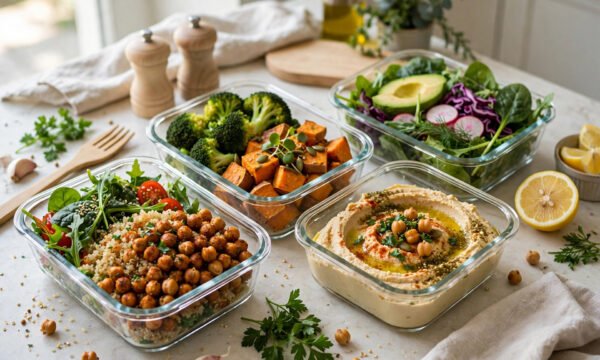
You batch-cook building blocks separately — grains, proteins, roasted vegetables, sauces — then combine them at mealtime however you’re craving. This mix-and-match style is why these vegan meal prep ideas never get boring: the same smoky chickpeas become a Mediterranean bowl on Monday and tacos on Wednesday.
Why These Vegan Meal Prep Ideas Are Worth the Effort
Ninety minutes on a Sunday sounds like a lot — until you add up what it gives back:
- Real savings. Bulk staples like lentils, rice, and seasonal vegetables cost a fraction of takeout.
- Less food waste. When every vegetable has a planned job, far less wilts forgotten in the crisper drawer.
- More plants, effortlessly. Prepped vegetables get eaten; unprepped ones don’t. It’s that simple.
- No 6 p.m. decision fatigue. Dinner becomes a five-minute assembly job instead of a daily negotiation.
- Steadier energy from fiber, complex carbs, and plant protein that keeps you full for hours.
How to Get Enough Protein on Plants (Without Overthinking It)
Let’s tackle the big question first: where does the protein come from? Hitting your protein needs on plants is very doable once you know your heavy hitters — and the old rule about combining specific proteins at every meal has been relaxed. What matters is variety across the whole day.
These are the staples worth building your prep around:
- Lentils — about 18g protein per cooked cup; red lentils for curries, green and brown for salads.
- Chickpeas — about 15g per cooked cup; roast for crunch or mash for sandwich filling.
- Tofu — about 20g per cup of firm tofu; press, cube, and bake until golden.
- Tempeh — 30g+ per cup; nutty and hearty, excellent crumbled into chili.
- Edamame — about 17g per cup; steam frozen pods for five minutes.
- Quinoa — about 8g per cooked cup, with all nine essential amino acids.
- Hemp seeds and nutritional yeast — easy protein boosters for bowls and sauces.
Anchor every meal with one concentrated protein source and let grains and vegetables top up the rest. For a visual reference on balanced plates, the USDA’s MyPlate guide is genuinely useful. And if you’re curious how plant proteins compare for building and maintaining muscle, our plant-based protein vs. whey breakdown explains the research in plain language.
The Simple 5-Step Vegan Meal Prep Method
Forget four-hour Sunday marathons. This streamlined method takes about 90 minutes, start to finish.
Step 1 — Pick one template
Don’t plan seven different dinners. Choose one flexible format — grain bowls are the easiest — and let sauces, spices, and toppings create the variety.
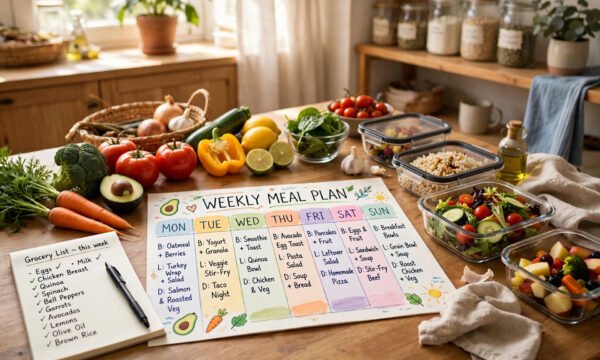
Step 2 — Write a short, specific grocery list
Check what you already have, then list only what your template needs. A focused list means a quick shop, a low bill, and no vegetable graveyard in the crisper drawer.
Step 3 — Cook in the right order
Start the longest, most hands-off item — usually grains or beans. While those simmer, roast vegetables and cook your protein. Whisk sauces together in the gaps. A slow cooker is ideal for the hands-off items — see how to use a slow cooker.
Step 4 — Store components separately
Keep grains, proteins, vegetables, and sauces in their own containers. Fresher food, better textures, and the freedom to remix meals all week.
Step 5 — Label and date everything
Ten seconds with masking tape and a marker beats the midweek mystery-container gamble. You’ll always know exactly what it is and when you made it.
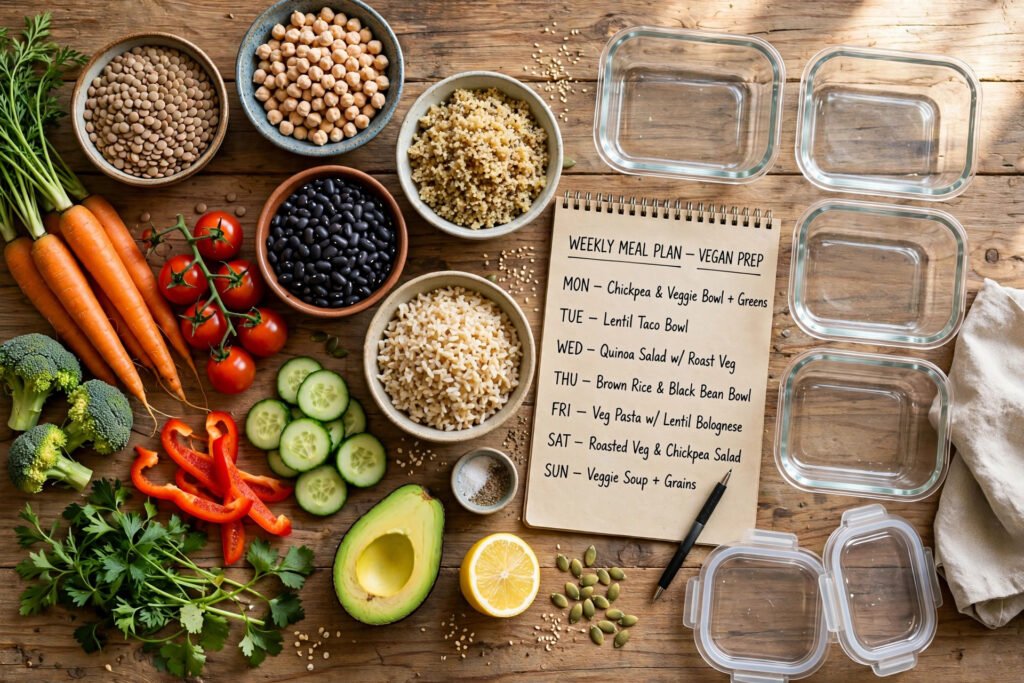
A 7-Day Vegan Meal Prep Framework
Think framework, not rigid menu: these vegan meal prep ideas give you breakfast and lunch formulas plus a week of dinner ideas. Prep the components on Sunday; assemble each meal in minutes.
Breakfasts (pick two for the week)
- Overnight oats, three ways: peanut butter–banana, apple-cinnamon walnut, or cocoa-cherry. Five jars on Sunday covers the week.
- Tofu scramble with turmeric, peppers, and spinach — savory, high-protein, and reheats beautifully.
Lunches (mix and match)
- Mediterranean bowl: quinoa, roasted chickpeas, cucumber, tomato, olives, and tahini-lemon dressing.
- Burrito bowl: brown rice, smoky black beans, corn, shredded cabbage, salsa, and guacamole.
Dinners for the week
| Day | Dinner idea |
|---|---|
| Monday | Red lentil coconut curry over brown rice |
| Tuesday | Sheet-pan tempeh with roasted sweet potato and broccoli |
| Wednesday | Black bean tacos with crunchy cabbage slaw |
| Thursday | Stuffed sweet potatoes with seasoned black beans and corn |
| Friday | Big-batch minestrone with white beans and crusty bread |
| Saturday | Tofu and vegetable stir-fry with sesame-ginger sauce |
| Sunday | Leftover remix bowls, then next week’s prep session |
Cooking for more than yourself? This framework scales well — see our family meal plans guide for portioning tips that keep everyone happy without cooking twice.
Storage and Food-Safety Basics
Good prep is safe prep. The rules worth memorizing:
- Cool it fast. Get cooked food into the fridge within two hours; shallow containers chill quicker.
- Remember the 3–4 day rule for cooked grains, beans, tofu, and roasted vegetables.
- Freeze the overflow. Soups, curries, beans, and grains keep up to three months — label with contents and date.
- Reheat thoroughly until steaming hot (165°F / 74°C), and only reheat something once.
- When in doubt, throw it out. If it smells off or you can’t remember when you made it, don’t risk it.
Vegan Meal Prep on a Budget
The cheapest foods in the store are often vegan staples — proof that vegan meal prep ideas can cost less per meal than almost any other way of eating:
- Dried beans, lentils, oats, and rice: pennies per serving, packed with fiber and protein.
- Frozen produce: picked ripe and just as nutritious as fresh, with zero waste.
- Seasonal fresh vegetables: cheaper and tastier — let the season shape your weekly template.
- Pantry sauces like tahini-lemon, peanut sauce, and salsa make simple components taste exciting.
Frequently Asked Questions About Vegan Meal Prep Ideas
How long does vegan meal prep last in the fridge?
Three to four days for most cooked components in airtight containers. Sunday prep covers you through Wednesday; a quick midweek batch of grains carries you to the weekend.
Can I really get enough protein from vegan meal prep?
Yes, with a little intention. Anchor each meal with lentils, chickpeas, tofu, or tempeh, and 15–30 grams of protein per meal adds up fast.
Do I need to combine specific proteins at every meal?
No — that advice is outdated. Your body pools amino acids through the day, so variety across meals is enough. No perfect pairings required.
What’s the easiest vegan meal prep for a complete beginner?
The simplest of these vegan meal prep ideas? Start with lunches: one grain, one tray of roasted vegetables, one protein, one sauce. Four containers, five days of mix-and-match meals.
How do I keep prepped vegetables from getting soggy?
Roast hot so vegetables caramelize, cool before sealing, and keep dressings separate. Sturdy vegetables like sweet potatoes, broccoli, and carrots outlast delicate greens — add those fresh.
Is frozen produce as nutritious as fresh?
In most cases, yes. Frozen produce is picked ripe and flash-frozen, locking in vitamins — and it never goes to waste.
The Bottom Line
The best vegan meal prep ideas aren’t the fanciest — they’re the ones you’ll actually repeat. One template, a few reliable components, one 90-minute session this weekend, and within a couple of weeks eating well on plants feels like the easiest part of your day.
A quick note: This article is for general information only and isn’t medical advice. Nutritional needs vary from person to person — if you have a health condition, take medication, or have specific dietary concerns, check in with a qualified healthcare professional or registered dietitian. You can find credentialed experts through the Academy of Nutrition and Dietetics.