It’s 7 a.m. You’re in front of the bathroom mirror, phone in one hand, hairbrush full of shed hair in the other. The algorithm has noticed — all week, two bottles: a peach-mango liquid vitamin that promises thicker hair, and a bright green powder that promises a flatter stomach. Both look like the answer — and both cost real money. And the maryruths vs bloom question is the one your group chat can’t settle.
Here’s the thing most reviews skip: these two products don’t actually do the same job. One is a liquid multivitamin built around hair, skin, and daily nutrient coverage. The other is a greens powder built around fiber, greens, and gut support. Comparing them is fair — you’re choosing where your money goes — but only if it’s honest about that difference. This maryruths vs bloom comparison grades both on seven points, with real prices and labels, so you can stop scrolling and decide.
Maryruths vs Bloom: 7 Honest Points That Decide It
1. Two different jobs in two different bottles
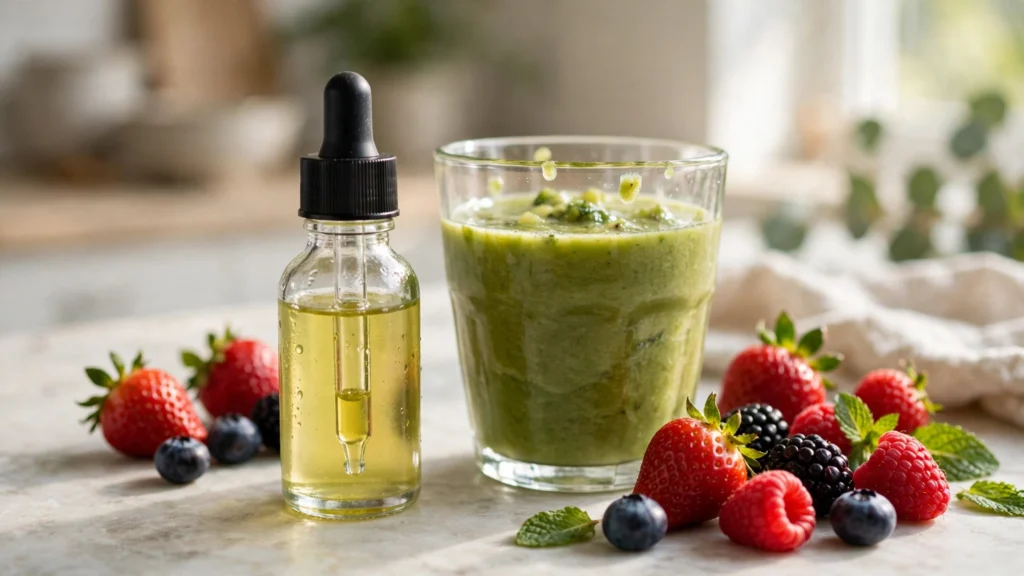
Start with what each product actually is — the maryruths vs bloom debate gets confusing the moment you forget they’re different categories. MaryRuth’s Liquid Morning Multivitamin + Hair Growth is a liquid multivitamin: two tablespoons a day deliver a broad spread of vitamins and minerals, led by 10,000 mcg of biotin and 160 mg of Lustriva — clinically shown, per the brand, to support thicker, fuller hair in as early as three weeks. Bloom Greens & Superfoods is a powder you stir into water: one 5.64-gram scoop delivers 30-plus fruit, vegetable, and greens ingredients, plus fiber, probiotics, and enzymes, at just 15 calories. One fills nutrient gaps and targets hair; the other adds greens and gut support to your day. Neither replaces a balanced diet.
2. The price math nobody does for you
Price is where the maryruths vs bloom gap gets hard to ignore. Bloom’s 30-serving tub sells for about $33.99 direct from the brand — roughly $1.13 per scoop. MaryRuth’s Liquid Morning Multivitamin + Hair Growth costs $39.99 for 15 servings or $74.99 for 30 — about $2.50 to $2.67 per serving, more than double Bloom’s daily cost. Over a month: roughly $34 for Bloom against roughly $75 for MaryRuth’s — about $41 a month, nearly $500 a year. MaryRuth’s isn’t overpriced — a branded hair ingredient costs more to make — but know the gap before you subscribe; it compounds fast.
Here’s where the maryruths vs bloom comparison turns on transparency. MaryRuth’s lists its headline numbers in the open: 10,000 mcg of biotin (33,333% of daily value), 12 mcg of vitamin B12, and 160 mg of Lustriva. Bloom lists 30-plus ingredients, but most sit inside seven proprietary blends. Its green superfood blend totals just 1.367 grams across five ingredients — far less than one serving of vegetables. Its pre- and probiotic blend is 648 mg, names three species, but discloses no strain designations or CFU count — so it can’t be checked against studied doses. Our AG1 vs Bloom breakdown found the same proprietary-blend problem.
4. The absorption question, answered honestly
MaryRuth’s sells the liquid format hard, and Bloom’s powder dissolves in water too, so the maryruths vs bloom absorption debate mostly comes down to marketing. You’ve probably seen the claim that liquids absorb at 90% while pills manage 10–20%. No published study supports that number. The research is narrower: a liquid or powder skips the tablet’s disintegration step, so nutrients may arrive sooner — but the total absorbed over time is similar for most nutrients. The NIH Office of Dietary Supplements notes absorption depends on the nutrient, its chemical form, and food — not on whether it arrived as a liquid. A liquid makes sense if you hate swallowing pills — but that alone is no proof of better absorption.
5. Taste, texture, and the habit you’ll actually keep
The best supplement is the one you still take in March, and that’s where the maryruths vs bloom taste question matters more than any label claim. Bloom is built to be drunk: stevia-sweetened, zero sugar, 15 calories a scoop, in flavors like mango and strawberry kiwi that reviewers rate as genuinely pleasant. MaryRuth’s is a syrupy two-tablespoon shot in peach mango or dragon fruit melon — 35 calories, sweet vitamin taste, loved by some and tolerated by others. Bloom wins on lightness and variety; MaryRuth’s on speed — two tablespoons take five seconds. Be honest about which routine you’ll repeat — powder or spoonful.
6. TikTok made them famous — what does the evidence say?
MaryRuth’s became the leading supplement brand on TikTok Shop, with a reported $29.9 million in gross merchandise value and 500,000-plus hair vitamins sold. Bloom built its fame the same way — the strongest TikTok gifting performer among supplement brands in late 2026 — with “debloat” videos turning greens powder into a daily ritual. The maryruths vs bloom hype is real, and both products have earned their audiences. But hype is not evidence. MaryRuth’s hair claim rests on Lustriva, an ingredient with a published study behind it; Bloom’s bloating and energy claims rest on small doses of familiar ingredients in blends. Virality tells you a product is easy to sell — not whether it will work for you. See our MaryRuth’s vs Thorne comparison.
7. Who should pick which one
So who wins? The maryruths vs bloom decision comes down to the problem you’re actually trying to solve. Choose MaryRuth’s if hair thinning is your main frustration, you want a true daily multivitamin with disclosed doses, and $75 a month doesn’t scare you. Choose Bloom if you want a light, tasty greens drink, your diet is short on vegetables and fiber, and you’d rather spend about $34 a month. If your budget stretches to one, pick the one matching your biggest complaint — hair or greens. And if you want a probiotic with disclosed strains and CFU counts, our Cymbiotika vs Seed and Jamieson vs Seed comparisons cover brands that publish those numbers; our Kirkland review covers the budget end.
Maryruths vs Bloom: Our Verdict — Which One Wins for You?
After seven rounds, the maryruths vs bloom verdict is a split decision. MaryRuth’s wins on transparency and a single clear job — a disclosed-dose liquid multivitamin with a hair ingredient that has real research behind it. Bloom wins on price, taste, and daily ease — a greens powder costing less than half as much per serving that people genuinely enjoy drinking. For most people, we’d pick Bloom for value and habit-building; for hair worries, MaryRuth’s. The honest maryruths vs bloom answer: neither is a miracle. The right one targets your problem, at a price you’ll still pay in six months. See our Ritual vs Thorne comparison for two premium multivitamins head to head.
Maryruths vs Bloom: Frequently Asked Questions
Is maryruths vs bloom a fair comparison?
Yes, as a buying decision — but not as a like-for-like product test. MaryRuth’s is a liquid multivitamin built around hair and daily nutrient coverage, while Bloom is a greens powder built around fiber, greens, and gut support. Compare them on price, transparency, and which problem they solve.
Is MaryRuth’s worth it if I already eat a balanced diet?
It depends on what you’re paying for. If your diet already covers your needs, a multivitamin adds less value — the NIH notes they mainly help people who don’t meet their needs from food. The hair-growth angle, built on Lustriva, is the real reason most buyers choose it.
Does Bloom Greens help with bloating?
Some users report feeling less bloated, but the evidence is thin: Bloom’s pre- and probiotic blend names three species with no disclosed CFU count, and its fiber blend is about 1.6 grams per scoop. The NIH explains that probiotic effects are strain-specific and dose-specific, so a blend without strain or CFU details can’t be checked against studied doses.
Can I take both products in the maryruths vs bloom comparison at the same time?
People do combine a multivitamin with a greens powder, but check the overlap first — both contain overlapping vitamins and botanicals, and high doses of biotin can interfere with some blood test results. Tell your doctor about every supplement you take before doubling up.
Which one is cheaper per month?
Bloom, by a wide margin. At about $1.13 per serving, a month of Bloom costs roughly $34. MaryRuth’s Liquid Morning Multivitamin + Hair Growth costs about $2.50 per serving, or roughly $75 a month — more than double.
Is Bloom a good brand?
Bloom is a legitimate, popular brand — its greens powder holds 4.5 out of 5 from more than 13,000 reviews on the brand’s own site. The fair criticism is transparency: seven proprietary blends hide individual doses and its probiotic count is undisclosed, so some claims rest more on marketing than on measurable doses.
Written by the HealthRovia editorial team. For general information only — not medical advice.