Medical Disclaimer: This article is published for educational and informational purposes only and does not constitute individualized medical diagnosis, treatment, or clinical prescription. Always consult a board-certified physician or qualified healthcare provider regarding symptoms, medication changes, or specific health conditions.
Key Takeaways
- Easy snacks for kids bridge the gap between meals, keeping energy steady and preventing the pre-dinner meltdown.
- The simple formula for easy snacks for kids: pair two food groups — like fruit plus protein — for a snack that actually satisfies.
- Below are 25 easy snacks for kids organized by food group, most ready in five minutes or less.
- Many packaged “kid” snacks hide surprising amounts of added sugar — a quick label check keeps them in the sometimes-food category.
- A short weekend prep session (washed fruit, portioned dips, hard-boiled eggs) makes healthy snacking automatic all week.
If your kids turn into different humans around 4 p.m., you’re witnessing the after-school slump in action. Finding easy snacks for kids that genuinely satisfy — without a sugar crash an hour later — is one of the highest-leverage moves in family nutrition. The right snack steadies energy and mood until dinner; the wrong one just restarts the “I’m still hungry” loop.
The good news: you don’t need elaborate recipes or expensive specialty products. This guide rounds up 25 easy snacks for kids — quick, healthy ideas organized by food group — plus lunchbox packing tips, a realistic look at snacks worth limiting, and make-ahead tricks for busy weeks. Snacking also works best as part of a bigger rhythm — our family meal plans guide shows how to weave snacks into a simple weekly system for the whole household.
Why Healthy Snacks Matter for Kids
Kids have small stomachs and big energy needs, which means they genuinely need to eat more often than adults — most children do well with two or three planned snacks a day on top of meals. Well-chosen snacks fill common nutrition gaps like fiber, calcium, iron, and vitamin D, and steadier blood sugar shows up as better focus and fewer meltdowns. That’s why easy snacks for kids deserve the same thought as meals.
The American Academy of Pediatrics encourages families to build easy snacks for kids around nutrient-dense foods — fruits, vegetables, whole grains, and protein-rich options — rather than empty-calorie treats. Think of snacks as mini-meals: each one is a chance to add a food group your child missed earlier in the day.
25 Easy Snacks for Kids, Organized by Food Group
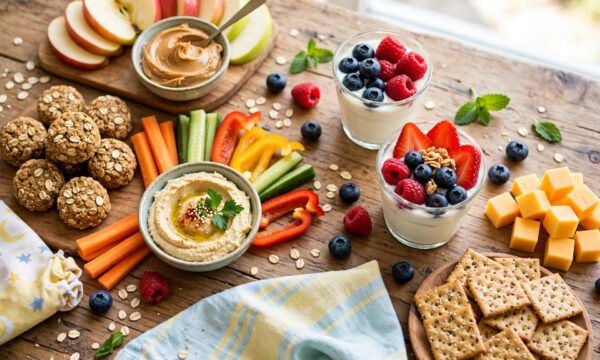
Mix and match across the groups below. Pairing a fruit or vegetable with a protein or whole grain is the simple formula for easy snacks for kids that keep them full until the next meal.
Fruits & Veggies
- Apple slices with peanut butter — the classic crunch-plus-protein combo.
- Frozen mango chunks — taste like sorbet straight from the freezer.
- Cucumber rounds with hummus — cool, crunchy, and endlessly dippable.
- Banana “sushi” — a banana rolled in a tortilla with peanut butter, sliced into rounds.
- Cherry tomato and mozzarella skewers — everything tastes better on a stick.
- Steamed edamame with a pinch of salt — fun to pop, packed with protein.
- Rainbow veggie cups — bell pepper strips, carrots, and snap peas standing in a cup of yogurt dip.
Protein-Rich Picks
- Hard-boiled eggs with everything-bagel seasoning — batch-cook a half dozen on Sunday.
- Turkey and cheese roll-ups — deli turkey wrapped around a cheese stick.
- Roasted chickpeas — crunchy, savory, and great by the handful.
- Greek yogurt with a drizzle of honey — double the protein of regular yogurt.
- DIY trail mix — nuts, seeds, whole-grain cereal, and a few dark chocolate chips.
- Cottage cheese with pineapple — the sweet-salty combo kids love.
Whole Grains
- Whole-grain toast fingers with avocado — a mini-meal in minutes.
- Oatmeal energy balls — oats, peanut butter, and honey rolled into bites (no baking).
- Air-popped popcorn with parmesan — a whole-grain snack that feels like a treat.
- Whole-grain crackers with cheese — simple, portable, satisfying.
- Mini whole-wheat pita with bean dip — fiber plus protein in every bite.
- Banana oat mini-muffins — batch-bake on weekends, freeze, and thaw as needed.
Dairy & Smart Combos
- Snack box — cheese cubes, whole-grain crackers, and apple slices in a bento box.
- Yogurt parfait — layers of yogurt, berries, and a sprinkle of granola.
- Berry-green smoothie — milk, frozen berries, banana, and a handful of spinach.
- String cheese and a piece of fruit — the ultimate grab-and-go pairing.
- Bean and cheese quesadilla triangles — quick in a skillet, great for dipping in salsa.
- Frozen yogurt bark — spread yogurt on a tray, top with berries, freeze, and break into pieces.
Lunchbox Packing Tips
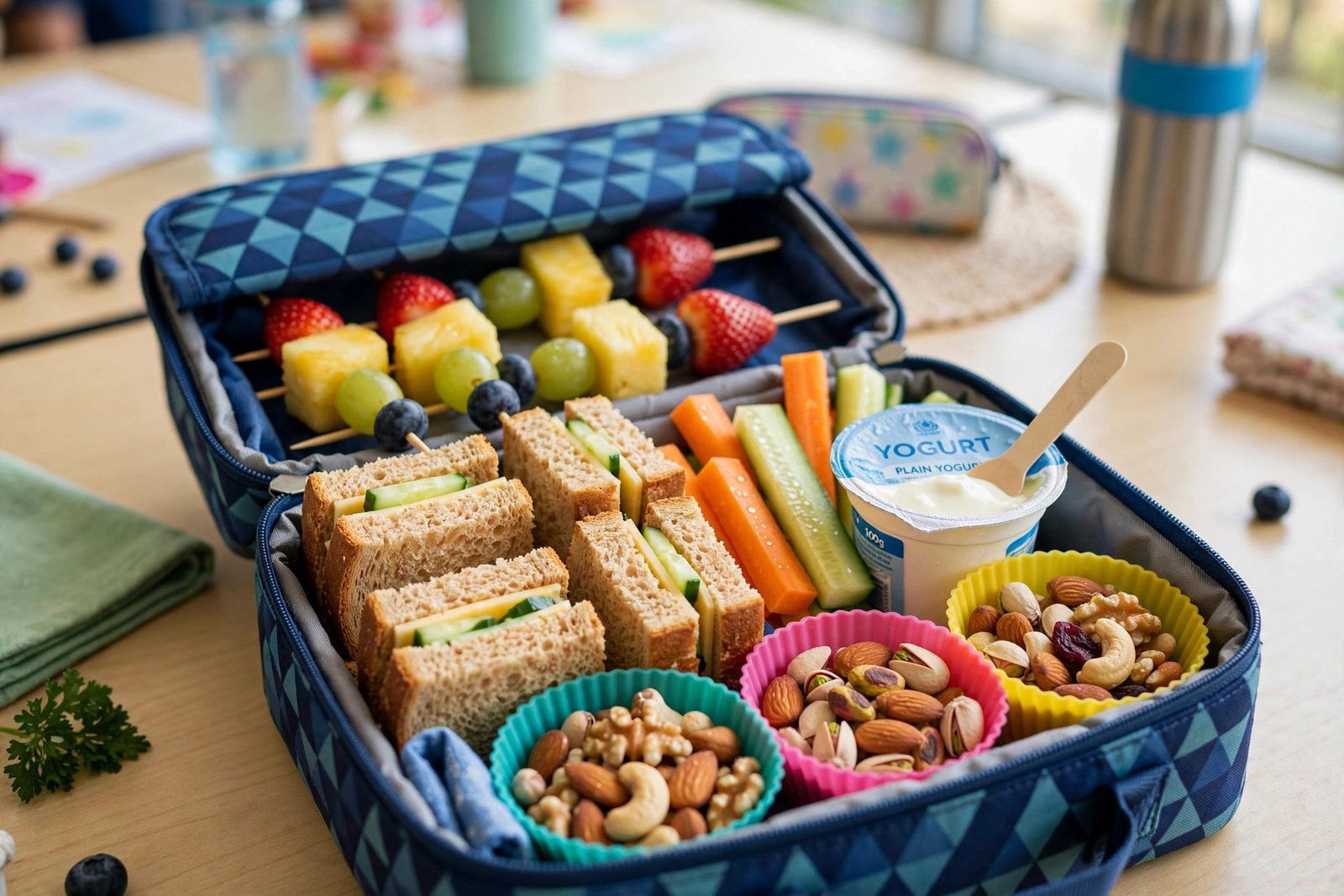
Packing school lunches gets easier with a formula: one main + one fruit or veggie + one crunchy whole-grain item + one fun extra. These lunchbox formulas double as easy snacks for kids on the go. Bento-style boxes with compartments make small portions feel abundant, and silicone muffin cups work beautifully as dividers. Tuck in an ice pack and keep cold foods cold — yogurt, cheese, and cut fruit should stay chilled until lunchtime. Finally, let kids pick one item each morning from two parent-approved options; a little autonomy dramatically increases the odds the lunchbox comes home empty.
Snacks to Limit: Keep an Eye on Added Sugars
Not every snack marketed to kids deserves a daily spot in the rotation. Fruit gummies, frosted pastries, candy-like yogurt tubes, and sugary juice drinks can pack several teaspoons of added sugar per serving with little nutrition to show for it. The USDA’s MyPlate guidance reminds families to limit added sugars — and the fastest way to spot them is the label. Our guide to how to read nutrition labels shows you how to check the “Added Sugars” line in seconds. A practical rule: if sugar (or one of its many aliases) appears among the first three ingredients, treat it as a sometimes-food rather than an everyday snack.
Make-Ahead Tips for Busy Weeks
A 20-minute weekend session removes all weekday friction and keeps easy snacks for kids within arm’s reach: hard-boil a half-dozen eggs, wash and cut fruit and vegetables into grab-ready portions, portion hummus or yogurt dip into small containers, and bake a batch of oat muffins or roll energy balls. Store everything at kid-eye-level in the fridge in clear containers. Pre-portioned snacks also prevent the “accidentally ate the family-size bag” problem — for kids and grown-ups alike.
Frequently Asked Questions
How many snacks do kids need per day?
Most children do well with two to three planned snacks a day in addition to three meals. Structured snack times work better than all-day grazing, which can spoil appetites for meals and make it hard to notice true hunger cues.
Are packaged snacks ever okay for kids?
Yes — real life happens, and there are solid packaged easy snacks for kids. Choose options with short ingredient lists, whole grains or nuts listed first, and minimal added sugar. Single-serve packs also help with portion control, at school and on the go.
What are the best easy snacks for kids after school?
The after-school window is when kids are hungriest, so aim for the most substantial snack of the day: a protein plus produce pairing like apple with peanut butter, cheese with whole-grain crackers, or a smoothie. This holds them comfortably until dinner.
How do I handle a child who only wants junk food?
Avoid outright bans, which tend to backfire. Instead, crowd out less-healthy options by keeping appealing nutritious snacks visible and accessible, offer limited choices (“apple slices or banana?”), and keep serving the good stuff without pressure. Tastes adjust over time.
What about snack safety for toddlers?
Children under four are at higher risk of choking, so skip whole grapes, whole nuts, popcorn, and hard raw vegetables for toddlers — or cut them into tiny, safe pieces. Always have young children sit down while eating and stay within arm’s reach.
Should kids drink juice with their snacks?
Whole fruit beats juice every time — it has the fiber that juice leaves behind. Offer water or milk with snacks, and save 100% juice for small occasional servings (4–6 ounces) rather than a daily habit.
The Bottom Line
Healthy snacking isn’t about perfection — it’s about making the easy choice the good choice most of the time. Stock your kitchen with easy snacks for kids from each food group, do a little weekend prep, and those 4 p.m. hunger pangs become just another easy win for your family.