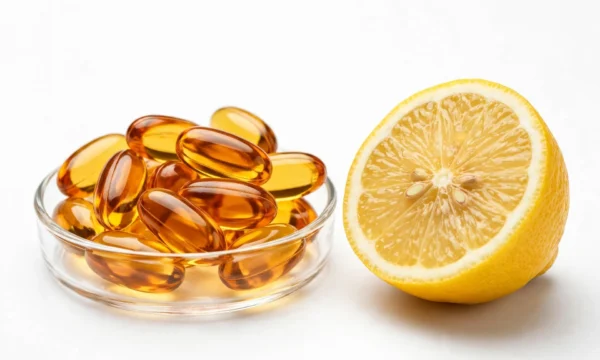
Lemon water is one of those habits that lives in two worlds. In one, it melts belly fat overnight, detoxes your liver, and alkalizes your body. In the other, it’s just flavored water.
The truth, as usual, sits somewhere much more interesting. Researchers have actually put lemon juice to the test — including a two-year randomized trial on kidney stones — and what they found is worth knowing. Here are the real lemon water benefits — what the research supports, what the hype gets wrong, and how to drink it without ruining your teeth.
What’s actually in a glass of lemon water?
Before the lemon water benefits, a quick look at the numbers — because most articles skip straight to the miracles without telling you what’s in the glass.
The juice of one average lemon (about 47 grams) contains roughly 21.6 mg of vitamin C, around 11 calories, and small amounts of folate, potassium, and B vitamins, according to the USDA National Nutrient Database for Standard Reference. That vitamin C is about one-quarter of a day’s needs for most adults (women need 75 mg/day, men 90 mg/day).
But the most distinctive ingredient isn’t the vitamin C — it’s the citric acid. Lemon juice contains about 49.2 grams of citric acid per kilogram, roughly five times the concentration in orange juice. That concentration matters, because citric acid is behind lemon water’s most genuinely impressive benefit — and its biggest downside.
1. A meaningful vitamin C boost
Vitamin C is needed to form collagen, heal wounds, maintain cartilage and teeth, and absorb iron — and it acts as an antioxidant that blocks some of the damage caused by free radicals, according to MedlinePlus.
One glass of lemon water won’t cover your full daily needs, but it adds a consistent 20–25% toward them at almost zero calories. That’s the honest version of the “immunity” claim: it contributes to the nutrient intake that supports immune function — it doesn’t supercharge anything. For more vitamin C–rich foods to build around it, see our guide to immune-boosting superfoods.
2. Kidney stone protection — the strongest evidence
Of all the lemon water benefits, this one has the most serious science behind it. Lemons are one of nature’s richest sources of citrate. In the body, citric acid becomes citrate, which binds with calcium in urine and keeps calcium oxalate crystals — the most common type of kidney stone — from clumping together and growing.
In 2021, researchers in Italy published a pragmatic randomized trial (Remuzzi and colleagues) testing 60 mL of fresh lemon juice twice daily in 203 people with recurrent calcium oxalate stones, all on a standard stone-prevention diet. Over two years, 21 of 100 people in the lemon juice group had a recurrence, compared with 32 of 103 controls — a difference that didn’t quite reach statistical significance (p = 0.089). But when researchers looked at the one-year mark, while adherence was still above 50%, the gap was clearer: 10 recurrences with lemon juice versus 22 without.
Adherence was the real problem: it slid from 68% at one year to 48% at two years, largely because of stomach complaints. So the honest read is this: lemon juice shows genuine promise for people prone to calcium oxalate stones, but drinking 60 mL twice daily for years is hard to stick with — and plain hydration remains the biggest factor.
3. Gentler, more regular digestion
A small 2022 study found that the citric acid in lemon juice boosted gastric acid secretion — the stomach fluid that breaks food down. A 2021 study also found that drinking lemon water before meals for four weeks appeared to promote digestion and peristalsis, the wave-like contractions that move food through the gut.
The evidence here is early and small, but the mechanism is plausible. Many people find warm lemon water first thing in the morning feels settling, and the hydration itself supports bowel regularity. If your digestion is sluggish in the mornings, it’s a reasonable, low-risk thing to try — not a cure for anything, just a nudge.
4. Better iron absorption from plant foods
This one gets skipped by almost everyone, yet it’s among the most useful. Vitamin C helps the body absorb non-heme iron — the kind found in spinach, lentils, beans, and chickpeas — by converting it into a form your gut can take up more easily.
If you follow a plant-based diet or just eat a lot of leafy greens, drinking lemon water with or right after your meal is a genuinely smart pairing. It costs nothing and uses real biochemistry, not wishful thinking.
5. Skin support from the inside
Vitamin C is essential for collagen formation — the protein that keeps skin firm and elastic. Diets richer in vitamin C are consistently linked with healthier-looking, more resilient skin. A 2017 review in Nutrients also found that adequate dietary vitamin C helped skin heal faster and reduced the appearance of scars.
To be clear: drinking lemon water won’t clear blemishes or erase wrinkles the way social media claims. But as one steady daily source of a nutrient your skin genuinely needs, it earns its place.
6. A hydration habit that sticks
The plainest benefit is also one of the biggest. A lot of people simply don’t drink enough water — and lemon makes plain water more appealing. If flavoring your water is what gets you from two glasses a day to six, that upgrade supports everything hydration supports: energy, kidney function, concentration, and digestion. (If you’re not sure how much water you actually need, our hydration guide breaks it down.)
7. Slightly gentler blood sugar responses
Some evidence suggests the acid in lemon juice can slow the breakdown and absorption of carbohydrate-rich foods, leading to a smaller blood sugar spike after meals — likely by slowing gastric emptying. A randomized crossover trial even tested this with an acidic lemon drink and white bread.
This is a modest, meal-level effect, not a diabetes treatment. Still, drinking lemon water with your meal rather than on its own may be the smarter timing if this is your interest.
8. Weight management — as a swap, not a miracle
No study has shown that lemon water melts fat. A mouse study on concentrated lemon polyphenols from peels got wildly misreported as proof — but researchers used extracts from peels (far stronger than juice), and mice aren’t people.
What lemon water can do is replace sugary drinks. A can of soda is 140+ calories; a glass of lemon water is about 11. Over months, that swap is where any real weight benefit comes from — not from anything the lemon burns.
9. Citrus flavonoids for the heart
Lemons contain citrus flavonoids, and research suggests these plant compounds can support heart health and may have a modest effect on blood pressure. One study found that women who consumed lemon daily alongside walking had lower blood pressure than those who didn’t — though it’s unclear whether they drank juice or ate the fruit.
Consider this promising rather than proven. It’s a nice possible bonus, not a reason to skip your actual heart-health habits.
What lemon water does NOT do
Let’s clear the table, because this drink carries more mythology than almost anything in the wellness world:
- It doesn’t detox your liver. Your liver, kidneys, and digestive system already process and remove waste continuously. No drink “detoxes” them, lemon or otherwise.
- It doesn’t melt fat or burn belly fat. There is no credible evidence for this.
- It doesn’t alkalize your body. Once metabolized, lemon produces some alkaline byproducts in urine, but your blood pH is tightly regulated and no food changes that.
- It doesn’t prevent cavities. One popular hospital article claims it does — the opposite is true. Citric acid erodes enamel (see below).
- It won’t transform your skin on its own. Vitamin C helps; miracles require better marketing.
- It isn’t a diabetes or cancer treatment. The blood sugar effect is small and meal-level.
How to make it (the way that actually works)
The studies used real, fresh juice — not bottled concentrate with preservatives, and not a restaurant wedge waved over the glass.
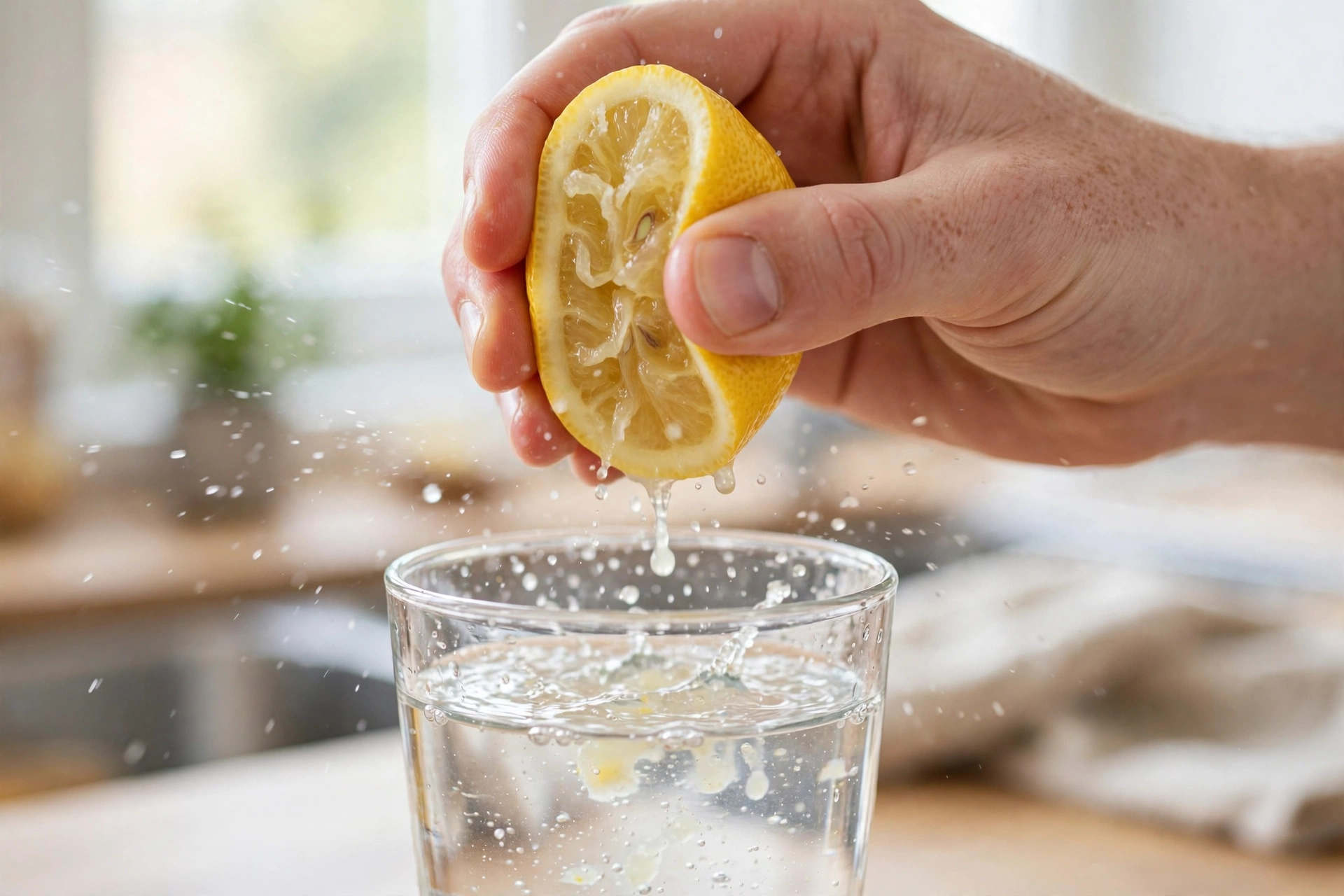
- Squeeze half a lemon (about 1–2 tablespoons of juice) into 8 ounces of water. That’s the everyday amount.
- Warm or room-temperature water is traditional and gentler on the stomach; cold works too.
- Drink with or just before meals if digestion or blood sugar is your goal.
- Optional: a few mint leaves, cucumber slices, or fresh ginger. Go easy on honey — a teaspoon adds 21 calories and mostly defeats the purpose of a low-sugar swap.
The teeth problem (take this seriously)
Here’s the downside almost everyone underplays: lemon water is acidic enough to soften and erode tooth enamel over time. Eroded enamel doesn’t grow back, and it leads to sensitivity and staining.
Dentist-recommended precautions:
- Drink through a straw to reduce contact with teeth.
- Rinse your mouth with plain water afterward.
- Brush before drinking, not right after. Wait about 30–60 minutes before brushing — acid softens enamel, and brushing softened enamel damages it further.
- Keep it to 1–2 glasses a day, and don’t sip it all day long (constant acid exposure is worse than one glass).
Who should be careful
- If you have GERD or frequent heartburn: citrus can increase gastric acid and trigger symptoms. The kidney stone trial itself found more gastrointestinal complaints in the lemon juice group.
- If you get mouth sores or have sensitive teeth: check with your dentist first.
- If you’re on potassium-sparing medication or manage kidney disease: talk to your doctor before adding large daily amounts of lemon juice — the trial used 60 mL twice daily, which is more than a casual glass.
Lemon Water Benefits: The Bottom Line
Lemon water isn’t magic, but it’s not nothing either. It’s a nearly calorie-free way to add a quarter of your daily vitamin C, a citrate source with real trial evidence behind it for kidney stone prevention, a modest digestive aid, and a clever trick for absorbing more iron from plant foods — plus the most underrated benefit of all, getting you to drink more water.
Just skip the detox fantasies, protect your enamel, and squeeze a fresh lemon instead of reaching for the bottle.
Frequently Asked Questions
How much lemon water should you drink a day?
One to two glasses a day — about half a lemon’s juice in 8 ounces of water per glass — is the amount most experts consider safe and useful. The kidney stone research used larger amounts (60 mL twice daily), but that’s a clinical dose, not a casual habit, and it caused stomach complaints in some people.
Is it better to drink lemon water in the morning or at night?
There’s no strong evidence favoring one time over another. Morning works well as a hydration habit after sleep, and drinking it with or before meals may help digestion and blunt blood sugar spikes. Choose whatever time you’ll actually stick with.
Can lemon water help with kidney stones?
There’s genuine evidence here. Citrate from lemon juice binds calcium in urine and helps prevent calcium oxalate stones, the most common type. A two-year randomized trial found fewer recurrences in people drinking 60 mL of fresh lemon juice twice daily, with clearer results at the one-year mark. It complements — but doesn’t replace — good hydration and medical guidance.
Does lemon water burn belly fat?
No. There’s no credible evidence that lemon water burns fat or specifically targets belly fat. Any weight benefit comes from swapping sugary drinks for a nearly calorie-free one, not from anything the lemon itself does.
Is lemon water bad for your teeth?
It can be, if you’re careless. The citric acid softens tooth enamel, and eroded enamel doesn’t regenerate. Use a straw, rinse with plain water afterward, brush before drinking (or wait 30–60 minutes after), and keep it to one or two glasses a day.
Written by the HealthRovia editorial team. For general information only — not medical advice.