Circadian Rhythms and Cortisol: How Light Exposure Shapes Hormone Cascades and Sleep Quality
By HealthRovia Clinical Contributor•
Aug 24, 2026 •
2 min read •
Fact-Checked
Medical Disclaimer: This article is published for educational and informational purposes only and does not constitute individualized medical diagnosis, treatment, or clinical prescription. Always consult a board-certified physician or qualified healthcare provider regarding symptoms, medication changes, or specific health conditions.
Key Takeaways
Discover the neuroscience of the suprachiasmatic nucleus, morning photon exposure, and nighttime melatonin protection for optimal energy.
Every human cell contains molecular clocks governed by the central circadian pacemaker: the suprachiasmatic nucleus (SCN) in the hypothalamus. Photic signals captured by intrinsically photosensitive retinal ganglion cells (ipRGCs) synchronize the secretion of cortisol in the morning and melatonin at night, dictating metabolic rate, mood, and sleep depth according to the NIH. Understanding circadian lighting helps you optimize this system for better sleep and hormone balance.
Hormonal balance depends on more than light exposure alone — following a diet plan to balance hormones built on whole foods and steady blood sugar can complement your circadian routine.
Circadian Lighting: Morning Strategies for Better Sleep
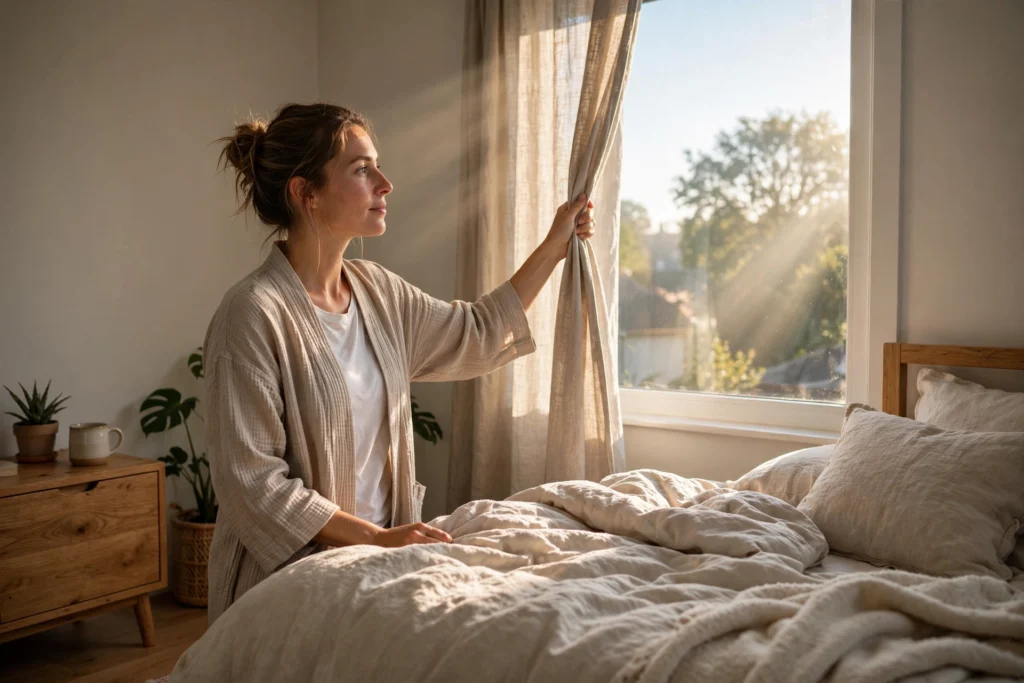
Get 10,000+ lux of outdoor light within 30 minutes of waking to trigger a healthy cortisol awakening response. Our Science of Better Sleep guide explains how morning light anchors your sleep-wake cycle.
Evening Light Habits That Protect Melatonin
Dim lights and avoid screens 1-2 hours before bed to protect melatonin production. Regular Zone 2 cardio in the morning can also help regulate your circadian rhythm. And if nasal congestion has you mouth-breathing at night, our honest answers on mouth tape for sleep cover whether this nasal-breathing aid is worth trying.
References
Czeisler CA, Gooley JJ. Sleep and circadian rhythms in humans. Cold Spring Harb Symp Quant Biol, 2007.
National Sleep Foundation. Circadian Rhythm Guidelines. sleepfoundation.org
Researched and vetted by the HealthRovia Editorial and Clinical Board. Our editorial process adheres to strict evidence-based standards, synthesizing research published in PubMed, MEDLINE, WHO, CDC, NIH, AHA, and peer-reviewed clinical journals. All health protocols are cross-verified for scientific accuracy and patient safety.
Get the latest health tips and articles delivered to your inbox.
We use cookies to personalize content, deliver relevant Google advertisements, and analyze our traffic in compliance with GDPR and CCPA standards. By continuing to use HealthRovia, you consent to our use of cookies as outlined in our
Privacy Policy.