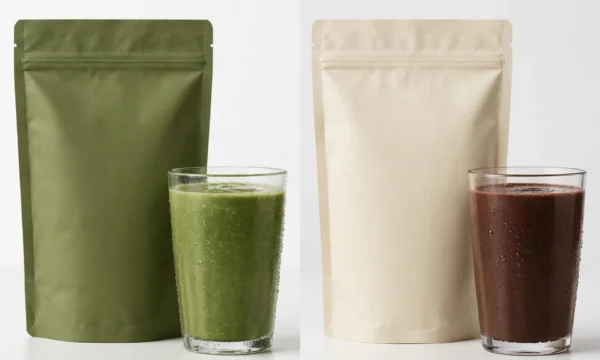
You know that moment — it is already past noon, you skipped breakfast because the morning ran away from you, and now lunch is looking like whatever you can grab in two minutes flat. You are not lazy for feeling that way. Most of us are just trying to eat something decent between everything else life demands, and that is exactly where meal shakes like Ka’Chava and Huel start to look tempting. You are not alone in this.
The problem is that they are not really the same kind of meal. One is a lighter, superfood-packed shake. The other, in its best-known form, is a much bigger, heartier meal in a glass. Pick the wrong one and you will either still be hungry an hour later or wonder why you paid premium prices for something you did not need.
This is a label-and-evidence comparison, not a taste-test diary. What follows is what the labels, the pricing, and the honest trade-offs actually say — so you can choose with your eyes open.
Quick Verdict: Ka’Chava vs Huel at a Glance
| Ka’Chava | Huel Black Edition | Huel Daily Superblend | |
|---|---|---|---|
| Calories per serving | 240 | 400 | 250 |
| Protein per serving | 25g | 40g | 25g |
| Fiber per serving | 6g | 8–11g | — |
| Price per serving | $4.66 ($3.99 subscription) | Roughly $2.50–$3.53 (varies) | $3.76 |
| Best for | Whole-food breadth, digestion extras | A filling, high-protein meal | A lighter Huel option |
Short version: Huel wins on price and on feeling like a real meal. Ka’Chava wins on ingredient breadth and digestion support. Neither wins everything.
Nutrition Head-to-Head: A Different-Sized Meal
Here is the honest distinction most comparisons skip, and it changes everything: these servings are not interchangeable. Ka’Chava gives you 240 calories. Huel Black Edition gives you 400. That is the difference between a light meal or a substantial snack and a full lunch.
Comparing them only per serving is misleading. Per serving, Huel Black looks like it crushes Ka’Chava on protein (40g against 25g) and fiber (8–11g against 6g). But per calorie, the picture evens out. Ka’Chava delivers about 10.4g of protein per 100 calories; Huel Black about 10g; Huel Daily Superblend, at 250 calories and 25g of protein, also lands right around 10g. Their protein density is remarkably similar — Huel Black simply gives you more of everything because it is a bigger serving.
Fiber tells a similar story: Ka’Chava’s 6g in 240 calories is about 2.5g per 100 calories, while Huel Black’s 8–11g in 400 calories is roughly 2–2.75g per 100 calories. Close on density, different on total amount. For a closer single-brand read, see our Ka’Chava review.
Protein Quality: What the Numbers Do and Do Not Tell You
Protein quantity is easy to print on a label; quality is harder to judge from that label alone, and an honest comparison should say so. Both brands deliver a solid amount of protein, and as shown above, their protein per calorie is close. What differs is the philosophy behind the scoop.
Ka’Chava builds its protein into a much wider whole-food blend — more than 85 superfood ingredients in total. That breadth is its real selling point. Huel takes a more functional approach: its Black Edition is built to be a complete, high-protein meal first, with less emphasis on sheer ingredient count.
Neither approach is automatically better. If your priority is a lot of protein and calories in one straightforward meal, Huel Black’s 40g is hard to argue with. If your priority is variety in a lighter shake, Ka’Chava’s formula is the more interesting one. For general background on protein needs, see the National Institutes of Health Office of Dietary Supplements: NIH Office of Dietary Supplements — FAQs.
Price Math: Per Serving and Per 100 Calories
Ka’Chava costs $69.95 for 15 servings, which is $4.66 per serving, or $3.99 per serving on subscription. Huel Black Edition powder sits roughly in the $2.50–$3.53 per serving range depending on the source, format, and subscription — treat that as a range, not a single exact current price. Huel Daily Superblend is $3.76 per serving.
Per serving, Huel is clearly cheaper. But remember the calorie gap, so price them per 100 calories too. Ka’Chava works out to about $1.94 per 100 calories at full price, or about $1.66 on subscription. Huel Black Edition works out to roughly $0.63–$0.88 per 100 calories across that range. Huel Daily Superblend works out to about $1.50 per 100 calories.
That per-calorie view is kinder to Ka’Chava, but it does not erase the gap. Huel Black remains the better value by calories and protein per dollar. Ka’Chava’s premium only makes sense if you value its whole-food breadth and digestion extras. For a different kind of daily habit, see our Vital Proteins review.
Taste and Mixability: The Practical Stuff
A shake you dread making is a shake you will stop drinking, however good its label looks. Huel Black Edition uses a larger 90g powder serving, and a bigger scoop of powder is simply harder to blend smoothly — it needs a proper shake, enough liquid, and a bit of patience, or you risk a thicker, grittier result.
Ka’Chava’s smaller serving is easier to manage in a standard shaker, which matters on a busy morning. On taste, honesty demands a disclaimer: flavor preference is personal, and older comparisons often lean on outdated flavor counts. Check current flavors on each brand’s own site before you commit.
Digestion Extras: Ka’Chava’s Clearest Edge
If there is one area where Ka’Chava pulls clearly ahead, it is digestion support. Its formula includes probiotics and digestive enzymes alongside its adaptogens — extras aimed at gut comfort that Huel’s more straightforward meal-replacement approach does not emphasize in the same way.
That does not make Ka’Chava a digestive treatment, and it would be wrong to promise it that way. But if your stomach tends to complain about heavy shakes, Ka’Chava offers something Huel Black does not lead with. Huel’s strength is the meal itself; Ka’Chava’s is everything around it — breadth, enzymes, probiotics, and adaptogens in a lighter package.
Subscription: Read This Before You Sign Up
Both brands reward subscribing with a lower price, and both make it easy to sign up. The part that deserves more attention — and that many comparisons skip entirely — is what happens when you want to stop, pause, or change your order.
Ka’Chava’s subscription price ($3.99 against $4.66 one-time) is a real saving, but subscription complaints are a known weakness for the brand, so check the cancellation and pause terms before your first order and set a reminder to review it after the first bag. Huel’s pricing also varies by format and subscription — hence the range in this article, not one fixed figure. The price at checkout is the only one that counts.
If subscriptions are not your thing, a simpler habit might suit you better — like the mushroom coffee in our RYZE Mushroom Coffee review, a morning cup rather than a meal-sized shake.
Who Should Pick Which?
Pick Ka’Chava if you want a lighter, nutrient-broad shake with digestion extras and 85+ superfood ingredients in one scoop, and you are willing to pay more per serving for that breadth. It fits best as a lighter meal or a substantial snack.
Pick Huel Black Edition if you want a real meal replacement — 400 calories, 40g of protein, and a price per calorie that is hard to beat. Pick Huel Daily Superblend if you like Huel’s approach but want a lighter 250-calorie option closer to Ka’Chava’s size.
Still torn? Ask yourself one question: will this shake replace a meal, or top one up? If it replaces a meal, Huel Black’s size and value are difficult to ignore. If it tops up your day, Ka’Chava’s breadth and digestion extras earn their premium more honestly. And if your goal is a single-nutrient habit rather than a full meal, our NeoCell Collagen review covers a very different kind of daily supplement.
Safety Fine Print
Meal shakes are foods and supplements, not medical treatments, and neither of these products treats or cures any condition. If you are pregnant, nursing, managing a health condition, or taking medication, talk to your doctor or a registered dietitian before making a shake a daily habit. Also note that sucralose appears in some Huel lines — check the label of the exact product and flavor you are buying, since formulas differ across lines. For how dietary supplements are regulated, see the U.S. Food and Drug Administration: FDA — Dietary Supplements.
Frequently Asked Questions
Is Ka’Chava or Huel better for weight loss?
Neither causes weight loss on its own. Huel Black’s 400 calories make a fuller meal replacement; Ka’Chava’s 240 calories suit a lighter meal or snack.
Which is cheaper, Ka’Chava or Huel?
Huel, both per serving and per 100 calories. Ka’Chava is $4.66 per serving ($3.99 on subscription); Huel Black Edition is roughly $2.50–$3.53 depending on format and subscription; Huel Daily Superblend is $3.76.
Can I cancel a Ka’Chava subscription easily?
Subscription complaints are a known weakness for Ka’Chava, so check the pause and cancellation terms before ordering.
Does Huel contain sucralose?
It appears in some Huel lines, though not every product. Check the label of the exact line and flavor you buy.
Is 240 calories enough for a meal?
For many people, 240 calories is a light meal or snack rather than a full lunch. If your shake must replace a meal entirely, Huel Black’s 400 calories fit better.
Written by the HealthRovia editorial team. For general information only — not medical advice.