
My kitchen counter looked like a supplement shop had exploded: a tub of greens powder beside a bottle of probiotic capsules, both bought because my stomach felt off most mornings. If your counter looks anything like mine did, you are not alone in this. This garden of life vs bloom comparison is the honest sort-out I wish I had had that morning.
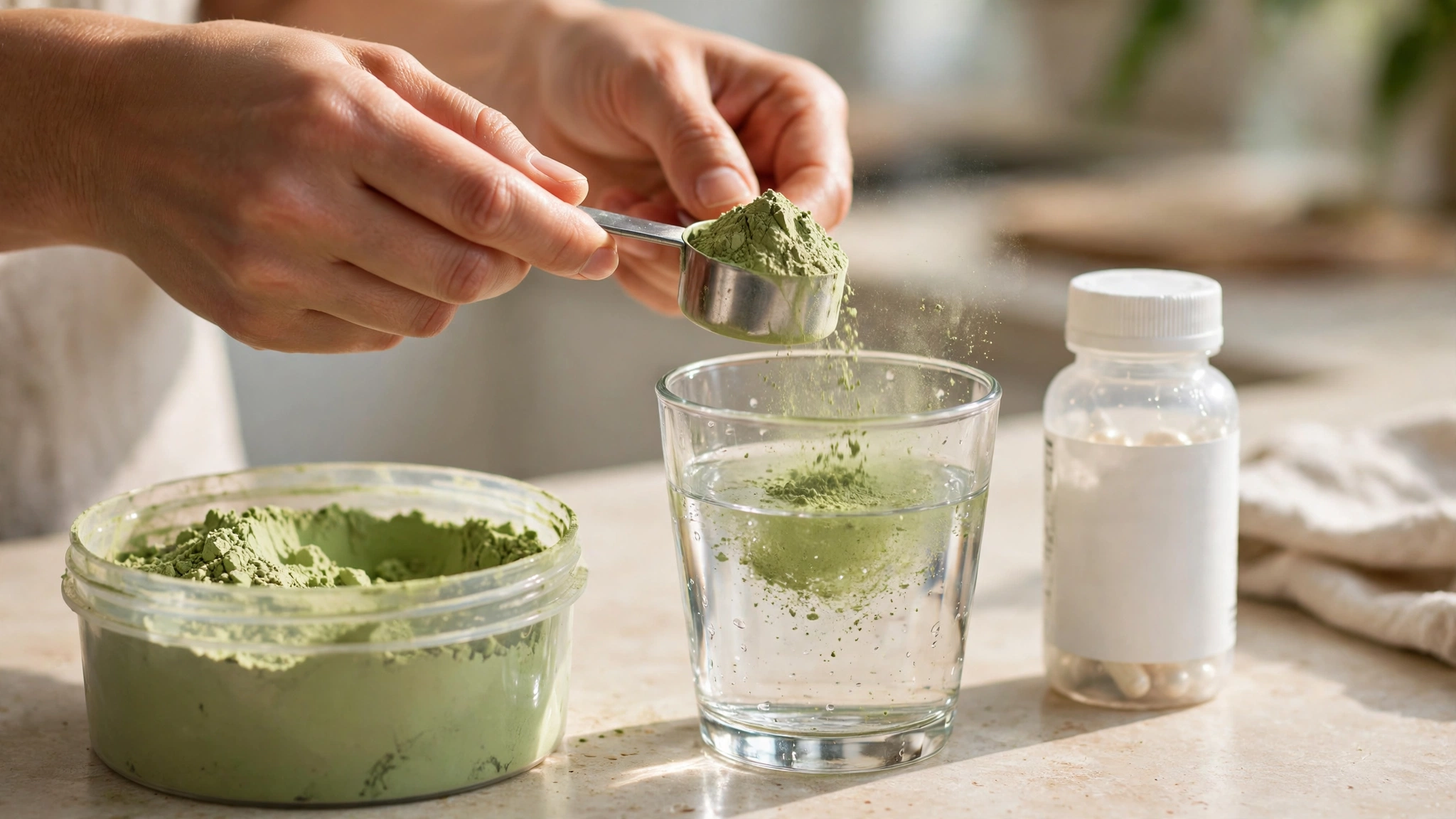
garden of life vs bloom at a glance
| Garden of Life | Bloom | |
|---|---|---|
| Format | One capsule a day | A scoop stirred into water |
| Probiotic dose | 50 billion CFU, 15–16 strains | 648 mg blend, no CFU count disclosed |
| Greens | Raw Perfect Food, 40 greens | 30+ ingredients, 7 blends |
| Third-party testing | NSF Gluten-Free, Non-GMO Verified | “Third Party Tested” seal, no lab named |
| Price per day | About $1.12–$1.23 | About $1.13 |
| Best for | Real-probiotic seekers | Tasty-greens seekers |
In short, garden of life vs bloom is not a choice between two versions of the same thing: one capsule delivers live microbes, the other is a flavoured greens drink.
First, the awkward truth: two different products
That is why garden of life vs bloom is a question about what job you are hiring a supplement to do. If your goal is a daily probiotic with a stated dose, Garden of Life is the only one that sells one. If your goal is to drink something green and pleasant every morning, Bloom is the only one built for that. Both are sold for gut comfort — judge each on what it claims to be.
7 checks that settle garden of life vs bloom
Seven checks, one at a time — each one tests a claim against what the label actually shows.
1. The probiotic dose — the biggest gap of all
The number that decides garden of life vs bloom comes first. Garden of Life’s Dr. Formulated Once Daily capsules list 50 billion CFU from 15 to 16 strains. Bloom’s pre and probiotic blend weighs 648 mg and names three species, but discloses no CFU count. Without a CFU count, a probiotic cannot be compared with any studied dose. On dose alone, this is not close.
2. Can you check the evidence behind the strains?
A strain name is the key that lets you look up the research. Garden of Life is uneven here: its Women’s pH formula lists all 15 strains with their codes, while its Once Daily formulas name species only. Bloom names species too, with no strain codes. Garden of Life still gives you more to verify. No trial has tested either finished product. See our Garden of Life vs Seed comparison.
3. The greens inside
Flip the question and garden of life vs bloom tilts the other way. Bloom packs 30-plus ingredients into a 5.64 g scoop across seven blends, with a green blend of 1.367 g. Garden of Life’s Raw Organic Perfect Food answers with 40 organic greens, sprouts and juiced grasses, USDA Organic. Bloom wins on flavour and variety; Garden of Life wins on organic sourcing. Neither scoop replaces a serving of vegetables.
4. Testing and trust
Garden of Life carries Non-GMO Project Verified and NSF Certified Gluten-Free marks on its Dr. Formulated line. Those cover ingredients and processes, not health benefits. Bloom’s tub carries a “Third Party Tested” seal and the brand says its products are tested in cGMP facilities — yet it names no lab and holds no NSF or Informed Choice certification. A seal without a certifier behind it is a claim, not evidence.
5. Taste — the check that decides whether you finish the tub
Here is where garden of life vs bloom stops being a lab comparison and becomes a human one. Bloom tastes like a sweet fruit drink, comes in ten flavours, and mixes smoothly into cold water. Garden of Life’s raw greens powder is earthy and grassy, best blended into a smoothie. If you have quit greens powders before because of the taste, Bloom’s flavour is a genuine advantage, not a gimmick.
6. Price per day — nearly a dead heat
On price, garden of life vs bloom is almost a tie. Garden of Life Dr. Formulated Once Daily Women’s or Men’s runs about $1.23 a day (30 capsules, $36.79). Bloom costs $33.99 for 30 servings, about $1.13 a scoop. The real question: are you paying a dollar a day for a stated probiotic dose, or a dollar a day for a flavoured greens drink?
7. Who should skip each one
Probiotics are unlikely to harm healthy people, and side effects are usually minor — often gas at first. But the NIH notes probiotics might not be safe for everyone, and the FDA has warned about severe infections in some groups. Talk to a clinician first if you are pregnant, immunocompromised or seriously ill. Bloom’s chicory-root fibre can cause gas in sensitive stomachs. Neither product treats any condition. The NCCIH probiotics page and the NIH probiotics fact sheet explain both points plainly.
The verdict
So, garden of life vs bloom — which one should you buy? If you want a probiotic with a real, stated dose and third-party certifications, buy Garden of Life. If you want a greens powder you will actually enjoy drinking every morning, buy Bloom, knowing the probiotic dose is undisclosed. Our MaryRuth’s vs Cymbiotika comparison pits two probiotic-first brands against each other, and our Momentous vs Bloom head-to-head tests Bloom against a premium rival. See also our Culturelle vs Nature Made comparison and our Ritual vs Bloom review. Our Bloom review looks at the brand on its own.
Frequently asked questions
Which wins on value in garden of life vs bloom?
Neither wins on price — both cost about $1.12 to $1.23 a day. Garden of Life gives you a stated 50 billion CFU probiotic dose, while Bloom gives you a tasty greens drink with an undisclosed probiotic count. The better value is the one that matches your goal.
Is Garden of Life a good brand?
It is a mainstream brand with real third-party certifications, including Non-GMO Project Verified and NSF Certified Gluten-Free, and it is a certified B Corp. Quality varies by formula, though: only some products name their strains, so check the label of the exact product you buy.
Does Bloom Greens help with bloating?
Some people report less bloating, and the prebiotic fibre, probiotics and enzymes give that a plausible mechanism. But the probiotic CFU count is undisclosed and the doses are small, so results vary a lot — and the fibre can cause gas in sensitive people at first.
Do I need to refrigerate Garden of Life probiotics?
Most Dr. Formulated capsules are shelf-stable in a desiccant-lined bottle and need only a cool, dry place. Some Garden of Life formulas are sold as refrigerated “Cooler” versions, so always follow the storage line on your exact bottle.
Does garden of life vs bloom matter if I already eat vegetables?
Not much. Whole vegetables give you fibre, volume and nutrients no powder matches. Either product is a top-up for busy days, not a replacement — pick the one that fills the gap in your routine.
Written by the HealthRovia editorial team. For general information only — not medical advice.