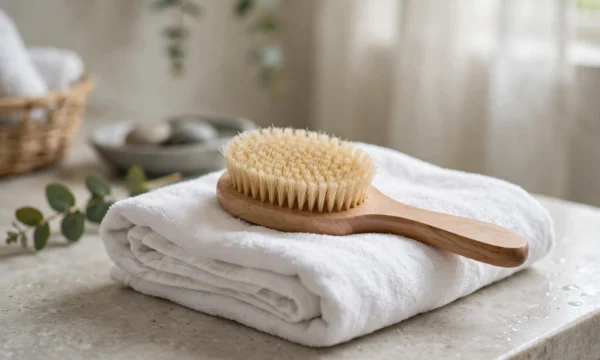
Dry brushing sounds almost too simple: take a stiff natural-bristle brush, sweep it over dry skin before your shower, and wait for the glow. Fans credit it with everything from melting cellulite to “detoxing” the lymphatic system. So which dry brushing benefits are real, and which are wishful thinking?
The honest answer is a mix. A dermatologist at the Cleveland Clinic has said there is no proof it reduces cellulite — any smoothing you see is temporary plumping from increased blood circulation. But as a form of exfoliation, dry brushing genuinely works, and the ritual itself is cheap, quick, and hard to mess up if you follow a few rules. Here is the evidence, the technique, and the cautions — all in one place.
What Is Dry Brushing, Exactly?
Dry brushing is the practice of brushing dry skin with a firm-bristled brush, usually right before a shower. The strokes go in long, upward motions toward the heart, covering the legs, arms, back, and torso over the course of a few minutes. Afterwards you shower as normal and moisturize.
The idea isn’t new — versions of it appear in traditional practices from several cultures — but it exploded on social media in the last decade as a “natural” answer to cellulite, dull skin, and sluggish circulation. The brush itself costs a few dollars, takes no batteries, and adds maybe three minutes to your routine. That’s part of the appeal: the barrier to trying it is almost zero.
Dry Brushing Benefits: What the Evidence Actually Shows
Let’s be blunt about the evidence, because most articles either hype it or dismiss it entirely. The truth has tiers:
| Claim | Evidence tier | Reality |
|---|---|---|
| Exfoliates dead skin, smoother feel | Strong | Mechanical exfoliation is well established; skin genuinely feels smoother. |
| Boosts circulation / gives skin a glow | Plausible, temporary | Brushing visibly increases local blood flow — the “glow” is real but short-lived. |
| “Detoxes” the lymphatic system | Weak | Healthline’s own review admits there is little research supporting lymphatic-drainage claims. |
| Reduces cellulite | No proof | A Cleveland Clinic dermatologist states there is no proof; any effect is temporary plumping from increased blood circulation. |
| Improves nutrient absorption through skin | No proof | Sometimes claimed; no studies support it. |
Exfoliation is the real win. This is the one benefit nobody disputes. Dragging soft bristles across dry skin physically lifts dead cells from the surface — the same principle behind scrubs and exfoliating cloths, minus the product. People consistently report smoother-feeling skin after a session, and dermatology guidance treats gentle mechanical exfoliation as a legitimate skincare step. If dry brushing did nothing else, it would still earn its place for this.
The circulation effect is real but fleeting. Brush your forearm firmly for 30 seconds and watch it pink up — that’s blood rushing to the surface, and it explains the post-brushing “glow.” It’s the same mechanism behind the cellulite myth: skin looks temporarily firmer and smoother because it’s flushed with blood. Enjoy the effect for what it is, but don’t mistake a ten-minute flush for a structural fix.
The lymphatic “detox” claim is where the science thins out. You’ll read that brushing “stimulates lymph flow and flushes toxins.” The lymphatic system is real and important, but as Healthline’s review acknowledges, there is little research showing that dry brushing meaningfully affects it. The claim persists because it sounds scientific, not because it’s been tested.
One honest footnote on the numbers you’ll see quoted. A 2004 study (19 participants) found increased blood magnesium and sulfate levels — but that was after baths, not brushing. Some articles borrow this finding for dry brushing; it doesn’t belong here. Borrowing bath data to sell brushes is exactly the kind of stretch this article won’t make.
How to Dry Brush: The Step-by-Step Protocol
Nobody teaches the actual technique well, so here it is — the full routine, end to end.
Frequency: start low, build up. You’ll find contradictory advice: one source says daily, another says once or twice a week. Both can be right — they’re describing different stages. Start at 1–2 sessions per week. If your skin stays calm (no redness lasting more than an hour, no stinging), add a session each week until you reach daily. Your skin’s feedback is the real schedule.
When: right before your shower. Dry brushing lifts dead skin; the shower washes it away. Always brush on dry skin — wet skin plus a stiff brush means more friction and more irritation.
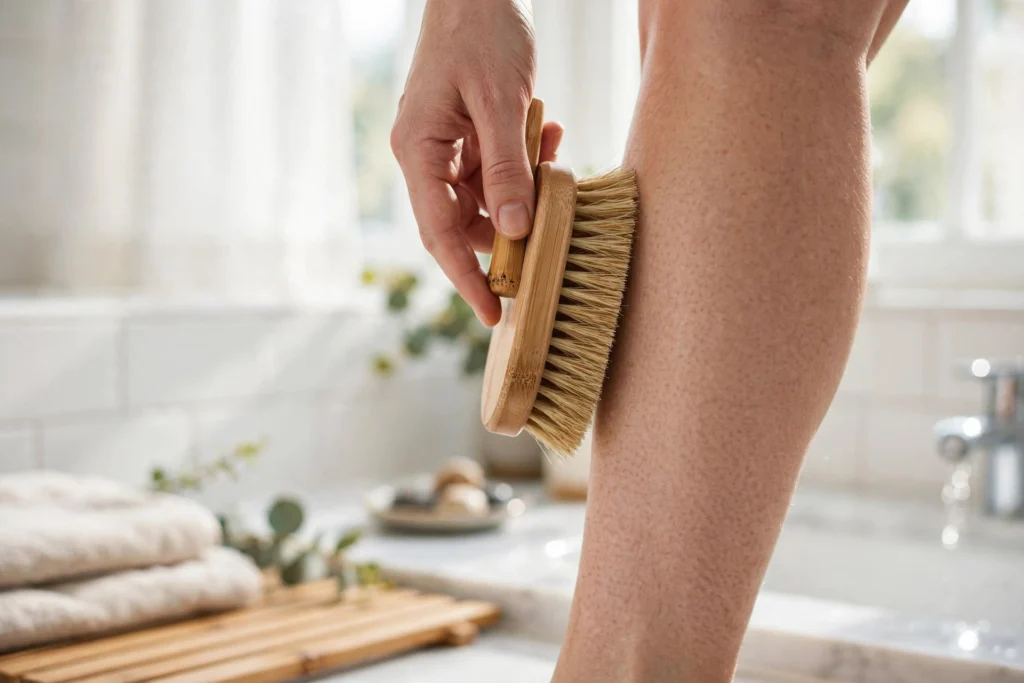
The order: feet first, always toward the heart. Begin at your feet and ankles and work upward in long, fluid strokes: shins, thighs, hips, buttocks. Then hands to shoulders, arms toward the armpits. Finish with the torso and back, stroking upward or toward the center of the chest. The “toward the heart” direction follows the natural flow of blood and lymph — it’s convention, not magic, but it’s the standard for a reason.
Pressure: firm, never painful. Press hard enough that you can feel the bristles working, but not so hard that the skin turns angry red or stings. A light pink flush is the target. Too many passes over one spot causes irritation and even minor bleeding — one or two strokes per area is enough.
Timing: two to five minutes total. This isn’t a workout. A full-body pass takes about three minutes once you know the route.
The face is off-limits. Facial skin is thinner and more delicate than body skin; a body brush is too aggressive for it. A Cleveland Clinic dermatologist explicitly advises against dry brushing the face. Use products made for faces on your face.
After: shower, then moisturize immediately. Wash off the loosened skin cells in the shower, then apply moisturizer while skin is still slightly damp. This step matters more than the brushing itself for how your skin looks the next day — dermatologists from the American Academy of Dermatology advise moisturizing right after any exfoliation, since the process can be drying. If you shave, do it after brushing, not before: brushing freshly shaved skin invites irritation.
It fits neatly into a self-care morning — our morning routine guide has more small habits that stack well with it.
Picking a Brush — and Keeping It Clean
Not all brushes are equal, and nobody compares them for the dry brushing benefits that matter:
- Natural bristle (the classic): firm plant fibers, usually cactus or boar. The standard choice — effective exfoliation, affordable, widely available. Replace when bristles soften or shed.
- Silicone body brush: softer nubs, gentler, easier to clean. Better for sensitive skin or beginners, but exfoliates less aggressively.
- Washcloth or loofah: the budget option. A rough washcloth on dry skin approximates the effect, though with less even pressure. Fine for testing whether you like the ritual before buying a brush.
Brush care is the section every article skips. Your brush collects dead skin cells — clean it weekly. Wash the bristles with mild soap and warm water, rinse well, shake off excess water, and let it dry bristle-down in a ventilated spot (never sealed in a damp shower caddy). A brush that stays damp grows things you don’t want on your skin. Replace natural-bristle brushes every 6–12 months, or sooner if the bristles splay.
Who Should Skip Dry Brushing
Dry brushing is gentle as body rituals go, but it’s not for everyone:
- Eczema, psoriasis, or rosacea flare-ups: brushing inflamed or broken skin makes it worse. MedlinePlus notes that eczema-prone skin gets irritated easily and should avoid harsh physical irritants (MedlinePlus: Eczema); the same logic applies to psoriatic patches, where skin cells already turn over far too fast.
- Sunburn, open cuts, rashes, or any broken skin: never brush over these.
- Active body acne: friction can aggravate it.
- Pregnancy: skin can become more sensitive, and there’s no safety research on vigorous dry brushing while pregnant — check with your doctor or midwife first.
- Retinoid or retinol users: the American Academy of Dermatology warns that these products make skin more sensitive, and exfoliating on top can trigger excessive dryness or breakouts. If you use strong actives on body skin, skip the brush or ask your dermatologist.
When in doubt, patch-test: brush one small area (like a shin) for a week before committing to the full routine. For more low-effort wellness habits, see our roundup of healthy benefits you can start today.
Frequently Asked Questions
Does dry brushing reduce cellulite? No — there is no proof it does. A Cleveland Clinic dermatologist has stated this directly: any smoothing you notice is temporary plumping of the skin from increased blood circulation, and it fades within hours.
How often should I dry brush? Start with 1–2 times per week and build toward daily only if your skin tolerates it well. Sources disagree (some say daily, others 1–2x weekly) because they describe different stages — your skin’s reaction is the real guide.
Can I dry brush my face? No. Facial skin is thinner and more delicate than body skin, and a body brush is too aggressive for it. Dermatologists advise against it; use facial exfoliants made for the face instead.
Is dry brushing safe during pregnancy? There is no specific safety research, and pregnancy can make skin more sensitive. Check with your doctor or midwife before starting, and skip it entirely if you develop any skin irritation.
Should I moisturize after dry brushing — and when do I shave? Yes, moisturize immediately after your post-brush shower, while skin is still slightly damp — exfoliation can be drying. If you shave, always do it after brushing, never before, to avoid irritating freshly shaved skin.
Written by the HealthRovia editorial team. For general information only — not medical advice.