
It was past ten at night, the kitchen light still on, and my phone had two carts open: MaryRuth’s liquid probiotic in one, Seed’s DS-01 in the other. I was tired, a little bloated, and just wanted someone to tell me which one was worth my money. If that sounds familiar, you are not alone in this. That feeling is exactly why maryruths vs seed keeps showing up in search boxes across the US.
Seven facts, real numbers, honest limits.
The 7 graded facts behind maryruths vs seed
1. Seed is one of the few probiotics tested as a finished product. In a six-week trial of 350 adults with everyday bloating, DS-01 beat placebo on bloating and regularity. The catch: all three trials were funded by Seed, and none tested people with a diagnosed digestive disease.
2. MaryRuth’s wins on format, not on potency. Its liquid lists 12 strains at up to 2 billion CFU; its Complete Gut Health+ capsule lists five strains at 1 billion CFU. But judging the brands on CFU alone misunderstands both, and this is the point most roundups skip: maryruths vs seed is not a fair fight on CFU alone, because the two products aim at different things.
3. Big CFU numbers do not mean a better probiotic. The NIH is blunt: many supplements hold 1 to 10 billion CFU per dose, some 50 billion or more, yet higher counts are not necessarily more effective. In testing of 25 products, only 27 percent matched the CFU on the label, and 32 percent listed organisms not actually present.
4. Strain codes matter more than strain counts. Seed names its strains with codes (such as Bifidobacterium longum SD-BB536-JP) and groups its 24 strains into four blends. MaryRuth’s names its strains too, but its gut products carry far fewer. The NIH explains why: probiotic effects can be strain-specific, so recommendations must be too.
5. The price gap is real, and bigger per day than per month. Seed costs $49.99 a month, about $1.67 a day, for two capsules. MaryRuth’s range sits around $22 to $45 a month. Over a year, that is several hundred dollars — worth it only if the pricier product solves a problem the cheaper one does not.
6. TikTok fame is not gut evidence. MaryRuth’s grew TikTok Shop revenue from zero to $40 million in 2024 (JoinBrands), with roughly $70 million projected for 2025. Its TikTok bestseller, though, is a liquid multivitamin for hair growth — about $29.9 million in sales, not a probiotic. Popularity proves a brand can sell, not that a probiotic works.
7. Neither product treats a condition. Both brands make support claims, not treatment claims. The NCCIH notes probiotics have a long history of apparently safe use in healthy people — but we still do not know which ones help. Anyone seriously ill, immunocompromised, or with a diagnosed gut condition should talk to a clinician first.
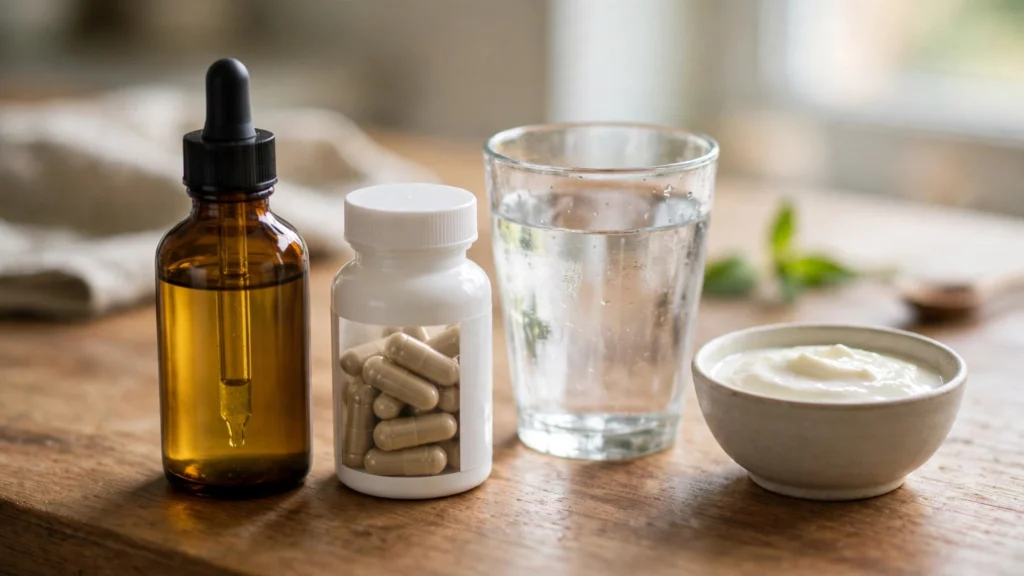
MaryRuth’s up close: liquids, gummies, gentle doses
MaryRuth’s is a women-owned, B Corp certified brand founded in Los Angeles in 2014, built around easy formats: liquids, gummies, and capsules for people who struggle to swallow pills. The best probiotic is useless if it sits unopened because you dread taking it.
The gut range is wide: liquid, Complete Gut Health+, enzymes, a 3-in-1 capsule, and beauty probiotics. Complete Gut Health+ averages 4.5 out of 5 across 276 reviews on the brand’s site, most reporting better regularity and less bloating. The honest read on maryruths vs seed starts there: MaryRuth’s is a gentle, flexible, family-friendly brand, not a maximum-strength one. One drawback: blend amounts stay private on some products.
Seed DS-01 up close: one capsule, 24 strains
Seed does the opposite: one adult gut product, DS-01 Daily Synbiotic — 24 clinically studied strains totalling 53.6 billion AFU, plus 400 mg of Indian pomegranate extract as a prebiotic, in a nested capsule that shields the bacteria from stomach acid. AFU counts living cells.
No liquid, no gummy, no gentler version: two capsules a day, every day, on subscription, for $49.99 a month. The upside is clarity — the strains are named and the finished product has been studied in people. The downside is rigidity — the sharpest contrast in maryruths vs seed: Seed wants one premium commitment, MaryRuth’s lets you browse, mix, and spend less.
Price, format, and routine in maryruths vs seed
Read the table: maryruths vs seed looks very different priced per day, not per month.
| MaryRuth’s | Seed DS-01 | |
|---|---|---|
| Flagship | Complete Gut Health+ / Liquid | DS-01 Daily Synbiotic |
| Strains | 5–12 | 24, named with codes |
| Potency | 1–2 billion CFU | 53.6 billion AFU |
| Format | Liquid, gummy, capsule | Two capsules daily |
| Price | $22–$45 a month | $49.99/mo, ~$1.67 a day |
On price, MaryRuth’s wins at roughly half Seed’s monthly cost, and its liquids suit households sharing one brand. On routine, the winner depends on you: two capsules a day is simple only if you can swallow capsules and remember a subscription; a liquid or gummy suits others better.
On evidence, Seed wins: it is the only one with published trials of its finished formula. But those trials were company-funded and covered everyday bloating in healthy adults — an advantage, not a guarantee. Before choosing, ask: do I want the cheapest habit I will keep, or the most studied formula at fifty dollars a month? For a different head-to-head, see our Thorne vs Seed comparison and our Bloom review.
Side effects and who should skip
For most healthy adults, probiotics are generally well tolerated; the most common complaint is gas or mild discomfort in the first week or two. Neither replaces sleep, fibre, or a varied diet.
Some people should be more careful. The NCCIH warns that severe infections have been reported in premature infants given probiotics, and the FDA has warned health care providers about that risk. People severely ill or immunocompromised face higher risk too. If that describes you, or you are pregnant, breastfeeding, or on prescription medicine, ask your clinician first. The quiet truth about maryruths vs seed is that the safest choice is sometimes neither product yet — a conversation with your doctor costs less than a year of subscriptions. Readers comparing other premium synbiotics may also want our Momentous vs Seed and Ritual vs Garden of Life comparisons.
Verdict: who should pick which
Pick Seed DS-01 if you want the most studied formula of the two, can swallow capsules, and $49.99 a month fits your budget. Pick MaryRuth’s for a gentler dose, a liquid or gummy format, a lower price, or one brand for the household. Both are reasonable — anyone who tells you otherwise is selling something.
Buy the one you will actually take every day for two months — consistency is the only thing the evidence rewards. In the end, maryruths vs seed is gentle vs studied, cheap vs premium, flexible vs focused. The right pick matches your life, not the loudest feed. See also our AG1 vs Seed and Seed vs Garden of Life comparisons.
Frequently asked questions
Which is better for bloating in maryruths vs seed?
Seed has the stronger direct evidence: a six-week trial of 350 adults found DS-01 beat a placebo on bloating, gas, and regularity. MaryRuth’s buyers also report less bloating, but that is from customer reviews, not a finished-product trial.
Is maryruths vs seed worth it on a tight budget?
On a tight budget, MaryRuth’s is the easier pick, at roughly $22 to $45 a month against Seed’s $49.99. The extra money buys a studied formula, not a guaranteed result. Start with the cheaper option first.
What are the side effects in maryruths vs seed?
The most common side effects for both are gas and mild discomfort, usually in the first week or two. Serious problems are rare in healthy adults. People severely ill, immunocompromised, or caring for a premature infant should seek medical advice first.
Who should skip maryruths vs seed products?
Skip both if severely ill or immunocompromised, if a clinician has advised against probiotics, or if you want treatment for a diagnosed condition — neither treats disease. Also skip Seed if a $50 monthly subscription would strain your budget.
How long before you notice anything from maryruths vs seed?
Most who notice a difference report it within two to six weeks, usually as more regular digestion. Seed’s trial ran for six weeks, a sensible window for judging either product. If nothing has changed after eight steady weeks, stop and reassess.
Should you switch between maryruths vs seed brands?
Switching is fine. Finish one product, then try the other for six to eight weeks to compare fairly. Do not take both at full dose at once, or switch every week, or you will never know which did what.
On how probiotics work, see the NIH probiotics fact sheet and the NCCIH probiotics page — both checked live before writing.
Written by the HealthRovia editorial team. For general information only — not medical advice.